
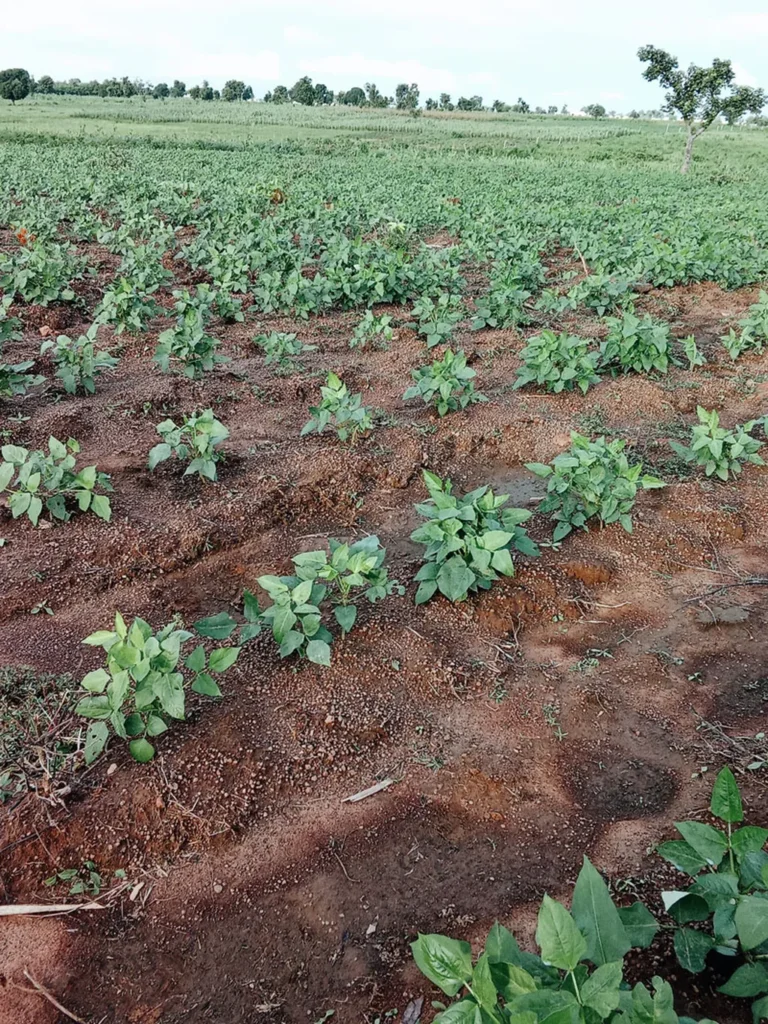
In the quest for sustainable agriculture, researchers are continually exploring innovative methods to manage weeds and enhance crop productivity. A recent study published in the journal ‘بوم شناسی کشاورزی’ sheds light on the potential of non-chemical weed control methods and planting patterns to improve nutrient uptake efficiency in cowpea (Vigna unguiculata L.), a vital legume crop.
The study, led by Mohammad Kabi from the Department of Production Engineering and Plant Genetics at Shahid Chamran University of Ahvaz, Iran, investigated the effects of different planting arrangements and non-chemical weed control methods on the uptake of nitrogen (N), phosphorus (P), and potassium (K) in cowpea. The findings reveal that the interaction between planting arrangement and weed control methods significantly impacts nutrient content in both shoots and seeds.
One of the key discoveries was that the triple-row planting arrangement, with 30 cm spacing, exhibited the highest phosphorus content in shoots (0.81%) and seeds (1.4%). This improvement was attributed to enhanced root expansion and reduced weed competition. “The triple-row arrangement allows for better root development, which in turn improves the plant’s ability to uptake nutrients,” explained Kabi.
The study also found that the double-row arrangement, with 20 cm spacing, showed the highest potassium content in shoots (6.1%) and seeds (3.44%). This was due to reduced intra-species competition, allowing each plant to access more nutrients. “Optimal spacing is crucial for balancing competition among plants and ensuring efficient nutrient uptake,” noted Kabi.
In terms of weed control, the treatment combining sugarcane bagasse mulch and a single hand weeding session proved to be the most effective. This method significantly reduced both wet and dry weed biomass, with measurements of 15.6 g.m-² and 3.7 g.m-², respectively. “Mulching not only suppresses weed growth but also improves soil conditions, creating a more favorable environment for the cowpea plants,” said Kabi.
The commercial implications of these findings are substantial. By adopting these sustainable practices, farmers can reduce their reliance on chemical herbicides, which have been linked to environmental concerns. The use of mulches and strategic planting arrangements can enhance nutrient availability, improve crop yield, and ultimately boost profitability.
This research opens up new avenues for future developments in the field of agronomy. As Kabi highlighted, “The integration of sustainable weed management practices with optimal planting arrangements can pave the way for more efficient and eco-friendly agricultural systems.” The study not only provides practical solutions for cowpea cultivation but also sets a precedent for similar research in other crops.
In an era where sustainability and productivity are paramount, this study offers valuable insights that could shape the future of agriculture. By embracing these innovative techniques, the agricultural sector can move towards a more sustainable and profitable future.