
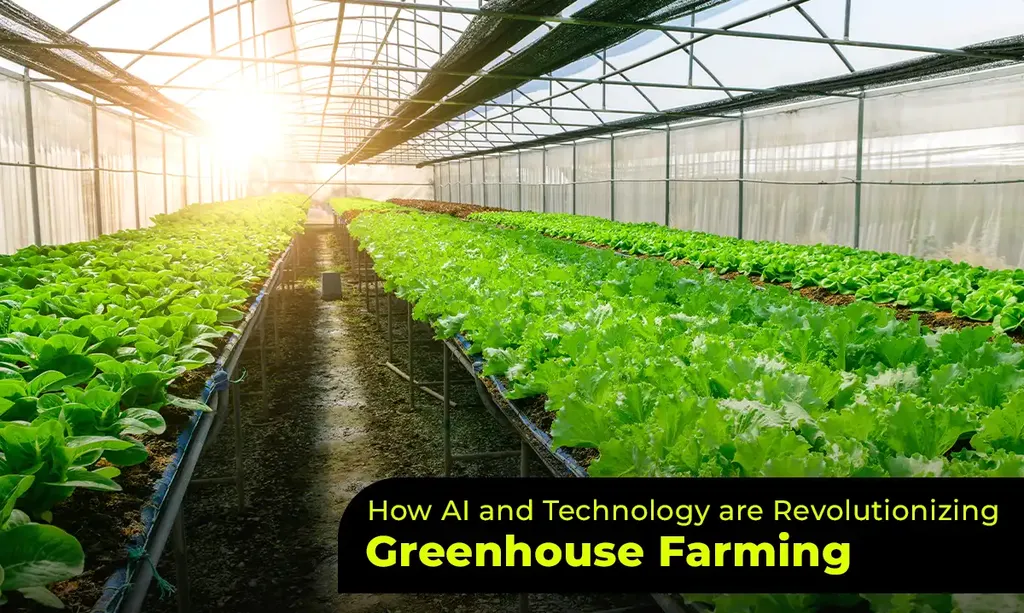
In the face of mounting global challenges such as population growth and climate change, the agricultural sector is under increasing pressure to evolve. Smart greenhouses, which integrate various technologies to create optimal growing environments, are emerging as a critical component of modern agriculture. A recent study published in *Scientific Reports* introduces an innovative approach to greenhouse ventilation control, leveraging artificial intelligence to enhance crop yield and quality.
The research, led by Zhi-Yong Wang from the School of Information Science and Engineering at Weifang University of Science and Technology, focuses on developing an adaptive genetic algorithm-back propagation neural network (GA-BPNN) based on the Weibull distribution. This advanced algorithm aims to optimize ventilation and air exchange in greenhouses, ensuring consistent and ideal air conditions for plant growth.
By analyzing historical and real-time data from the Shouguang Vegetable High-Tech Demonstration Park, the researchers established a robust foundation for autonomous ventilation control. The study employed a hybrid fitness scaling approach, combining linear and nonlinear fitness scaling, to refine the model. Three distinct models—multiple regression (MR), back propagation neural network (BPNN), and GA-BPNN—were explored to fit the greenhouse data.
The results of extensive simulation experiments revealed that the proposed GA-BPNN method outperformed the other techniques in terms of accuracy and error reduction. “Our method enables precise regulation of greenhouse environmental factors, including temperature, humidity, and CO2 levels,” Wang explained. “This precision is crucial for optimizing crop yield and quality, addressing the growing demand for sustainable and efficient agricultural practices.”
The implications of this research are significant for the agriculture sector. Effective ventilation control algorithms can lead to more intelligent and sustainable farming practices, ultimately enhancing crop productivity and quality. As the global population continues to grow, the need for innovative solutions to food production becomes increasingly urgent. This study represents a step forward in the integration of artificial intelligence and smart agriculture, paving the way for more efficient and sustainable farming practices.
The research not only highlights the potential of AI in agriculture but also underscores the importance of data-driven decision-making in optimizing greenhouse environments. By leveraging advanced algorithms and real-time data analysis, farmers can achieve greater control over environmental factors, leading to improved crop outcomes.
As the agriculture sector continues to evolve, the adoption of smart technologies like those developed by Wang and his team will play a pivotal role in meeting global food demands. The study published in *Scientific Reports* offers a glimpse into the future of smart agriculture, where AI-driven solutions are poised to revolutionize farming practices and enhance food security.