
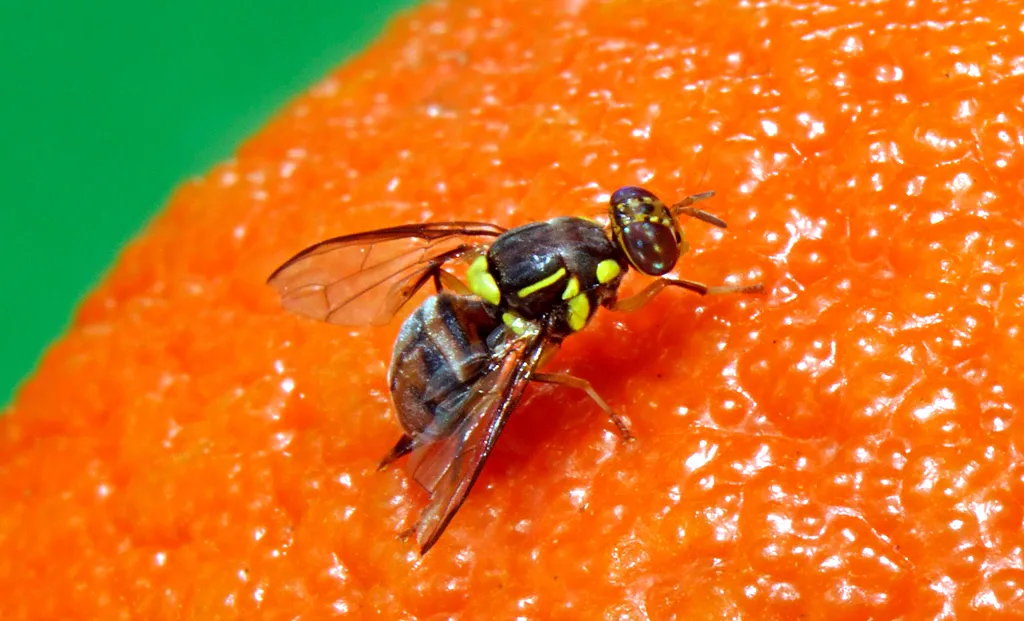
In a significant stride for agricultural pest management, researchers have successfully assembled a high-quality, telomere-to-telomere genome for the oriental fruit fly, Bactrocera dorsalis. This achievement, published in *Nature Communications*, marks a pivotal moment in the study of Dipteran insects, a group notorious for causing substantial agricultural damage worldwide.
The oriental fruit fly is a particularly devastating pest, infesting a wide range of fruit crops and causing millions of dollars in losses annually. Traditional methods of control have often been reactive and costly, making the development of targeted genetic strategies a priority for researchers and farmers alike.
The genome assembly, led by Wei Liu from the Agricultural Genomics Institute at Shenzhen, Chinese Academy of Agricultural Sciences, utilized a novel strategy combining low-input HiFi circular consensus sequencing (CCS) from a single male individual with Oxford Nanopore Technologies (ONT) sequencing from pooled inbred individuals. This approach overcame longstanding challenges in Dipteran genome assembly, such as high heterozygosity and complex genetic backgrounds.
“By obtaining a complete genome sequence, we’ve unlocked a treasure trove of genetic information that was previously inaccessible,” said Liu. “This includes the complete structural organization of centromeres and telomeres, which provides crucial insights into the evolution of chromosome structure in insects.”
One of the most striking findings from the study is the identification of a homolog of ATPsynβ as a Y chromosome-specific gene. This gene is highly expressed across multiple male tissues and is believed to play a critical role in male-specific physiological activities. Understanding the function of this gene could pave the way for the development of male-specific pest control strategies, reducing the need for broad-spectrum insecticides that can harm beneficial insects and the environment.
The study also revealed several tandem duplications of odorant receptor genes, including a triplet of the OR88a family. These receptors are known to be involved in the behavioral response to methyl eugenol, a compound used in attract-and-kill strategies for oriental fruit fly control. By understanding the genetic basis of these responses, researchers can develop more effective and targeted pest management tools.
The commercial implications of this research are substantial. A complete reference genome for Bactrocera dorsalis provides a foundation for future genomic research in Diptera and offers genetic insights for the control of this and other related pests. This could lead to the development of more efficient and environmentally friendly pest control methods, ultimately reducing crop losses and increasing agricultural productivity.
As Wei Liu and his team continue to explore the implications of their findings, the agricultural community watches with anticipation. The complete genome sequence of the oriental fruit fly is not just a scientific milestone; it’s a beacon of hope for farmers worldwide, promising a future where technology and genetics combine to protect crops and secure food supplies.
The research, published in *Nature Communications*, was led by Wei Liu from the Shenzhen Branch, Guangdong Laboratory of Lingnan Modern Agriculture, Key Laboratory of Synthetic Biology, Ministry of Agriculture and Rural Affairs, Agricultural Genomics Institute at Shenzhen, Chinese Academy of Agricultural Sciences. This groundbreaking work not only advances our understanding of Dipteran insects but also opens new avenues for innovative pest management strategies in the agriculture sector.