
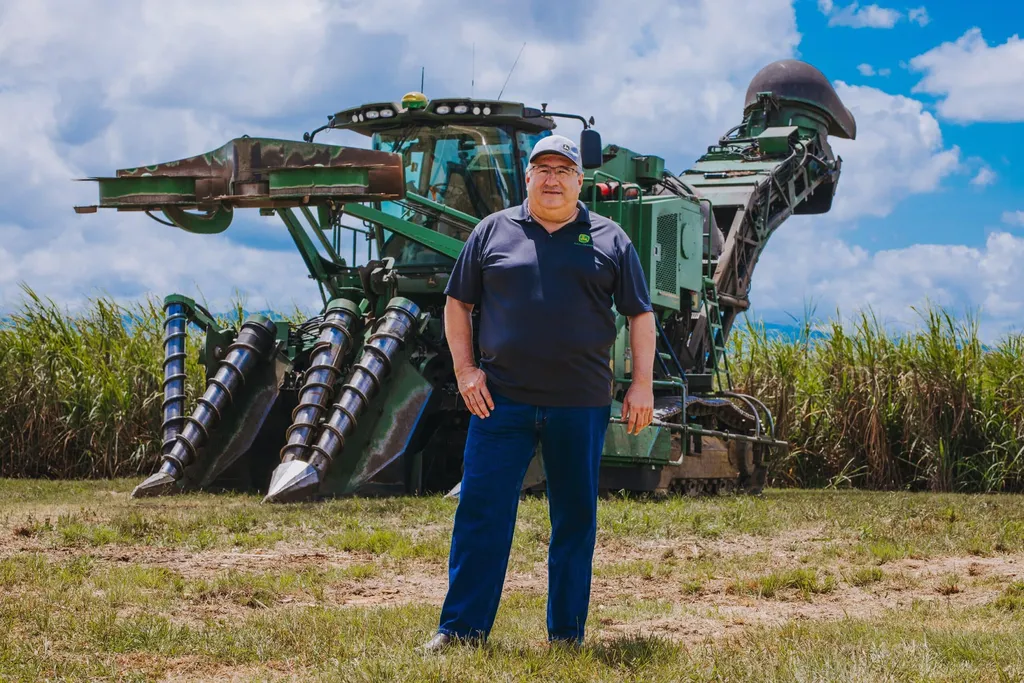
In the heart of Egypt’s agricultural innovation, a groundbreaking study has emerged, promising to revolutionize sugarcane harvesting—a sector vital to global sugar production, biofuel, and renewable energy. The research, led by Abdallah Elshawadfy Elwakeel from the Agricultural Engineering Department at Aswan University, introduces a semiautomatic whole-stalk sugarcane harvester (SWSH) designed to harvest two rows of sugarcane stalks simultaneously. This development is not just a leap in farm machinery; it’s a stride towards enhancing profitability and sustainability in the sugarcane sector.
The study, published in *Scientific Reports*, evaluates the performance of this double-row harvester using advanced deep learning techniques. By employing Feedforward Neural Network (FNN) and Deep Neural Network (DNN), the researchers predicted optimal operational conditions for various parameters, including forward speeds, row spacing, cutting heights, and the number of knives on the cutting system.
The results are impressive. The cutting efficiency of the developed SWSH reached a perfect 100%, with the highest efficiency observed at ground level cutting height, a forward speed of 3 km/h, and a row spacing of 71 cm, using both two and four knives. This level of efficiency is a game-changer for the industry, potentially reducing labor costs and increasing yield.
Moreover, the study found that the minimum total operating cost of the developed SWSH was approximately 4.42 USD per hectare. This cost was achieved at a forward speed of 4.5 km/h, a row spacing of 88.75 cm, a cutting height of 4 cm, and using only two knives on the cutting disk. “This reduction in operating costs is significant for farmers,” Elwakeel noted. “It makes sugarcane farming more profitable and sustainable, which is crucial for meeting the growing global demand.”
The maximum field capacity of the developed SWSH was recorded at 0.554 hectares per hour, observed at a forward speed of 4.5 km/h and a row spacing of 88.75 cm. This capacity is a testament to the harvester’s efficiency and its potential to transform large-scale sugarcane farming.
The commercial impacts of this research are profound. By optimizing operational conditions and reducing costs, the SWSH can enhance the profitability of sugarcane farming, making it a more attractive venture for farmers. Additionally, the use of deep learning in predicting optimal conditions sets a precedent for the integration of artificial intelligence in agricultural engineering, paving the way for future innovations.
As the world grapples with the challenges of climate change and food security, advancements like the SWSH are crucial. They not only improve efficiency and profitability but also support eco-friendly agricultural practices. The research led by Elwakeel is a beacon of hope, showcasing how technology and innovation can drive the future of agriculture.
In the words of Elwakeel, “This is just the beginning. The potential for AI and deep learning in agriculture is vast, and we are only scratching the surface.” As we look to the future, the integration of these technologies promises to reshape the agricultural landscape, making it more sustainable, efficient, and profitable.