
In the heart of the Himalayas, where terraced fields have been cultivated for centuries, a silent crisis is unfolding. Soil erosion, exacerbated by complex topography and land abandonment, threatens the region’s agricultural productivity and ecosystem stability. A recent study published in *Discover Geoscience* sheds light on this pressing issue, offering insights that could reshape soil conservation strategies and bolster the agriculture sector.
The research, led by Anu David Raj from the Agriculture and Soils Department at the Indian Institute of Remote Sensing (IIRS), Indian Space Research Organisation (ISRO), employs the Fallout Radionuclide (FRN) 137Cs technique to quantify soil redistribution across a representative Himalayan hillslope. This innovative approach provides a reliable assessment of long-term soil erosion and deposition patterns, addressing the limitations of conventional methods in rugged terrains.
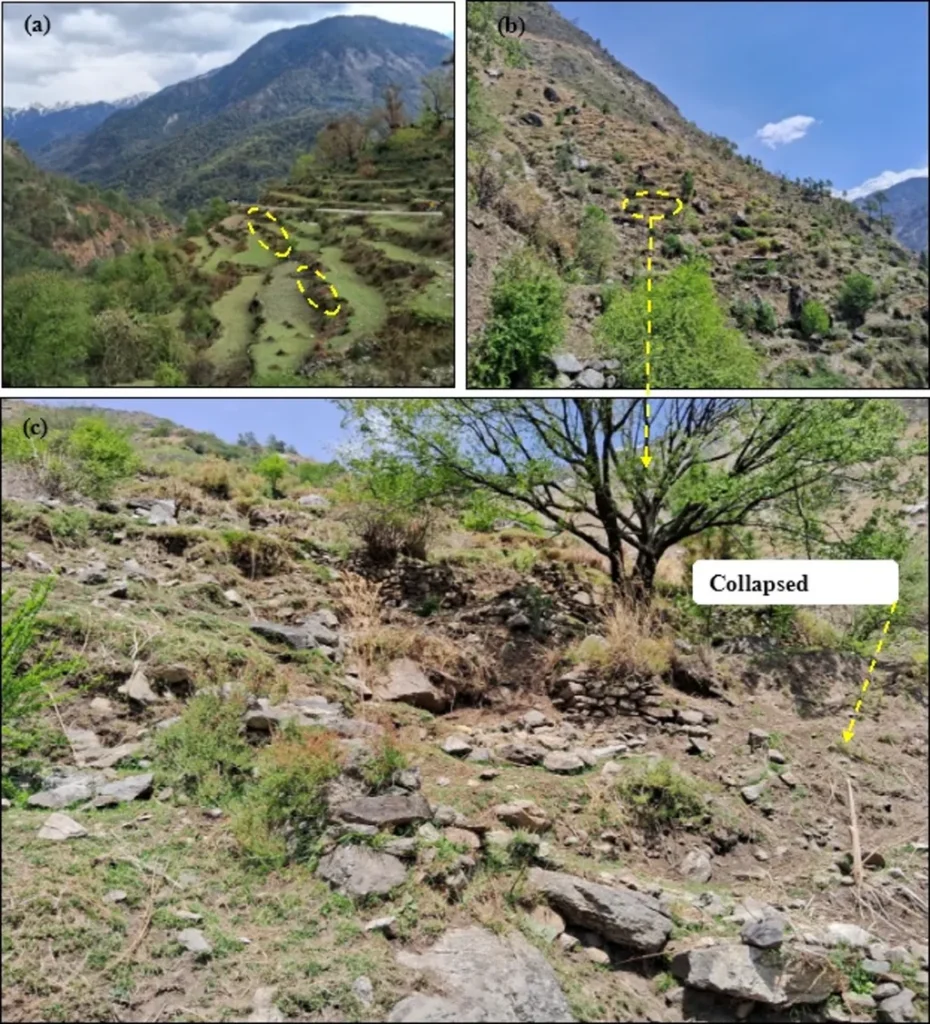
The findings reveal a stark contrast between cultivated and abandoned terraced fields. “The highest erosion rate was observed at the abandoned terraces located on the upper hillslopes,” Raj explains. “This underscores the adverse consequences of land abandonment, which can lead to severe soil loss and reduced agricultural productivity.” The study recorded an erosion rate of -34.6±4.47 t ha⁻¹ yr⁻¹ at these sites, highlighting the critical need for regular terrace maintenance.
Conversely, the highest sediment deposition (+11.5±3.00 t ha⁻¹ yr⁻¹) occurred at the lower and valley positions, demonstrating the natural sediment trapping mechanisms of well-maintained terraces. “Concave slopes promoted sediment accumulation, while convex slopes facilitated soil loss,” Raj notes. This topographic influence on erosion and deposition dynamics underscores the importance of tailored soil conservation strategies.
The commercial impacts of this research are profound. Soil erosion directly affects agricultural yields, threatening the livelihoods of millions of farmers in the Himalayan region. By quantifying soil redistribution patterns, the study provides a scientific basis for targeted interventions. “Policy interventions promoting terrace preservation, sustainable land-use practices, and preventing land abandonment are crucial for mitigating soil erosion,” Raj emphasizes. These measures can enhance soil health, improve crop productivity, and ensure long-term agricultural sustainability.
The ¹³⁷Cs method’s effectiveness in capturing spatial patterns of soil redistribution offers a promising tool for future research and policy-making. As Raj points out, “The findings underscore the need for integrated soil conservation strategies that consider topographic heterogeneity.” This approach can guide the development of precision agriculture techniques, optimizing land use and minimizing soil loss.
The study’s implications extend beyond the Himalayas, offering valuable insights for mountainous regions worldwide. By addressing the challenges of soil erosion and land abandonment, this research paves the way for resilient mountain agriculture. As the global population grows and climate change intensifies, the need for sustainable agricultural practices becomes increasingly urgent. This research provides a crucial step forward in meeting these challenges, ensuring food security and ecological stability for future generations.
In a rapidly changing world, the insights from this study are more relevant than ever. By leveraging advanced techniques like the ¹³⁷Cs method, we can better understand and mitigate the impacts of soil erosion, safeguarding the agricultural sector and the environment. As Raj’s research demonstrates, the future of agriculture lies in innovative, science-driven solutions that prioritize sustainability and resilience.