
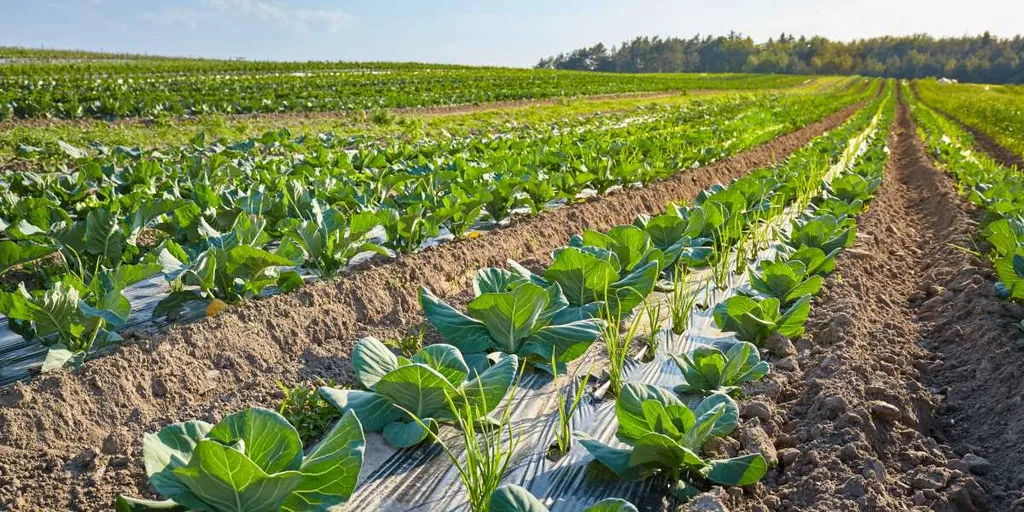
In the quest for sustainable agriculture, researchers have made a significant stride with a novel approach to plastic mulching that could reshape the industry. A recent study published in *npj Sustainable Agriculture* introduces a multi-layer agricultural mulch film (MLAMF) designed to address the persistent issue of plastic accumulation in soils. The research, led by Harshal J. Kansara of the Rochester Institute of Technology’s Golisano Institute for Sustainability, offers a promising alternative to conventional polyethylene mulches and current biodegradable options.
Plastic mulching is a widely adopted practice in agriculture, enhancing soil temperature, conserving moisture, and suppressing weeds. However, the environmental impact of non-biodegradable plastics has driven the search for sustainable alternatives. Biodegradable plastic mulch films (BMFs) have emerged as a solution, but their slow degradation rates often leave fragments in the soil for years. Kansara’s team set out to tackle this challenge with their innovative MLAMF design.
The MLAMF features poly(butylene adipate-co-terephthalate) (PBAT) outer layers and a thermoplastic starch (TPS) core. This structure aims to enhance biodegradation while maintaining the functional benefits of mulching. In laboratory composting, the MLAMF demonstrated a remarkable 64% mass loss over 365 days, significantly outperforming pure PBAT films, which degraded by only 12%. The results were even more striking in industrial composting conditions, where the MLAMF achieved 58% mass loss in just 14 days, compared to 33% for PBAT films.
“Our goal was to create a mulch film that not only performs well in the field but also breaks down efficiently to minimize environmental impact,” Kansara explained. “The results indicate that the TPS core accelerates mineralization, making the MLAMF a more sustainable option for farmers.”
The study also included a small-scale field trial with onions, which showed no statistically significant differences in yield or rot incidence between the MLAMF and commercial films. This suggests that the MLAMF can deliver the same agricultural benefits without the long-term environmental drawbacks.
The commercial implications of this research are substantial. Farmers could adopt the MLAMF without compromising crop performance while significantly reducing plastic pollution. As the agricultural sector faces increasing pressure to adopt sustainable practices, innovations like the MLAMF could become a cornerstone of eco-friendly farming.
“This research opens the door to a new generation of biodegradable mulches that could transform the way we approach soil management,” Kansara noted. “It’s a step towards a more sustainable future for agriculture.”
The study’s findings were published in *npj Sustainable Agriculture*, with Harshal J. Kansara of the Rochester Institute of Technology’s Golisano Institute for Sustainability leading the research. As the agricultural industry continues to evolve, such advancements could pave the way for broader adoption of sustainable practices, ultimately benefiting both farmers and the environment.