
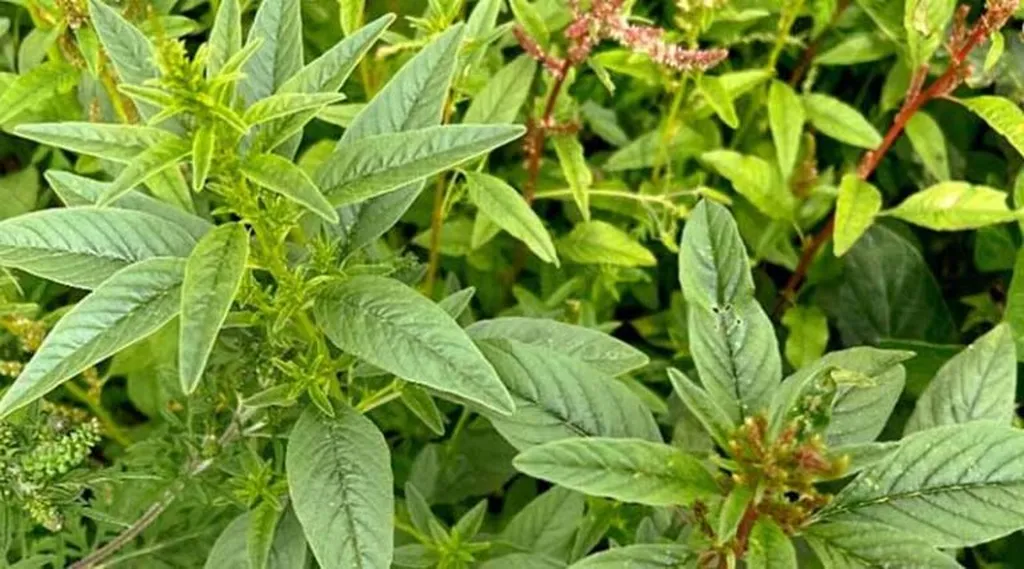
In the heart of Tamil Nadu, a pressing agricultural challenge is gaining global attention. Herbicide-resistant weeds, once a local concern, have now become a worldwide menace, threatening food security and environmental sustainability. A recent review published in *Discover Applied Sciences* sheds light on this escalating issue, offering insights into the evolutionary mechanisms driving herbicide resistance and proposing sustainable management strategies.
The study, led by A. Pon Arasan from the Department of Agronomy at Tamil Nadu Agricultural University, highlights over 530 documented cases of herbicide resistance worldwide. This alarming trend is primarily driven by the continuous application of herbicides with a single mode of action, which exerts selection pressure on weed populations. “Farmers are heavily relying on chemical weed management to boost crop productivity,” Arasan explains. “However, this over-reliance is backfiring, as weeds are evolving resistance and spreading through seeds, farm implements, and even pollen-mediated gene transfer.”
The commercial implications for the agriculture sector are significant. Herbicide resistance can lead to substantial yield losses and increased production costs, as farmers grapple with ineffective weed control measures. Moreover, the environmental impact is profound, with resistant weeds outcompeting crops for resources and disrupting ecosystems.
However, the study offers a glimmer of hope. Emerging technologies like drone-based spectral imaging, deep learning, and machine learning algorithms show promise in the early detection of resistant weed populations. “These technologies can help farmers identify and target resistant weeds more effectively,” Arasan notes, “delaying the evolution of resistance and preserving the efficacy of herbicides.”
Integrated Weed Management (IWM) and precision agriculture tools are also highlighted as sustainable pathways to combat herbicide resistance. By combining mechanical, cultural, biological, and chemical control methods, IWM can effectively manage weeds while minimizing the risk of resistance development.
The study calls for future research to prioritize alternative weed control practices, advanced breeding methods, and farmer education. As the agriculture sector faces increasing pressure to feed a growing population sustainably, understanding and mitigating herbicide resistance will be crucial.
In the words of Arasan, “The future of weed management lies in our ability to adapt and innovate. By embracing integrated strategies and leveraging cutting-edge technologies, we can safeguard our crops, our environment, and our food security.” As the global agriculture community grapples with the challenges posed by herbicide-resistant weeds, this study serves as a timely reminder of the power of proactive, sustainable management strategies.