
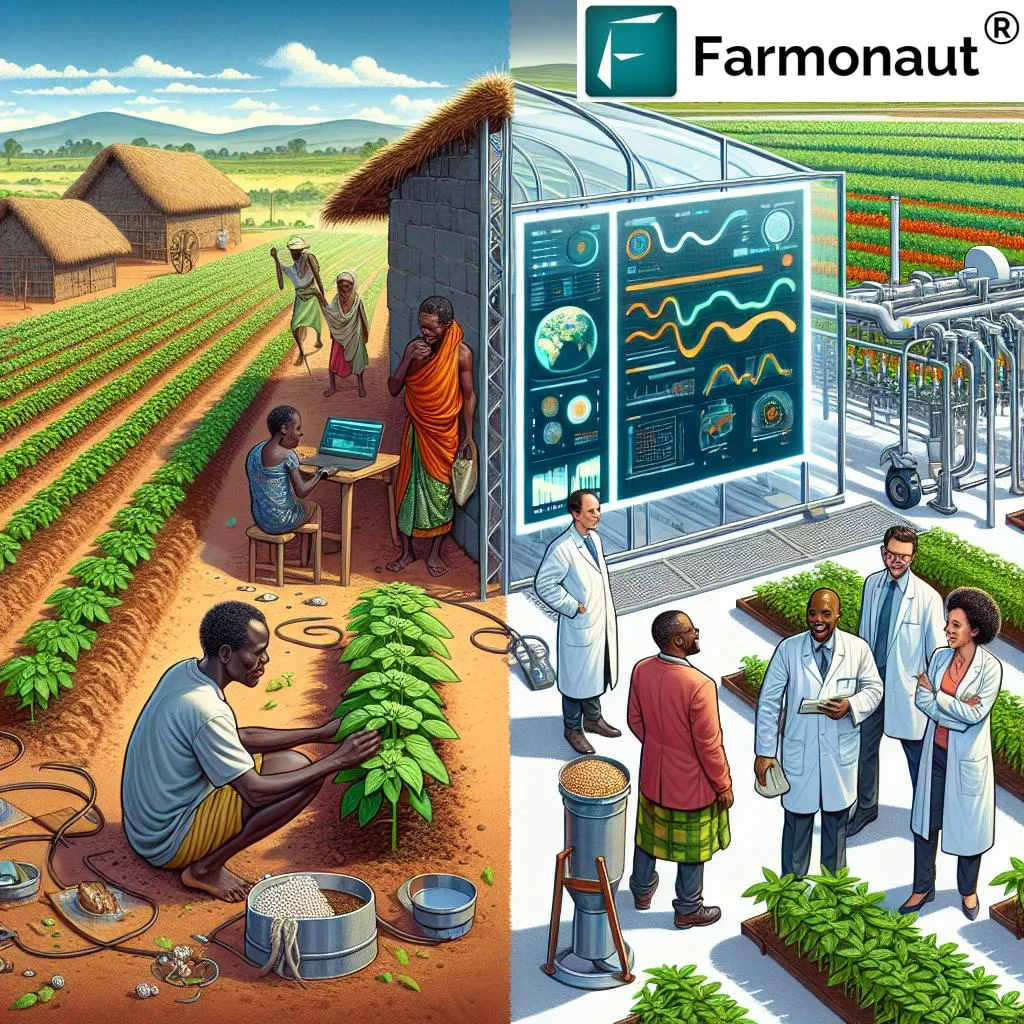
At a time when artificial intelligence (AI) is redefining industries across the globe, agriculture stands out as one of the sectors where its impact could be truly transformative. This was the shared sentiment at the AI for Agri round table forum held on 28 October 2025 and hosted by The Embassy of The Kingdom of The Netherlands- Nairobi, in partnership with Yielder. The dynamic session brought together researchers, agritech innovators, private sector representatives, and development partners to discuss the current status of AI adoption, data sharing, and the outlook for successful AI integration in the agriculture sector, particularly in the East African context.
The roundtable provided a space to explore how technology can improve productivity, efficiency, equity, and sustainability for smallholder farmers and other agribusiness stakeholders. Bart Pauwels, Agricultural Counselor at the Embassy of the Kingdom of the Netherlands in Nairobi, opened the discussion with a reality check. Even in the Netherlands, one of the world’s most technologically advanced agricultural economies, only about 15 percent of farmers have shown interest in adopting AI. This statistic underscores a critical truth: technology alone does not drive transformation; adoption and inclusion do. Pauwels emphasized the need to bridge Dutch expertise with Kenyan innovation to ensure that smallholder farmers are not left behind in the AI revolution. “By equipping them with tools that enhance yields, reduce waste, and improve decision-making, AI could become a genuine force for empowerment,” he noted.
The discussion centered not just on technology, but on people, partnerships, and the trust needed to make digital transformation in agriculture a shared success. Alexander Valeton of Yielder/farmbetter acknowledged the many challenges facing agriculture in Kenya and beyond, but underscored that AI holds immense potential to transform the sector. “For farmers to truly benefit, AI solutions must be simple, seamless, and built around their everyday realities,” he said.
Jasper Grosskurth, Managing Director at Dalberg Research, delivered a keynote address on the role of data in shaping the future of artificial intelligence in agriculture. He reminded participants that data is the lifeblood of AI. Without quality, well-structured, and shared data, even the most sophisticated algorithms remain ineffective. Grosskurth underscored the need to build robust and ethical data ecosystems that encourage collaboration while protecting privacy and ownership. He highlighted that Africa, and Kenya in particular, stands at a unique advantage. While data systems are still developing, the region has the opportunity to design smarter, more inclusive frameworks from the ground up, avoiding the fragmentation and duplication challenges seen elsewhere. He urged stakeholders to focus on data integrity, accessibility, and local context to ensure that AI solutions are not just innovative but also relevant and trustworthy for farmers.
Designing the right environment for AI to thrive in agriculture was at the heart of the first session, led by Almut van Casteren, Co-Founder of eProd, Solutions Limited. Drawing from over a decade of experience in digitalizing agricultural systems, Almut shared the importance of creating structures that enable technology to serve farmers effectively and sustainably. She cautioned against repeating the mistakes of earlier IT initiatives, which were often fragmented, had poor data quality, and lacked farmer trust. Instead, she emphasized the need for connected, integrated, and farmer-centered ecosystems. AI should simplify the work of farmers and cooperatives, not add new layers of complexity.
Participants reflected on what successful AI would look like in Kenya’s agriculture sector. Many agreed it would mean farmers having easy access to reliable, localized insights that help them make better production and marketing decisions. Others added that success should be measured not only by efficiency gains or profit margins but also by equity and inclusion, ensuring that smallholder farmers, youth, and women benefit from AI innovations. They underscored the need for strong partnerships between government, private sector, and research institutions, as well as continuous feedback loops so that AI tools evolve with real farmer experiences.
Data sharing remains one of the most debated and transformative questions in the journey toward smarter agriculture. Emmanuel Makau, Senior Regional Technology and Data Manager at Mercy Corps AgriFin, led a session inviting participants to unpack the complex issues of data ownership, privacy, and accountability. He reminded the room that while AI depends on data, it must never come at the expense of farmers’ rights. Makau highlighted that data sharing must be built on trust, explicit consent, and clear communication about how and why the data will be used. The discussion brought forward diverse perspectives. Some participants highlighted that data collaboration could unlock new efficiencies across value chains, helping farmers access credit, insurance, and advisory services. Others cautioned that poorly managed data systems could lead to duplication, exclusion, or misuse, stressing the need for clear rules and shared standards. From these exchanges, a guiding principle emerged: “open where possible, closed where needed.”
Participants were invited to imagine a world where AI in agriculture worked