
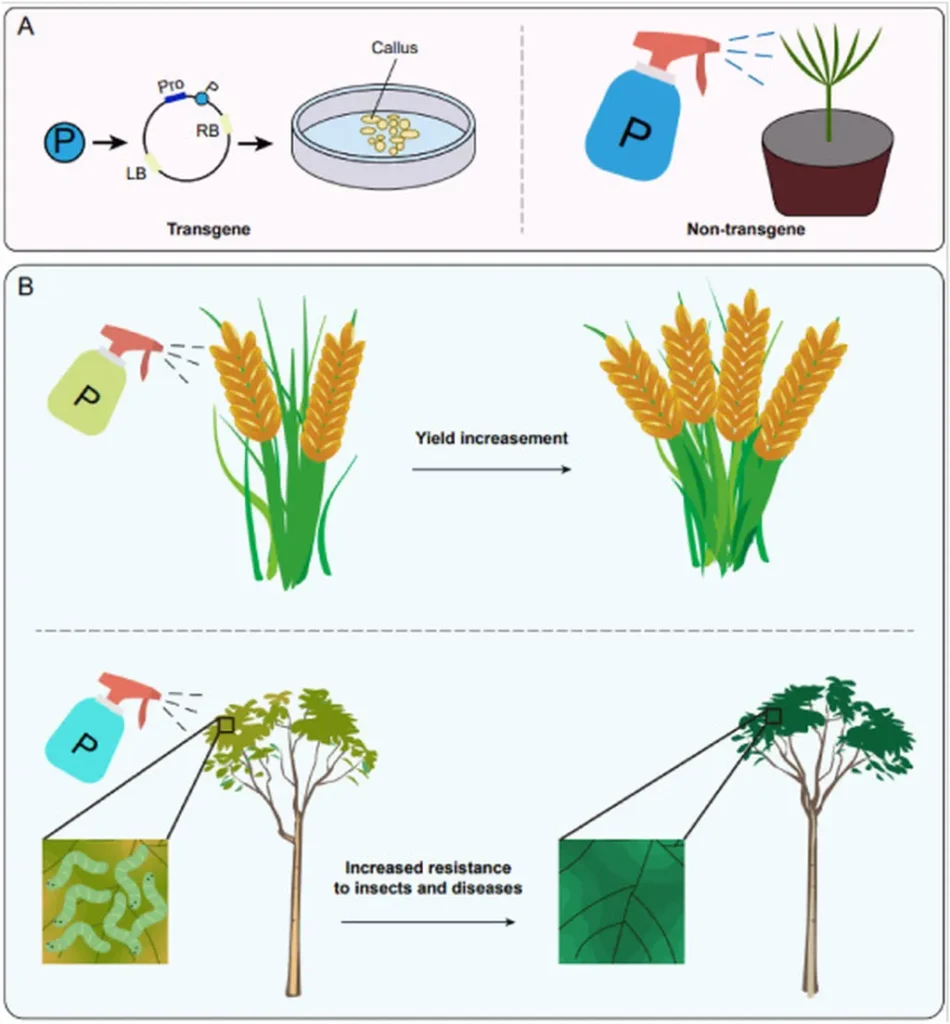
In the ever-evolving landscape of agricultural technology, a novel tool is emerging that could revolutionize how we manage plant diseases. Aptamers, short sequences of DNA or RNA, are stepping into the spotlight as a promising alternative to traditional antibodies, offering high affinity and specificity. A recent review published in *iScience* delves into the potential of aptamers to transform plant disease management, from biosensing to active modulation.
Aptamers have already made waves in food safety, environmental monitoring, and medical diagnostics, thanks to their robustness and versatility. Now, researchers are exploring their application in agriculture. “Aptamers not only serve as sensitive biosensors for detecting plant hormones and pathogens but also as active agents that interfere with pathogen effectors and modulate plant immune responses,” explains lead author Fuguo Liu, affiliated with Jia Sixie College of Agriculture at Weifang University of Science and Technology and the Shouguang Vegetable Hi-Tech Demonstration Park Management Service Center.
The review highlights the molecular mechanisms and key benefits of aptamers over traditional antibodies. Their high specificity and affinity make them ideal for detecting plant diseases with greater accuracy and efficiency. This could lead to earlier detection and more effective management of plant diseases, ultimately reducing crop losses and increasing yields.
One of the most exciting aspects of this research is the potential for aptamers to be used in active modulation of plant immune responses. This could open up new avenues for disease control, moving beyond traditional methods like pesticides and fungicides. “Aptamers hold considerable potential to transform plant disease control,” Liu notes, emphasizing the need for further advancements in aptamer screening and biosensor stability.
The integration of aptamers with emerging technologies such as microfluidics, CRISPR, and artificial intelligence could pave the way for intelligent, field-deployable diagnostics. This could have significant commercial impacts for the agriculture sector, enabling farmers to monitor and manage plant diseases more effectively and sustainably.
As the agricultural industry continues to seek innovative solutions to the challenges posed by plant diseases, aptamers offer a promising tool. The research published in *iScience* provides a comprehensive overview of the current state of aptamer technology and its potential applications in plant disease management. While challenges remain, the future looks bright for aptamers in agriculture, with the potential to shape the future of sustainable farming practices.