
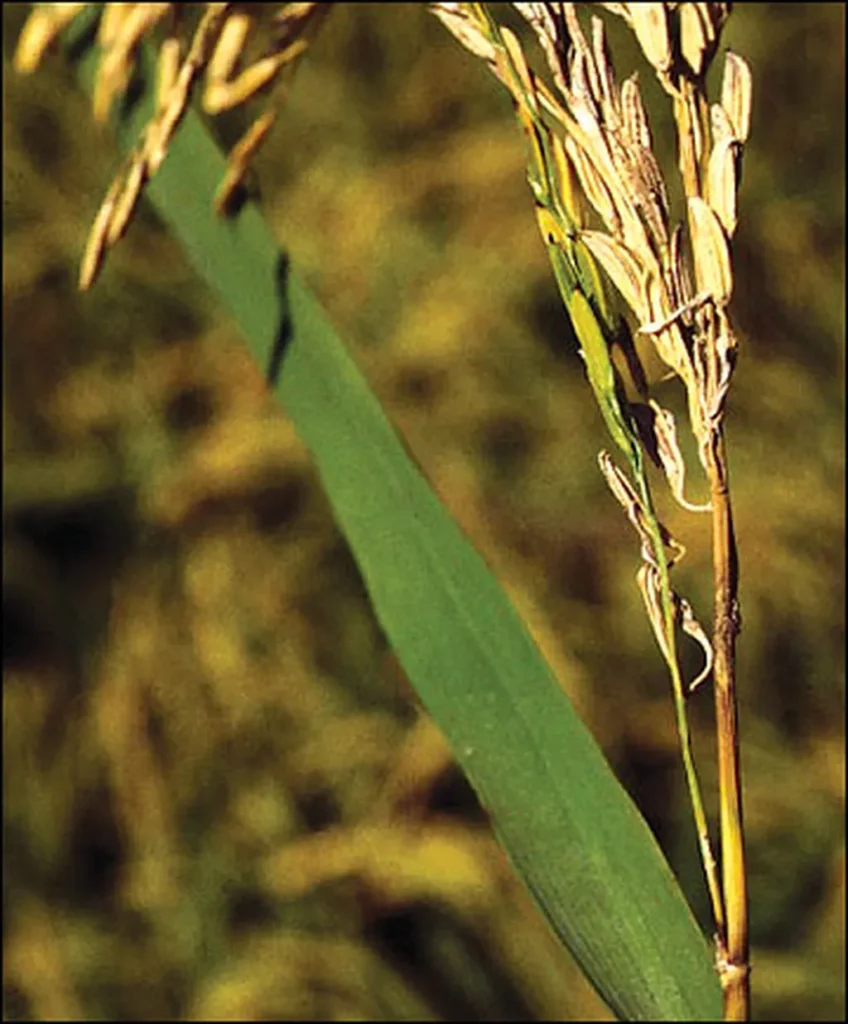
In the relentless battle against crop diseases, farmers and agronomists are continually seeking effective, sustainable solutions. A recent study published in *Frontiers in Agronomy* sheds light on the antifungal prowess of tetramycin, a polyene macrolide antibiotic, against *Magnaporthe oryzae*, the pathogen responsible for rice blast—a disease that devastates rice crops worldwide. The research, led by Huiye Jin, offers promising insights into the mechanism and potential applications of tetramycin in agricultural disease control.
Tetramycin has long been recognized for its broad-spectrum antimicrobial activity and low toxicity, making it a valuable tool in the agricultural arsenal. However, its specific effects on *Magnaporthe oryzae* have remained largely unexplored until now. The study reveals that tetramycin significantly inhibits the growth of *Magnaporthe oryzae* in a dose-dependent manner, with a median effective concentration (EC50) of 4.41 mg·L⁻¹. This finding underscores its potential as a potent fungicide for controlling rice blast, a disease that can cause substantial yield losses.
The research delves deeper into the underlying mechanisms of tetramycin’s antifungal activity. “We observed that tetramycin markedly suppressed appressorium formation and conidial germination, which are critical steps in the infection process of *Magnaporthe oryzae*,” explains the lead author. At high concentrations, tetramycin reduced spore germination to 0%, effectively halting the pathogen’s ability to infect rice plants. Scanning electron microscopy (SEM) and transmission electron microscopy (TEM) further revealed concentration-dependent morphological damage to hyphae, including contraction, deformation, fragmentation, extensive vacuolization, and cytoplasmic dilution.
One of the most intriguing findings is that tetramycin disrupts the cell membrane integrity of *Magnaporthe oryzae*. “Our cell membrane integrity tests demonstrated that tetramycin causes severe structural alterations, leading to cellular dysfunction,” notes the lead author. This disruption of the cell membrane is a key factor in tetramycin’s antifungal effectiveness, highlighting its potential as a targeted and efficient fungicide.
The commercial implications of this research are substantial. Rice blast is a significant threat to global rice production, and the development of effective, low-toxicity fungicides like tetramycin could revolutionize disease management strategies. Farmers could benefit from increased crop yields and reduced economic losses, while the agricultural industry could see a shift towards more sustainable and targeted disease control methods.
Looking ahead, the study suggests that further research is needed to fully elucidate the mechanism of tetramycin’s action and to conduct field trials to evaluate its practical application. Establishing systematic resistance monitoring programs will also be crucial to ensure the sustainable use of tetramycin and to prevent the development of resistant strains.
As the agricultural sector continues to grapple with the challenges posed by crop diseases, the findings of this study offer a glimmer of hope. Tetramycin’s potent antifungal activity and low toxicity make it a promising candidate for the development of new fungicides, potentially reshaping the future of agricultural disease control. With continued research and field trials, tetramycin could become a cornerstone in the fight against rice blast and other crop diseases, ultimately contributing to global food security and sustainable agriculture.