
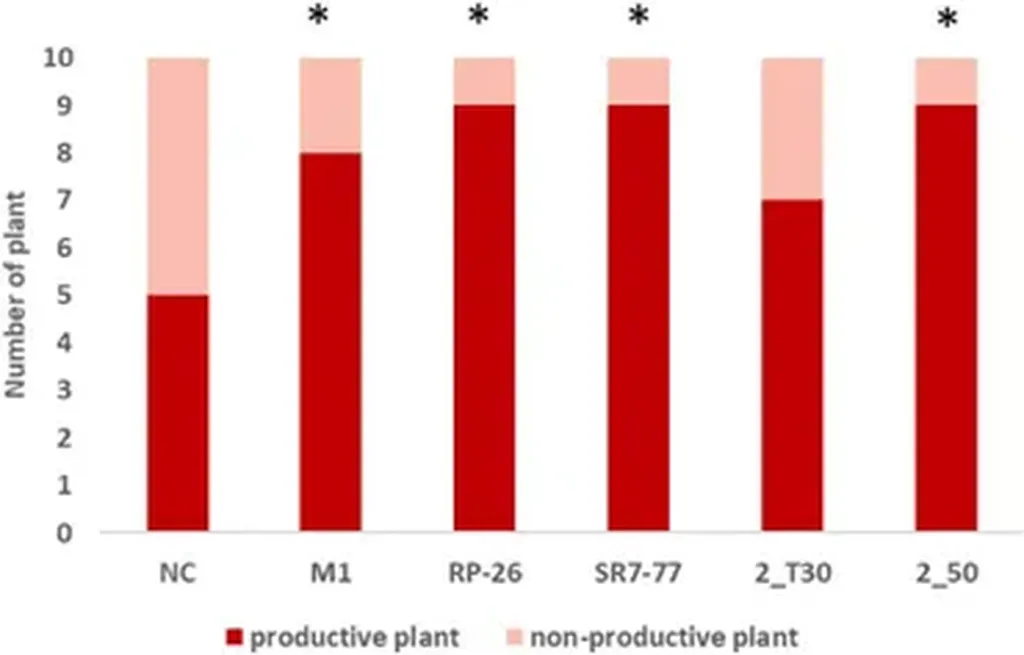
In the face of global water scarcity and the pressing need to reduce chemical inputs in agriculture, scientists are turning to nature’s own solutions: plant growth-promoting bacteria (PGPB). A recent study published in *Frontiers in Sustainable Food Systems* has shed light on the potential of two bacterial strains to enhance tomato crop productivity and nutritional quality under varying irrigation conditions. The research, led by Neveen Almalkawi from the Department of Molecular Ecology at the Hungarian University of Agriculture and Life Sciences, offers promising insights for the agriculture sector.
The study focused on two bacterial isolates, *Kocuria rhizophila* FSP120 and *Brevibacillus porteri* FSP5, derived from the rhizosphere of arid grasslands. These bacteria were tested on tomato plants under both full and deficit irrigation regimes, applied either as seed coatings or post-emergence inoculants. The results were striking. While seed coating treatments hindered germination and early seedling development, post-emergence application of FSP120 significantly boosted plant growth and advanced flowering by over a week.
“FSP120 inoculation increased marketable fruit yield by 16% under full irrigation and 11% under deficit conditions compared to untreated controls,” Almalkawi explained. This is a substantial improvement, especially considering the current challenges faced by farmers in water-scarce regions. The study also found that FSP120 enhanced lycopene and total carotenoid concentrations by 23–29%, improving the nutritional quality of the tomatoes without affecting tocopherol and vitamin C contents.
Metagenomic analysis confirmed that FSP120 successfully colonized the rhizosphere, indicating its potential to enhance plant resilience. In contrast, FSP5 showed limited colonization and lower agronomic benefits, highlighting the importance of selecting effective bacterial strains and optimizing delivery methods.
The commercial implications of this research are significant. As the agriculture sector seeks sustainable solutions to improve crop yields and nutritional quality, PGPB-based bioinoculants like FSP120 could play a pivotal role. By reducing the reliance on synthetic fertilizers and enhancing water use efficiency, these bioinoculants offer both economic and environmental benefits.
“This research underscores the potential of PGPB to revolutionize sustainable agriculture,” Almalkawi noted. “The key lies in identifying the right strains and applying them effectively to maximize their benefits.”
As the world grapples with the challenges of climate change and resource scarcity, innovations like these are crucial. The study not only advances our understanding of PGPB but also paves the way for future developments in sustainable crop production. With further research and commercialization, bioinoculants could become a cornerstone of modern agriculture, helping to feed a growing population while protecting the planet.