
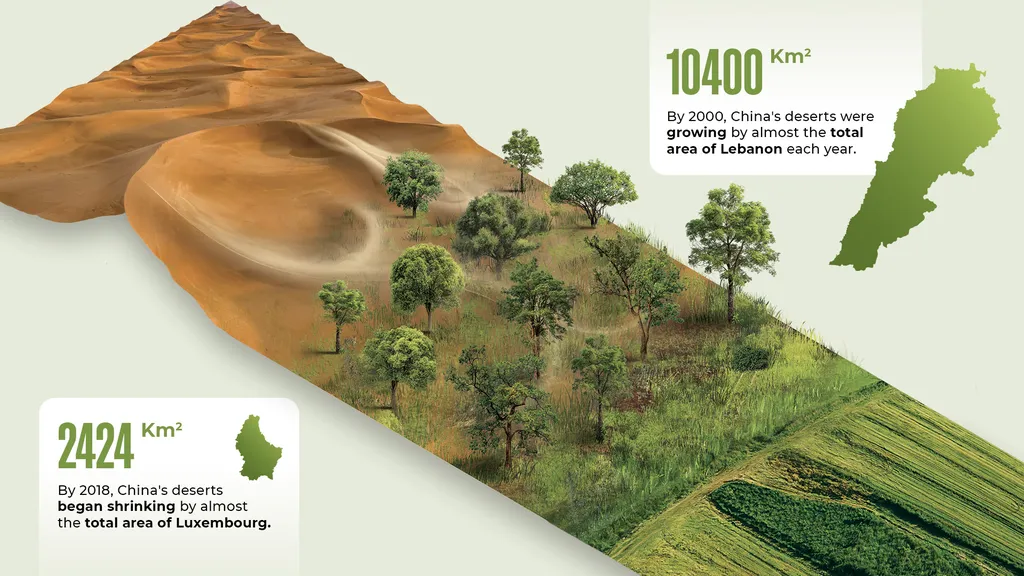
In the vast, climate-sensitive loess hilly-gully region (LHGR) of China, a silent battle against wind erosion is being waged, and new research is shedding light on the intricate dynamics of this ecological challenge. A study published in *Ecosystem Health and Sustainability* and led by Huilin Zhang of Shanxi University’s Institute of Loess Plateau, has uncovered critical insights into the spatiotemporal dynamics of wind erosion prevention services (WEPS), with significant implications for agriculture and regional development.
Wind erosion is a formidable foe in China’s arid and semiarid zones, contributing to soil degradation and desertification. The study, which quantified WEPS from 2000 to 2020, revealed a marked increase in the capacity for wind erosion prevention. “The persistently high-value zones are concentrated in northwestern arid regions, such as the Mu Us Sandy Land,” Zhang explained. This improvement can be attributed to increased surface roughness, primarily driven by fraction vegetation coverage (FVC), which has been amplified by China’s ecological restoration policies.
The research also identified 2,783 sand transport paths, with spring winds dominating (57.96%) and carrying dust eastward towards densely populated areas and even transboundary regions like Japan. This cross-regional effect highlights the interconnectedness of ecosystems and the far-reaching benefits of WEPS. Beneficiary areas exhibited a concentric spatial pattern, covering 62.5% of China’s landmass, underscoring the vast scale of wind erosion’s impact and the potential for widespread benefits from effective prevention strategies.
For the agriculture sector, these findings are particularly significant. Wind erosion can lead to significant crop losses and reduced soil productivity. By understanding the dynamics of WEPS, farmers and policymakers can better implement strategies to protect agricultural lands. “The growing population, gross domestic product, and ecosystem service value highlight the dual role of WEPS in safeguarding human health and supporting sustainable development,” Zhang noted.
The study also emphasized the necessity of multi-factor governance, with synergistic interactions between FVC, precipitation (PRE), and other drivers. This holistic approach is crucial for developing effective strategies to combat wind erosion and support sustainable agriculture.
The research provides a practical framework that integrates physical flow and beneficiary mapping, offering valuable insights for optimizing payment for ecosystem services. This can enhance cross-regional ecological benefits and support the development of more resilient agricultural systems.
As we look to the future, this research underscores the importance of integrated, multi-factor approaches to environmental challenges. By understanding the complex dynamics of wind erosion and the benefits of prevention services, we can better protect our agricultural lands and support sustainable development. The findings also highlight the need for continued investment in ecological restoration and the development of innovative strategies to combat soil degradation.
In the words of Huilin Zhang, “Our framework integrating physical flow and beneficiary mapping provides practical insights for optimizing payment for ecosystem service to enhance cross-regional ecological benefits.” This research not only advances our understanding of wind erosion dynamics but also paves the way for more effective and sustainable agricultural practices in the face of climate change.