
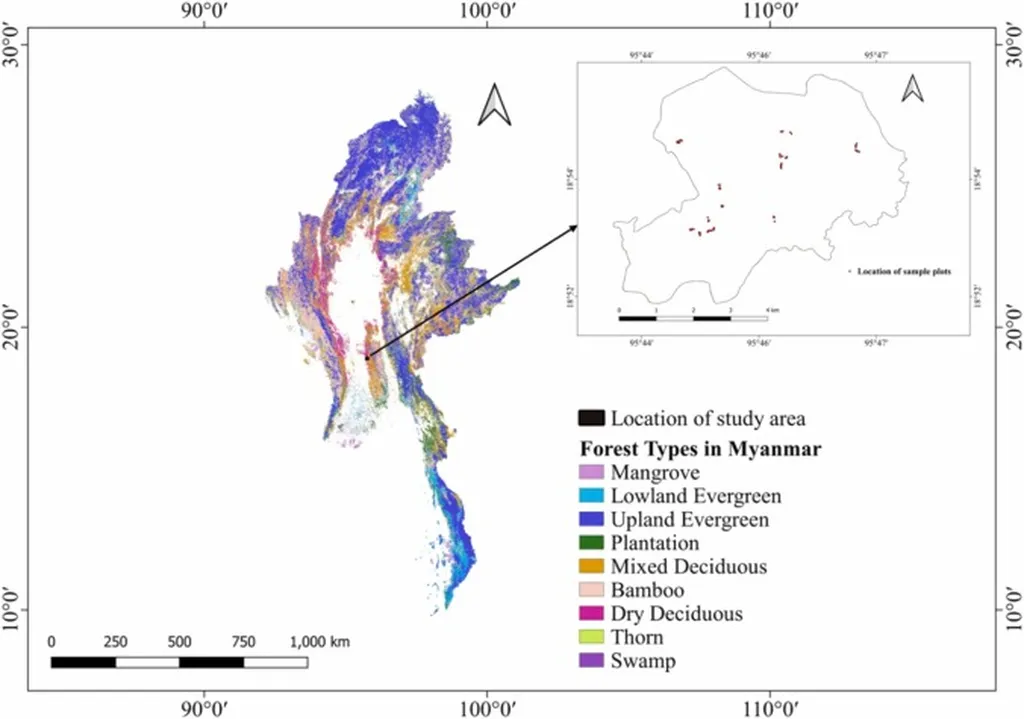
In the heart of Myanmar’s West Bago Mountains, a groundbreaking study is transforming how we monitor and manage tropical hardwood plantations, with significant implications for the global agriculture sector. Researchers have successfully integrated remote sensing data with deep learning models to detect changes in aboveground carbon (AGC) storage in young teak plantations, offering a scalable and efficient alternative to traditional field-based methods.
The study, led by Kyaw Win from the Department of Global Agricultural Sciences at The University of Tokyo, focused on young teak plantations in Pauk Kaung Township from 2019 to 2023. By combining optical data from Sentinel-2 and radar data from ALOS PALSAR-2, the team employed a ResNet-18 deep learning model to predict AGC changes with remarkable accuracy. “The integration of these multi-source remote sensing data with advanced machine learning techniques has allowed us to achieve a predictive performance of R² = 0.76, which is a significant improvement over previous methods,” Win explained.
The results were striking: 89% of the study area showed an increase in AGC over the five-year period, while only 11% experienced a decrease. This level of detailed, large-scale monitoring is a game-changer for the agriculture and forestry sectors, enabling more precise carbon accounting and better-informed decision-making for sustainable forest management.
The commercial impacts of this research are substantial. Teak is a highly valuable tropical hardwood, and Myanmar is one of its primary growing regions. Accurate monitoring of AGC storage not only supports climate mitigation efforts but also enhances the economic value of teak plantations. Farmers and forest managers can use this technology to optimize their practices, ensuring healthier, more productive plantations that command higher prices in the global market.
Moreover, the study’s findings are particularly relevant for REDD+ (Reducing Emissions from Deforestation and Forest Degradation) initiatives, which aim to incentivize developing countries to protect their forests. “This technology provides a robust tool for verifying carbon sequestration, which is crucial for the success of REDD+ programs and other climate mitigation policies,” Win noted.
The integration of remote sensing and deep learning techniques represents a significant leap forward in the field of forestry and agriculture. As these technologies continue to evolve, they hold the potential to revolutionize how we manage and monitor natural resources on a global scale. The study, published in the journal Geomatica, underscores the importance of embracing innovative solutions to address the pressing challenges of climate change and sustainable resource management.
This research not only highlights the potential of deep learning in agriculture but also sets the stage for future developments in the field. As remote sensing technologies become more sophisticated and machine learning models more powerful, we can expect even greater advancements in our ability to monitor and manage natural resources sustainably. The work of Kyaw Win and his team is a testament to the transformative power of technology in shaping a more sustainable future for the agriculture sector.