
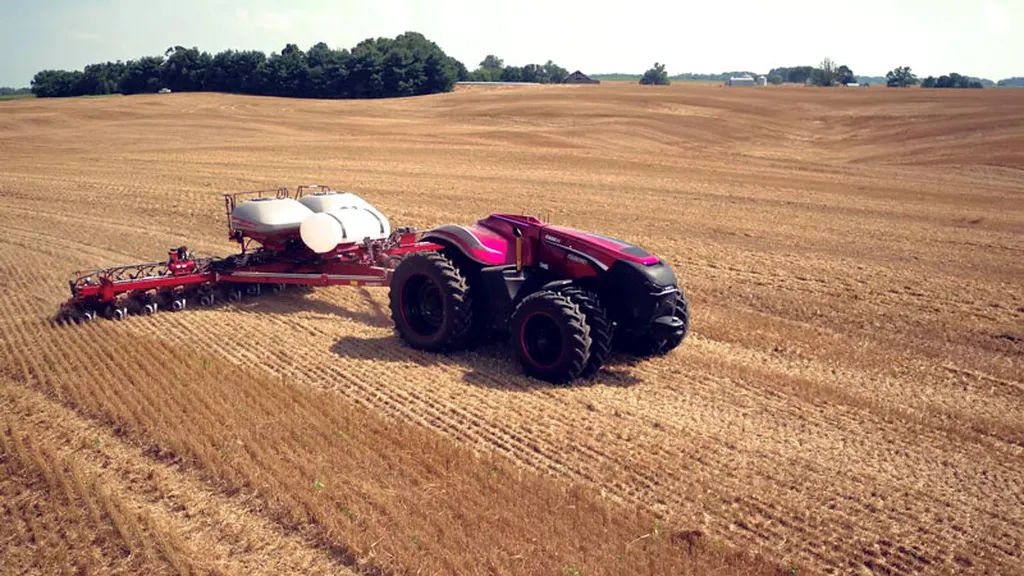
In the heart of the Dutch town of Wieringerwerf, a quiet revolution is taking place in the fields of De GroenCompagnie. The contracting company, active in agriculture, green maintenance, and infrastructure, has been testing a New Holland tractor equipped with an iQuus system that enables the tractor to operate autonomously. This is not science fiction; it’s a glimpse into the future of farming, where technology is being harnessed to address labour shortages and increase efficiency.
The autonomous tractor, fitted with the iQuus system, is not a specialist vehicle with limitations in deployability. Instead, it remains a conventional tractor, a fact that appeals to De GroenCompagnie. The company operates five planting machines, primarily for bulb planting in the IJsselmeer polders and partly in the southwest. The process involves a series of operations: rotavating, ploughing, and then planting, all done in a coordinated sequence. The autonomous tractor is tasked with the first operation, rotavating the grassland ahead of the plough.
Djurre Kool, a driver at De GroenCompagnie, has taken on an additional task: monitoring the autonomous tractor as it works. The initial learning curve was steep, but Kool found the process manageable, requiring some interest and experience with electronics and GPS systems. The tractor is driven around the field once to record the boundaries, and then parameters such as working width and headland turning method are set. The autonomous tractor does not disrupt the existing workflow but integrates seamlessly, working steadily without breaks.
However, the journey towards full autonomy is not without its challenges. Kool identified areas for improvement, such as sensors to monitor the quality of the operation and the ability to vary driving speed based on soil conditions. The GPS system’s precision could also be enhanced, particularly for tasks requiring centimetre accuracy. The tractor’s turning on the headland is relatively slow, and the system could benefit from smoother re-engagement of the cultivator after stops.
Despite these challenges, the autonomous tractor has shown promise. It operates steadily, building up a lead during breaks and maintaining the sequence of operations. Ramon Veldboer, co-owner and director of De GroenCompagnie, sees potential in the technology, particularly for tasks that are relatively straightforward and can benefit from autonomy. The cost savings come from reducing the need for drivers, but the technology also offers a solution for staff shortages during peak periods.
The implications of this technology are significant. Autonomous tractors could address labour shortages in the agricultural sector, a pressing issue as the industry grapples with an aging workforce and fewer young people entering the field. The technology could also increase efficiency, allowing operations to continue steadily without breaks. However, the success of autonomous tractors will depend on the availability of personnel who have the interest and skills to operate them.
The testing at De GroenCompagnie is a step towards a future where autonomy plays a significant role in agriculture. It is a future that is not without challenges, but one that offers the promise of increased efficiency and a solution to labour shortages. As the technology continues to evolve, it will be interesting to see how it shapes the future of farming.