
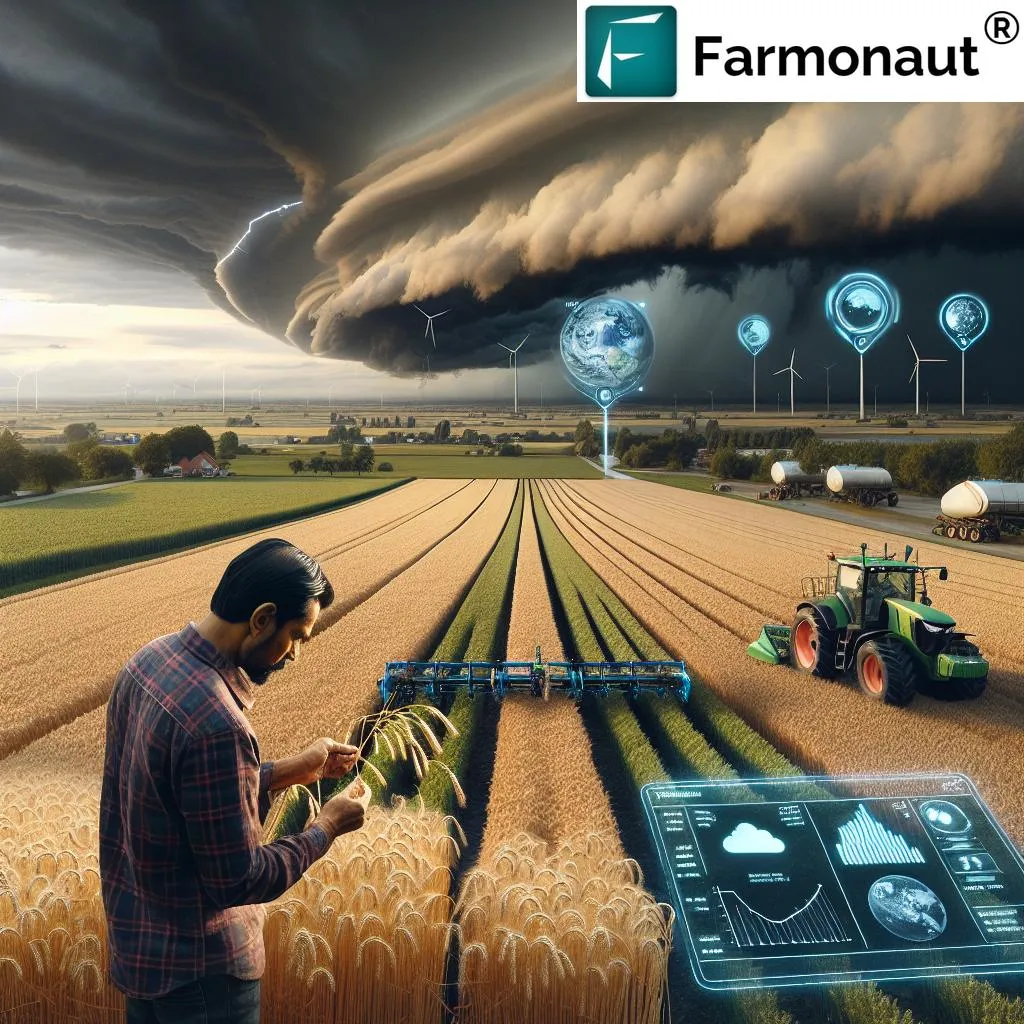
In the heart of Germany’s agricultural landscape, a quiet revolution is struggling to take root. Variable-rate nitrogen fertilization (VRNF) technology, which promises to tailor nitrogen application to the specific needs of different areas within a field, is gaining traction as a tool to combat agricultural nitrogen pollution. Yet, despite its potential, adoption among farmers remains low. A recent study published in *Environmental Research Communications* sheds light on the barriers hindering this technology’s uptake, offering insights that could reshape the future of sustainable agriculture.
The study, led by Marius Michels of the Farm Management Group at the Georg-August-University of Goettingen, applied the Capability, Opportunity, Motivation-Behavior (COM-B) framework to identify the key obstacles preventing German farmers from adopting map-based VRNF. The research, conducted through a survey from December 2024 to January 2025, revealed significant differences between adopters and non-adopters in terms of technology access, technical skills, and perceptions of economic profitability.
“Environmental awareness alone is not enough to drive adoption,” Michels noted. The study found that both adopters and non-adopters equally recognized the environmental benefits of map-based VRNF, indicating that other factors are at play. “We need to look beyond environmental consciousness and address the practical barriers that farmers face,” Michels added.
The COM-B framework, which categorizes barriers into capability, opportunity, and motivation, provided a structured approach to understanding these challenges. Capability-focused barriers include the technical skills required to operate VRNF technology effectively. Opportunity-focused barriers encompass the availability of infrastructure and services necessary for implementation. Motivation-focused barriers revolve around the perceived economic profitability of the technology.
The study’s findings suggest that targeted interventions could significantly boost VRNF adoption. For instance, education and training programs could enhance farmers’ technical capabilities, while improved infrastructure and service provision could address opportunity-related barriers. Additionally, strategies that emphasize the economic benefits of VRNF could motivate more farmers to adopt the technology.
The commercial impacts of increased VRNF adoption could be substantial. Precision agriculture technologies like VRNF not only reduce nitrogen pollution but also optimize fertilizer use, potentially lowering input costs and increasing crop yields. This could translate into higher profitability for farmers and a more sustainable agricultural sector overall.
As the agricultural industry grapples with the challenges of sustainability and efficiency, research like Michels’ offers valuable insights into the barriers hindering the adoption of innovative technologies. By addressing these barriers, the industry can move closer to achieving its environmental and economic goals.
The study, published in *Environmental Research Communications* and led by Marius Michels of the Farm Management Group at the Georg-August-University of Goettingen, provides a roadmap for fostering the adoption of map-based VRNF technology. As the agricultural sector continues to evolve, such research will be crucial in shaping the future of sustainable farming practices.