
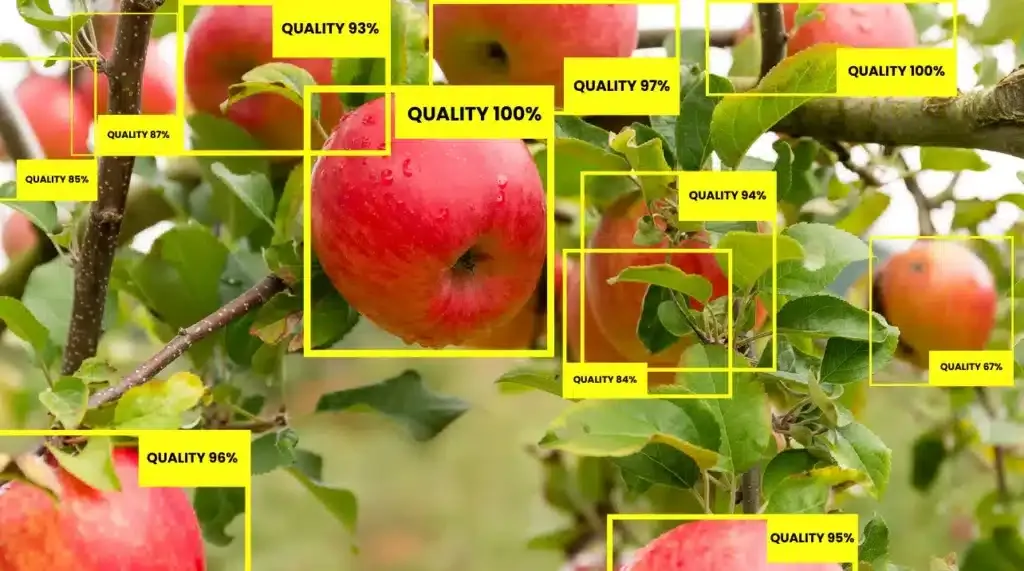
In the ever-evolving landscape of agricultural technology, a groundbreaking review published in *智慧农业* is set to redefine how we assess fruit quality. Led by ZHANG Zishen and colleagues from Xinjiang Agricultural University and the Hebei Academy of Agricultural and Forestry Sciences, the research delves into the transformative potential of hyperspectral imaging (HSI) technology. This advanced sensing technique, which captures both high-resolution spatial data and continuous spectral information, is poised to revolutionize the way we evaluate fruit quality—non-destructively and in real time.
The study highlights the remarkable adaptability of HSI across various scenarios, from assessing external appearance and surface defects to measuring internal quality attributes like sugar content, acidity, and moisture. “HSI has significantly enhanced the accuracy of fruit quality assessments,” notes lead author ZHANG Zishen. “Its ability to provide detailed spectral information allows for precise and rapid evaluations, which are crucial for quality control and supply chain management.”
One of the most compelling aspects of this research is its focus on disease detection, variety classification, and origin traceability. These capabilities not only streamline the quality control process but also offer substantial commercial benefits. For instance, the ability to trace the origin of fruits can enhance transparency and trust in the supply chain, a critical factor for both producers and consumers. “By integrating HSI technology, we can ensure that fruits meet the highest quality standards, thereby increasing consumer satisfaction and market competitiveness,” adds CHENG Hong, a co-author of the study.
The review also identifies key research areas and emerging trends through bibliometric analysis, providing a roadmap for future advancements. The authors emphasize the need for optimizing spectral dimensionality reduction techniques to improve model efficiency and accuracy. They also advocate for the exploration of transfer learning and incremental learning approaches to enhance model generalization across different scenarios and fruit types.
Moreover, the development of lightweight system hardware and the strengthening of edge processing capabilities are highlighted as essential steps for practical deployment. “Integrating lightweight deep learning networks and acceleration modules will support real-time inference, making HSI technology more accessible and efficient for real-world applications,” explains GENG Wenjuan, another co-author.
The study also underscores the importance of establishing standardized systems and protocols to promote the sharing of research findings and ensure broader application across different industries. The incorporation of multimodal technologies, such as thermal imaging, gas sensors, and visual data, is suggested to improve the accuracy and robustness of detection platforms. This integration will allow for more precise and comprehensive assessments of fruit quality, further advancing the digitalization and intelligent application of HSI technology.
As the agricultural sector continues to embrace technological innovations, this research offers a glimpse into the future of fruit quality assessment. By leveraging the power of HSI, farmers, producers, and consumers alike can benefit from enhanced quality control, improved supply chain management, and increased market competitiveness. The insights provided by this study are not only thought-provoking but also pave the way for a more intelligent and sustainable agricultural future.
Published in *智慧农业*, this comprehensive review led by ZHANG Zishen and colleagues from Xinjiang Agricultural University and the Hebei Academy of Agricultural and Forestry Sciences marks a significant step forward in the application of hyperspectral imaging technology. As the agricultural industry continues to evolve, the integration of HSI technology promises to shape the future of fruit quality assessment, driving innovation and efficiency across the sector.