
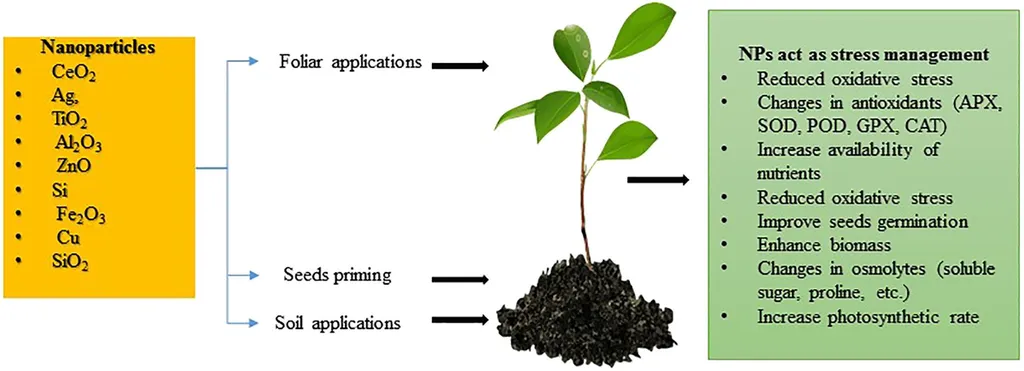
In a world grappling with energy demands, environmental concerns, and industrial inefficiencies, a beacon of hope shines from the nanoscale. Researchers, led by J. Ajayan from SR University in Warangal, Telangana, India, have published a comprehensive review in *Materials Today Sustainability*, shedding light on the transformative potential of inorganic nanocatalysts. These tiny powerhouses, with their massive surface-area-to-volume ratios and unique properties, are revolutionizing sectors from energy to healthcare, with significant implications for agriculture.
Inorganic nanocatalysts are not just small; they’re mighty. Their enhanced catalytic activity makes them powerful tools for biodiesel production, a boon for the agriculture sector. Imagine farmers turning crop waste into valuable energy resources, reducing waste, and boosting income. “The potential for nanocatalysts in biodiesel production is immense,” says Ajayan. “They can enhance the efficiency of the process, making it more viable and sustainable for farmers.”
But the benefits don’t stop at energy. These nanocatalysts are also playing a pivotal role in environmental remediation and industrial processes. They’re cleaning up our act, purifying gases, treating wastewater, and making industries more efficient. In agriculture, this could mean cleaner water for irrigation, reduced pollution, and healthier crops.
The review also delves into the use of nanocatalysts in healthcare, a sector closely intertwined with agriculture. From drug delivery to disease diagnosis, nanocatalysts are opening up new avenues. They could help in developing more effective pesticides and fertilizers, reducing the environmental impact of agriculture.
However, the journey isn’t without challenges. Stability, scalability, and life-cycle sustainability are hurdles that need to be overcome. But as Ajayan points out, “Every challenge is an opportunity in disguise. Addressing these issues can lead to the development of next-generation nanocatalytic systems that are sustainable, highly efficient, and purposefully engineered for real-world impact.”
The research offers a forward-looking perspective, paving the way for innovations that could reshape the agriculture sector and beyond. It’s a testament to the power of nanotechnology, a field that’s not just about shrinking sizes but expanding possibilities. As we stand on the brink of a nanotechnology revolution, one thing is clear: the future is small, and it’s mighty.