
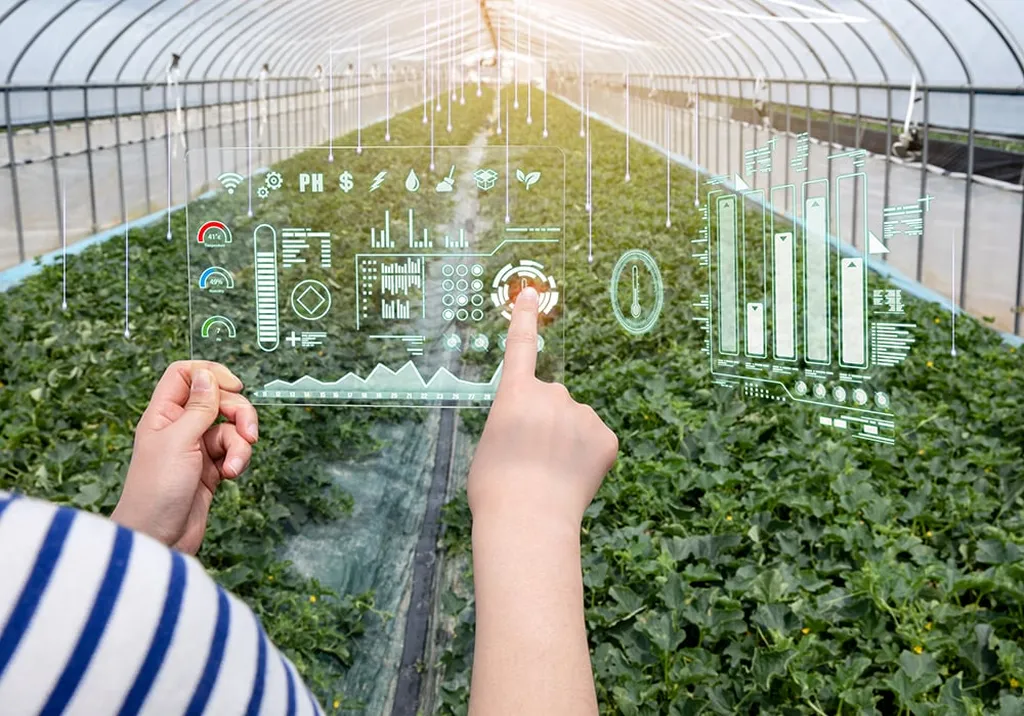
In the heart of China’s agricultural innovation, a groundbreaking approach is emerging that promises to revolutionize how farmers cultivate crops. Opto-intelligent agriculture, a cutting-edge paradigm that marries optical sensing with intelligent decision-making, is transforming traditional farming practices into precision-driven, data-informed processes. This shift could significantly enhance efficiency, productivity, and sustainability in the agriculture sector.
At the core of this innovation lies the dual role of light: as an information carrier and a regulatory factor. Optical sensors, such as hyperspectral imagers and fluorescence detectors, enable non-destructive monitoring of crop health. These sensors capture subtle spectral variations, providing early warnings of stress, pests, and diseases. “This technology allows us to see what was previously invisible,” explains lead author CHEN Chengcheng, a researcher at Shenyang Aerospace University. “By understanding the light that plants emit and reflect, we can diagnose issues before they become critical.”
The integration of optical sensing with intelligent decision systems creates a closed-loop framework of “perception-decision-execution.” This system not only enhances water and fertilizer use efficiency but also supports quality-oriented production. For instance, dynamic light-spectrum LED systems and intelligent variable-spray drones translate data-driven decisions into precise actions, ensuring optimal crop growth conditions.
The commercial implications of this research are vast. Farmers can expect to see improved yields, reduced resource waste, and enhanced product quality. “This technology is not just about increasing production; it’s about making agriculture more sustainable and resilient,” says YU Helong, a co-author from Jilin Agricultural University. “By optimizing resource use, we can reduce environmental impact while boosting profitability.”
However, the journey from laboratory to field is not without challenges. Unstable signals in complex environments, high equipment costs, and a shortage of interdisciplinary talent are some of the hurdles that need to be overcome. To address these issues, the researchers advocate for a comprehensive advancement framework that integrates technology, equipment, talent, and policy.
Looking ahead, the integration of opto-intelligent agriculture with emerging technologies like 6G communication and digital twin systems could further enhance its capabilities. This synergy could pave the way for a new era of agricultural innovation, ensuring food security and ecological sustainability.
Published in the journal ‘智慧农业’, this research represents a significant step forward in the field of agritech. As the agriculture sector continues to evolve, the insights and technologies developed by CHEN Chengcheng, WU Jiaping, and YU Helong could play a pivotal role in shaping the future of farming. Their work at the College of Computer Science, Shenyang Aerospace University, and the College of Information Technology, Jilin Agricultural University, underscores the potential of opto-intelligent agriculture to transform the industry.