
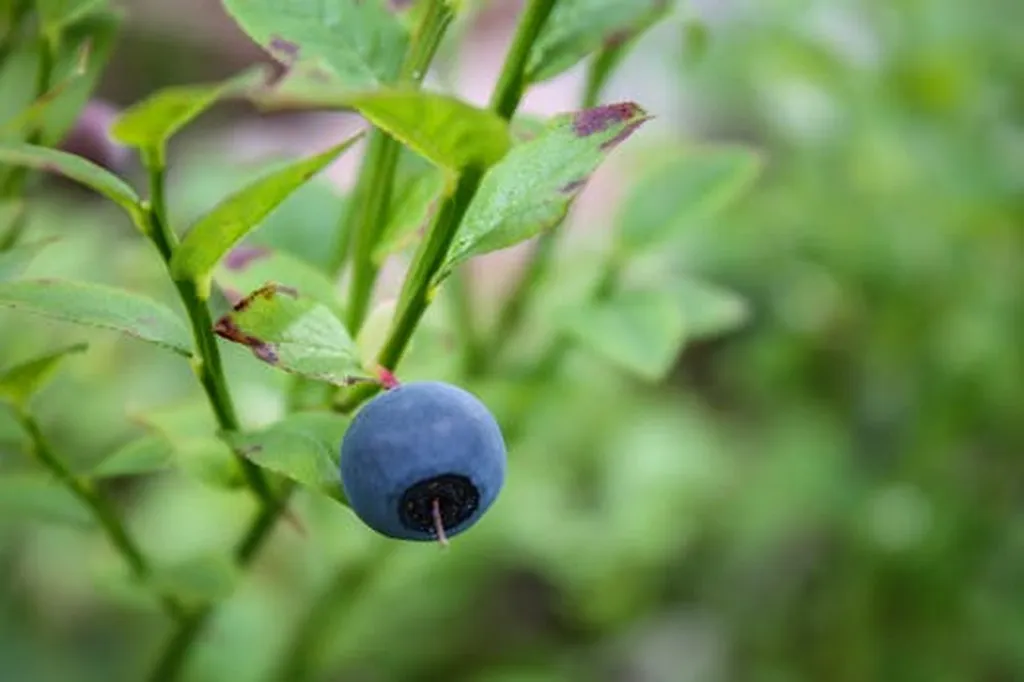
In the ever-evolving landscape of precision agriculture, a groundbreaking study published in *Sensors* is set to revolutionize how farmers manage their crops. Researchers, led by Connor C. Mullins from the Department of Engineering at Dalhousie University, have developed an automated image annotation pipeline that promises to streamline data-driven crop management. The study focuses on wild blueberry fields, but its implications stretch far beyond this single crop.
The challenge at hand is clear: manual image annotation is a labor-intensive and time-consuming process, making it impractical for large-scale agricultural systems. Tasks such as detecting berry ripeness, identifying plant diseases, monitoring growth stages, and detecting weeds rely heavily on annotated datasets. Mullins and his team have tackled this issue head-on by integrating zero-shot detection models from two frameworks—Grounding DINO and YOLO-World—with the Segment Anything Model version 2 (SAM2).
The results are impressive. Grounding DINO consistently outperformed YOLO-World, with its Swin-T achieving mean Intersection over Union (mIoU) scores of 0.694 ± 0.175 for fescue grass and 0.905 ± 0.114 for red leaf disease when paired with SAM2-Large. For ripe wild blueberry detection, Swin-B with SAM2-Small achieved the highest performance (mIoU of 0.738 ± 0.189). For wild blueberry buds, Swin-B with SAM2-Large yielded the highest performance (0.751 ± 0.154).
Processing times were also evaluated, with SAM2-Tiny, Small, and Base demonstrating the shortest durations when paired with Swin-T (0.30–0.33 s) and Swin-B (0.35–0.38 s). SAM2-Large, despite higher segmentation accuracy, had significantly longer processing times, making it less practical for real-time applications.
“This research offers a scalable solution for rapid, accurate annotation of agricultural images, improving targeted crop management,” Mullins explained. The implications for the agriculture sector are profound. By automating the annotation process, farmers can make more informed decisions, leading to better crop yields and more efficient use of resources.
The study also highlights the potential for future research to optimize these models for different cropping systems, such as orchard-based agriculture, row crops, and greenhouse farming. Expanding their application to diverse crops will further validate their generalizability and broaden their impact.
As the agriculture sector continues to embrace technology, this research paves the way for more efficient and data-driven farming practices. The integration of advanced models like Grounding DINO and SAM2 into agricultural workflows could very well be the next big leap in precision agriculture, shaping the future of how we grow and manage our crops.