
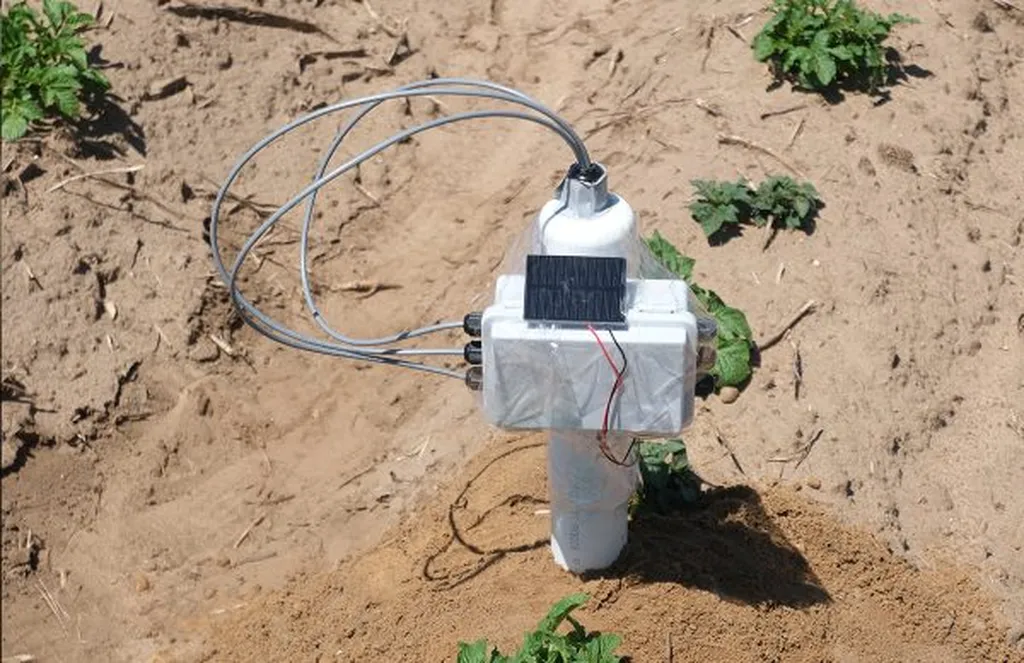
In the heart of Indonesia, researchers are leveraging the power of artificial intelligence to revolutionize soil fertility detection, a critical factor in boosting agricultural productivity. A recent study published in the *JOIV: International Journal on Informatics Visualization* introduces a novel approach to assess paddy soil fertility using Convolutional Neural Networks (CNN), potentially transforming how farmers and agronomists manage crop yields.
The research, led by Muh. Syahlan Natsir from Hasanuddin University, focuses on detecting soil fertility based on texture, pH levels, and production amounts. Paddy soil is categorized into three levels: very fertile, fertile, and reasonably fertile. The study utilized 558 paddy soil datasets, employing various models including CNN, Resnet, Enet, and VGG19. The CNN model, optimized with Adam and a learning rate of 0.001, achieved the highest training accuracy of 0.9687 and validation accuracy of 0.8333, demonstrating its potential to accurately identify soil fertility levels.
“This model can significantly enhance our ability to monitor and analyze soil fertility, which is crucial for increasing rice yields,” Natsir explained. The implications for the agriculture sector are substantial. By accurately detecting soil fertility, farmers can make informed decisions about crop management, leading to improved productivity and sustainability.
The study suggests that integrating additional soil parameters, such as nitrogen, phosphorus, potassium levels, and organic matter content, could further improve classification accuracy. Moreover, the use of multimodal data sources like remote sensing and hyperspectral imaging could enhance the model’s robustness in diverse environmental conditions.
“This research opens up new possibilities for precision agriculture,” Natsir added. “By optimizing deep learning architectures and AI techniques, we can provide better tools for agricultural stakeholders, ultimately supporting more efficient and sustainable farming practices.”
The commercial impact of this research is profound. Accurate soil fertility detection can lead to targeted interventions, reducing the need for excessive fertilizers and pesticides, and promoting environmentally friendly farming practices. As the agriculture sector continues to evolve, the integration of AI and machine learning technologies will play a pivotal role in shaping the future of farming.
In the words of Natsir, “The potential for AI in agriculture is immense. This study is just the beginning, and we are excited to see how these technologies will continue to transform the industry.”
As the world grapples with the challenges of feeding a growing population, innovations like this offer a glimpse into a future where technology and agriculture converge to create a more sustainable and productive food system.