
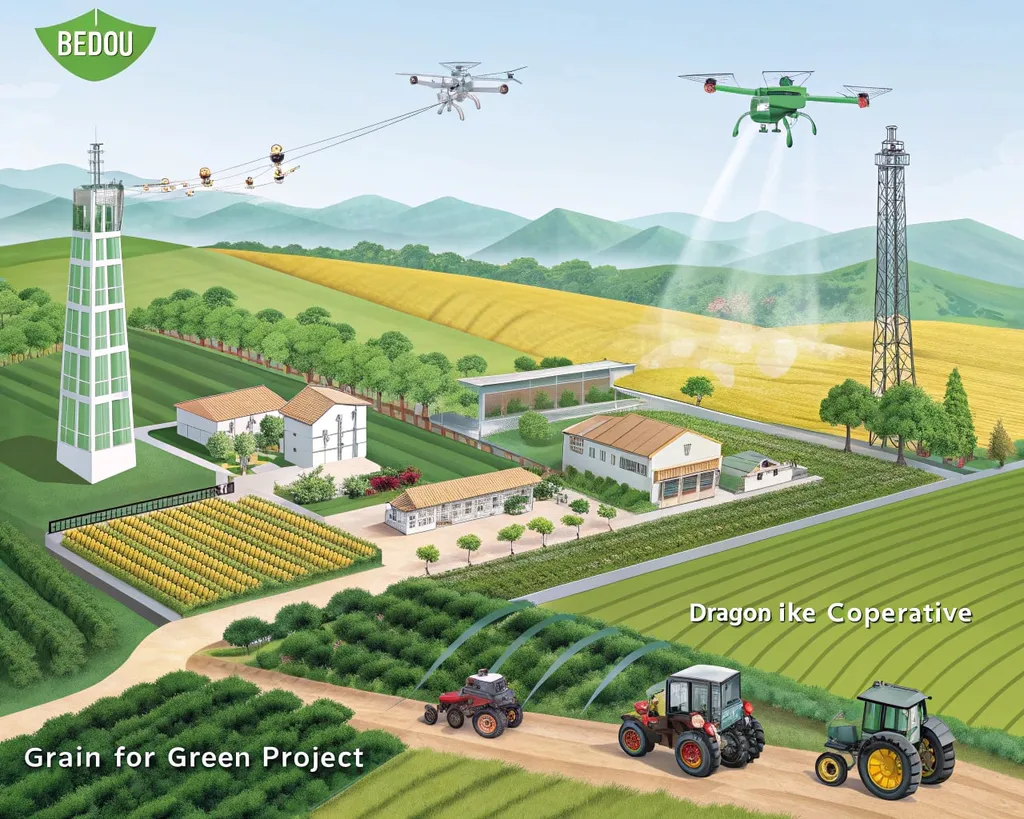
In the sprawling fields of modern agriculture, the symphony of machinery is growing ever more complex. Harvesters, grain trucks, and other specialized equipment must work in harmony to maximize efficiency and minimize costs. Yet, coordinating these diverse machines has long been a challenge, plagued by high operational costs and a lack of robust scheduling strategies. A recent study published in *Information Processing in Agriculture* offers a promising solution, potentially revolutionizing how farms manage their machinery fleets.
The research, led by Ning Wang from the Key Laboratory of Smart Agriculture System Integration at China Agricultural University, introduces an integrated solution for collaborative scheduling of heterogeneous agricultural machines. The study focuses on harvest-transport scenarios, where harvesters and grain trucks must work in tandem to gather and transport crops efficiently.
At the heart of this solution is an electronic farm map, which serves as the backbone for path planning and the generation of unloading points within plots. This digital representation of the farm allows for precise coordination, ensuring that machines are deployed where they are needed most.
“The electronic farm map is crucial because it provides a real-time, accurate depiction of the farm’s layout,” Wang explains. “This allows us to optimize the routes and unloading points, reducing the overall operational time significantly.”
The study developed a collaborative scheduling model that incorporates a variety of parameters, including harvester harvesting speeds and grain truck hopper capacities. The goal is to minimize the total operational time of the machinery fleet, a critical factor in reducing costs and improving efficiency.
To tackle the complex scheduling problem, the researchers introduced a hybrid greedy heuristic-based improved genetic algorithm. This algorithm combines the best elements of greedy heuristics and genetic algorithms to find the most efficient scheduling solution. Simulation and experimental validation were conducted using the electronic map of the Shanghai Qingpu unmanned farm, demonstrating the algorithm’s effectiveness.
The results were impressive. When the number of tasks was set at 20, the average total operational time was reduced by 32.4 minutes, an improvement of approximately 11.45% compared to the standard genetic algorithm. This reduction in operational time translates to significant cost savings and increased productivity for farmers.
“The algorithm’s ability to handle heterogeneous parameters makes it highly adaptable to different farming scenarios,” Wang notes. “This flexibility is key to its success in real-world applications.”
The study also highlights the algorithm’s compatibility with various parameter settings, validating its efficacy in addressing task allocation problems for heterogeneous machinery. This adaptability is crucial for the agriculture sector, where farms often have a mix of different machines with varying capabilities.
The implications of this research are far-reaching. By optimizing the coordination of heterogeneous agricultural machines, farms can achieve greater efficiency, reduce operational costs, and ultimately increase their profitability. This is particularly important in an era where farms are under pressure to produce more with less, driven by factors such as climate change, resource scarcity, and market demands.
Looking ahead, the findings of this study could shape the future of agricultural technology. The integration of electronic farm maps and advanced scheduling algorithms could become a standard practice, enabling farms to manage their machinery fleets more effectively. This could lead to the development of more sophisticated agricultural systems, where machines work in perfect harmony, guided by intelligent algorithms.
As the agriculture sector continues to evolve, the need for innovative solutions to complex problems will only grow. The research led by Ning Wang from the Key Laboratory of Smart Agriculture System Integration at China Agricultural University represents a significant step forward in this direction, offering a glimpse into the future of smart agriculture.