
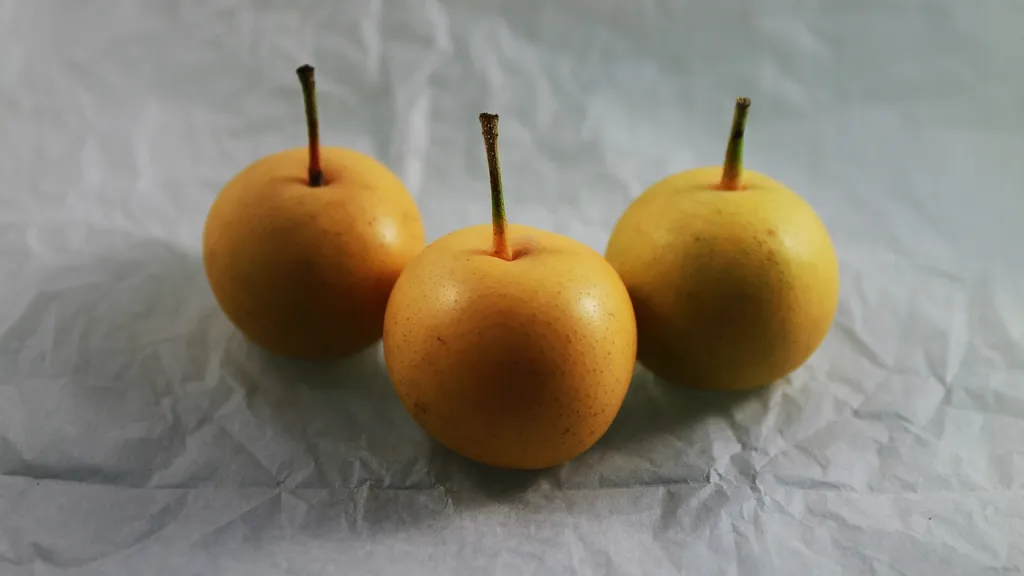
In the heart of China, a treasure trove of genetic diversity is being meticulously preserved and innovatively utilized, promising to revolutionize the pear industry and beyond. The National Sand Pear Germplasm Resource Repository (Wuhan) has been diligently collecting, conserving, and studying sand pear resources, with significant implications for agriculture and rural development.
The repository, initially established in 1979, has grown to become a vital hub for pear germplasm resources. As of December 31, 2024, it housed an impressive collection of 1,520 germplasm accessions belonging to nine species across three genera. Among these, 1,386 accessions are of Pyrus pyrifolia Nakai, the sand pear, a species native to the Yangtze River basin and southern regions of China.
The repository’s work is not just about preservation; it’s about innovation and utilization. “Through long-term systematic identification and evaluation, we have successfully screened 154 excellent germplasm accessions,” said lead author Chen Qiliang from the Institute of Fruit and Tea, Hubei Academy of Agricultural Sciences. These accessions exhibit traits such as minimal stone cell content, high chlorogenic acid content, suitability for juice production, better storage resistance, and high resistance to various diseases.
The impact of this research on the agriculture sector is substantial. Between 2001 and 2024, the repository provided 712 germplasm accessions, totaling 11,000 distributions, to various research institutions, agricultural technology extension departments, cooperatives, enterprises, and farmers. These resources have supported basic research, breeding utilization, and industrial development in areas such as pear origin and evolution, genetic diversity, fruit quality, stress resistance, pear virus detection, and pear self-incompatibility.
The innovative utilization of sand pear germplasm resources has made significant contributions to pear breeding and industrial upgrading in China. It has played an important role in rural poverty alleviation, prosperity, and sustainable industrial development. As Chen Qiliang put it, “The utilization of sand pear germplasm resources has made significant contributions to pear breeding and industrial upgrading in China.”
The research, published in ‘Guoshu xuebao’, not only summarizes the current status of sand pear germplasm resource collection and conservation but also looks forward to future research. It aims to provide references for the effective utilization of sand pear germplasm resources and industrial development in China.
The future of pear breeding and the agriculture sector, in general, looks promising with such dedicated institutions and researchers like Chen Qiliang and his team at the Institute of Fruit and Tea, Hubei Academy of Agricultural Sciences. Their work is a testament to the power of genetic diversity and innovative utilization in shaping the future of agriculture.