
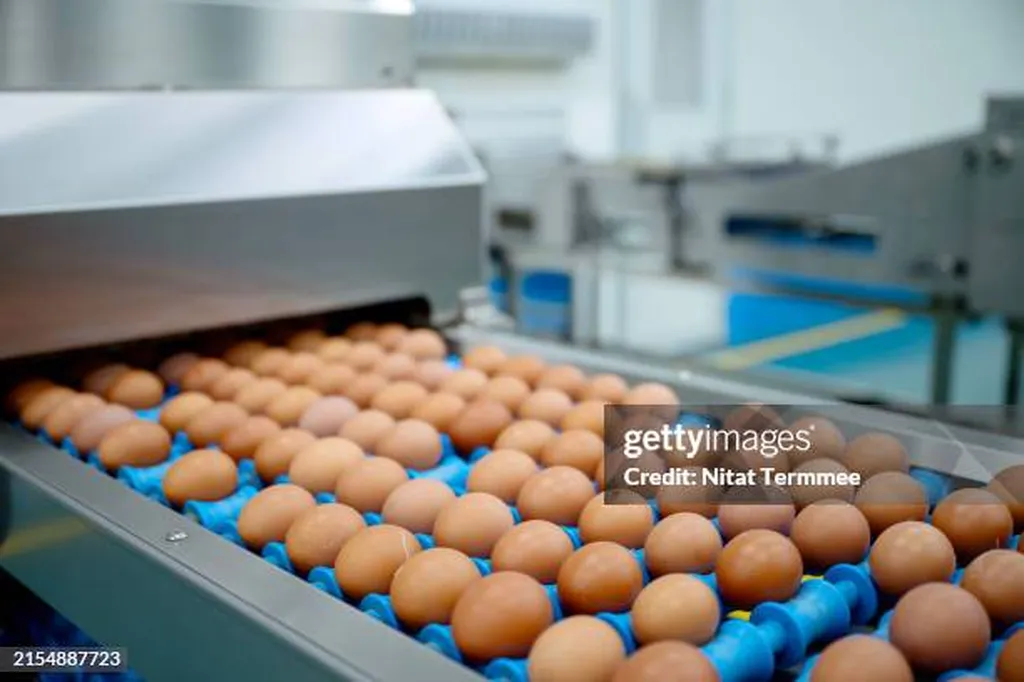
In the rapidly evolving world of agritech, a groundbreaking study has emerged that could revolutionize the way we approach egg classification and poultry farming. Published in the journal *Animals*, the research titled “Detection of Hatching Information of Meat Duck Eggs Based on Deep Learning” introduces a novel method that leverages advanced deep learning techniques to enhance the efficiency and accuracy of egg classification.
The study, led by Jiawen Cai from the College of Agricultural Engineering at Jiangsu University in China, focuses on the detection of hatching information in meat duck eggs. This is a critical area of research, as the poultry industry continues to seek ways to optimize production and ensure the health and well-being of its flocks. By utilizing deep learning, the researchers have developed a system that can accurately predict the hatching status of eggs, providing valuable insights for farmers and breeders.
One of the key innovations in this research is the use of a residual network combined with an attention mechanism. This combination allows the model to not only learn complex patterns from the data but also to focus on the most relevant features, significantly improving the accuracy of the predictions. “The attention mechanism helps the model to concentrate on the most informative parts of the egg images, which is crucial for accurate classification,” explains Cai.
The commercial implications of this research are substantial. In the poultry industry, the ability to accurately classify eggs based on their hatching status can lead to more efficient resource allocation and improved productivity. Farmers can better plan their incubation processes, reduce waste, and ensure that only the healthiest eggs are brought to term. This can result in significant cost savings and increased profitability for poultry farms.
Moreover, the application of deep learning in agriculture is not limited to egg classification. The principles and techniques developed in this study can be extended to other areas, such as disease detection in plants and animals, quality control in food production, and even precision agriculture. As Cai notes, “The potential for deep learning in agriculture is vast, and we are just beginning to scratch the surface of what is possible.”
The research also highlights the importance of interdisciplinary collaboration. By bringing together experts from computer science, agricultural engineering, and animal science, the study demonstrates how cutting-edge technology can be applied to solve real-world problems in the agricultural sector. This collaborative approach is essential for driving innovation and addressing the complex challenges faced by modern agriculture.
Looking ahead, the findings of this study could pave the way for further advancements in the field of agritech. As deep learning and artificial intelligence continue to evolve, we can expect to see even more sophisticated applications in agriculture. From automated monitoring systems to predictive analytics, the integration of AI technologies has the potential to transform the way we farm and produce food.
In conclusion, the research led by Jiawen Cai and published in *Animals* represents a significant step forward in the application of deep learning to agricultural challenges. By improving the accuracy and efficiency of egg classification, this study not only benefits the poultry industry but also sets the stage for broader innovations in agritech. As we continue to explore the possibilities of AI in agriculture, the potential for positive impact on global food production and sustainability is immense.