
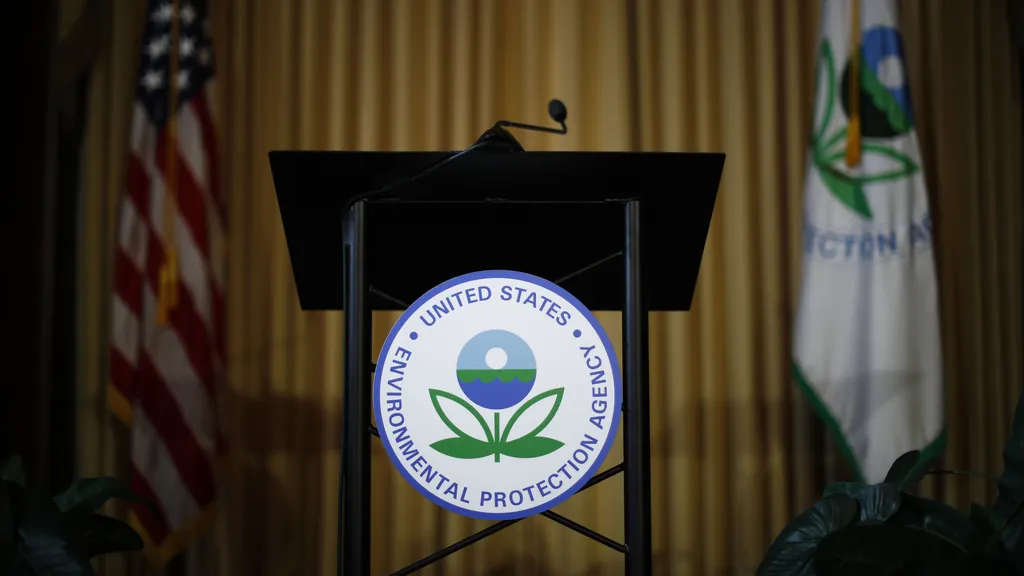
The Environmental Protection Agency (EPA) has recently removed information from its website that detailed the role of human activities in driving climate change. The revised web page now focuses solely on natural factors such as volcanic eruptions, solar output, and changes in Earth’s orbit, omitting any mention of greenhouse gases and their impact on global warming.
This alteration has sparked concern among climate scientists, who argue that the EPA’s new stance is at odds with the overwhelming consensus on human-induced climate change. UCLA climate scientist Daniel Swain noted that the EPA’s near-exclusive emphasis on natural causes is “completely out of synch with all available evidence demonstrating overwhelming human influence on contemporary warming trends.” Previous studies have indicated that human activities are responsible for more than 100 percent of the warming observed since 1950, with the Earth likely experiencing a slight cooling trend in the absence of human influence due to volcanic aerosols.
An EPA spokesperson defended the changes, stating that they were part of routine editing and asserting that the agency “no longer takes marching orders from the climate cult.” This shift in messaging comes as the European Copernicus Climate Change Service reports that 2023 is on track to be the second hottest year on record, following 2022. The past three years have each measured more than 1.5 degrees Celsius warmer than the preindustrial era, underscoring the accelerating pace of climate change.
For the agriculture sector, the implications of this policy shift and the underlying climate trends are significant. Agriculture is highly sensitive to changes in temperature, precipitation patterns, and the frequency of extreme weather events, all of which are influenced by climate change. The removal of human-driven climate change information from the EPA’s website could hinder the sector’s ability to prepare for and adapt to these changes. Farmers and agricultural businesses rely on accurate and comprehensive information to make informed decisions about crop selection, planting times, irrigation strategies, and other management practices.
Moreover, investors in the agriculture sector may face increased uncertainty and risk as a result of the EPA’s revised stance. Climate change is a critical factor in assessing the long-term viability and profitability of agricultural investments. The lack of clear and evidence-based information on the causes and impacts of climate change could make it more challenging for investors to evaluate risks and opportunities accurately.
The Copernicus Climate Change Service emphasizes that the only way to slow warming is to rapidly reduce greenhouse gas emissions. For the agriculture sector, this means adopting sustainable practices that minimize emissions and enhance resilience to climate change. Investors, too, have a role to play in supporting these efforts and advocating for policies that address the root causes of climate change.
In summary, the EPA’s removal of information on human-driven climate change from its website has implications for the agriculture sector and its investors. Accurate and comprehensive information is crucial for making informed decisions and managing risks in an era of accelerating climate change.