
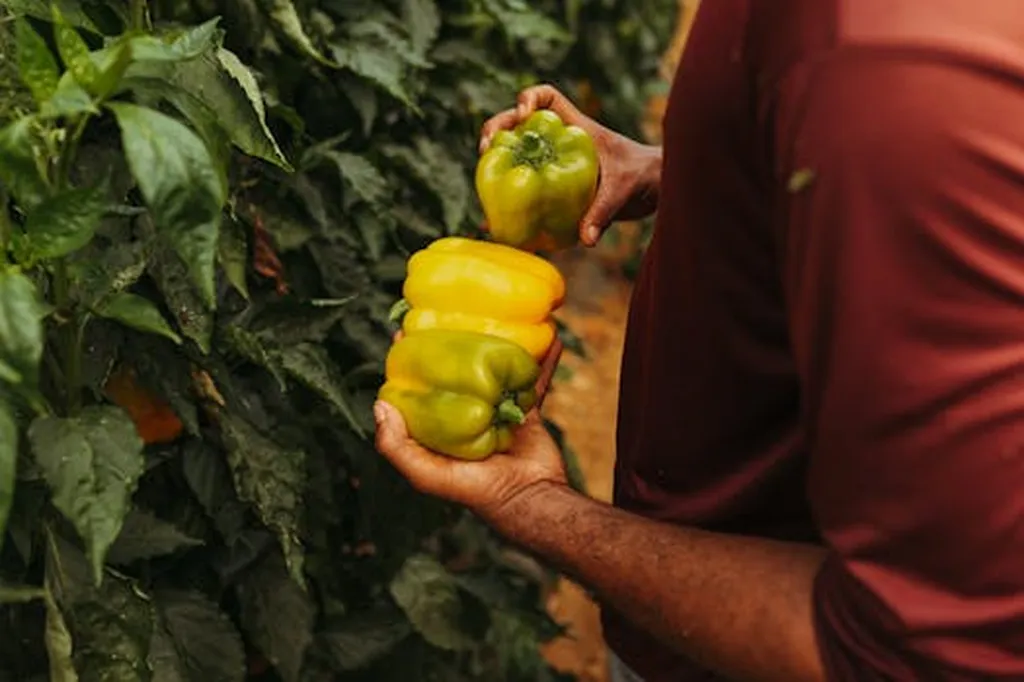
In the ever-evolving landscape of agricultural technology, a recent study published in the journal ‘Plants’ is making waves by exploring the synergistic effects of green-synthesized titanium dioxide nanoparticles (TiO2-NPs) and plant-growth-promoting microorganisms (PGPMs) on pepper plants (*Capsicum annuum*). The research, led by Atiya Bhatti from Tecnologico de Monterrey, offers promising insights into the future of precision agriculture.
The study focuses on TiO2-NPs produced using blueberry extracts, a green synthesis method that leverages the phenolic and flavonoid profiles of the fruit. These nanoparticles were then tested in combination with PGPMs, including *Bacillus subtilis*, *Bacillus thuringiensis*, and *Trichoderma harzianum*, to observe their effects on plant growth and biochemical responses.
“Our goal was to understand how these green-synthesized nanoparticles interact with beneficial microorganisms and influence plant growth,” Bhatti explains. “The results were quite promising, showing a clear dose-dependent effect on various plant parameters.”
In greenhouse experiments, the researchers observed that low to moderate concentrations of TiO2-NPs led to increased leaf number and plant height, although root length remained unchanged. Notably, the use of isopropanol-synthesized TiO2-NPs (I-TiO2) at moderate concentrations, particularly when combined with a single PGPM, significantly boosted both fresh and dry biomass accumulation.
The study also delved into the biochemical responses of the plants. Peroxidase activity, an indicator of oxidative stress, rose sharply with methanol-synthesized TiO2-NPs (M-TiO2) at low doses when used in conjunction with a consortium of microorganisms. In contrast, I-TiO2 elicited a broader range of antioxidant responses. Total protein content increased at higher doses for both formulations, and total chlorophyll levels were highest with I-TiO2 at high doses, with or without PGPMs.
These findings suggest a formulation- and dose-dependent biphasic behavior, where different types of TiO2-NPs and their combinations with PGPMs can be tailored to achieve specific agricultural outcomes. “This research opens up new avenues for precision agriculture,” Bhatti notes. “By understanding these interactions, we can develop more targeted and effective strategies for enhancing crop yield and quality.”
The commercial implications of this research are substantial. The use of green-synthesized nanoparticles and beneficial microorganisms offers a sustainable and eco-friendly approach to agriculture. Farmers could potentially enhance crop productivity while minimizing the environmental impact, a critical consideration in the face of climate change and increasing food demand.
As the agricultural sector continues to embrace technological advancements, studies like this one pave the way for innovative solutions that can revolutionize farming practices. The integration of nanotechnology and microbial biology holds immense potential for shaping the future of agriculture, making it more efficient, sustainable, and resilient.
The research, led by Atiya Bhatti from Tecnologico de Monterrey, was published in the journal ‘Plants’, offering a glimpse into the exciting possibilities that lie at the intersection of green synthesis, nanotechnology, and precision agriculture.