
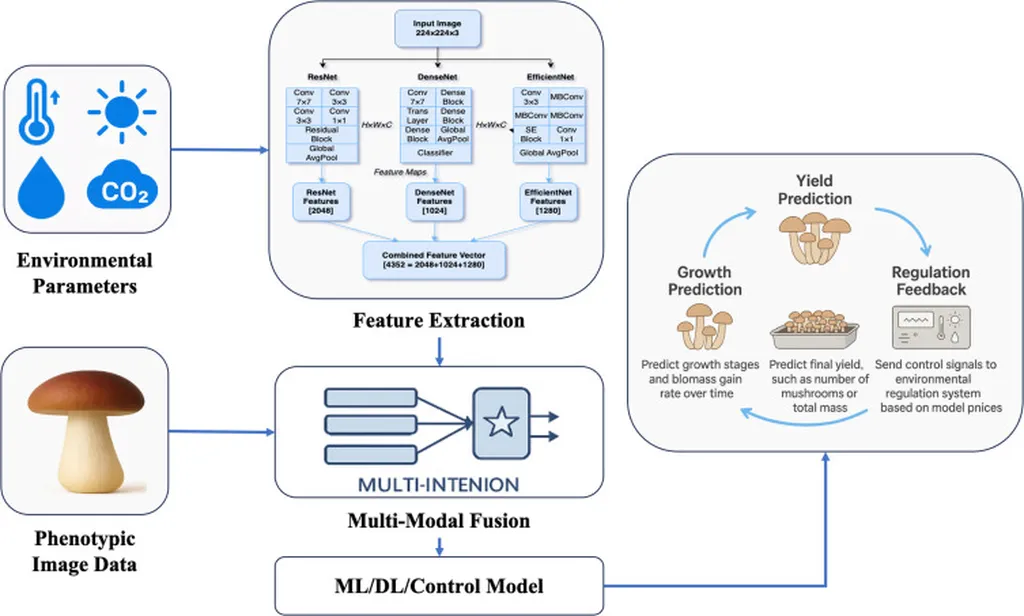
In the heart of Indonesia’s burgeoning agricultural sector, a technological breakthrough is poised to revolutionize the way straw mushrooms are assessed for quality. Researchers have developed a deep learning model that can classify these mushrooms with remarkable accuracy, potentially transforming the industry’s approach to post-harvest quality control.
Straw mushrooms, known scientifically as Volvariella volvacea, are a staple in Indonesian cuisine and a significant economic commodity. Their nutritional value and growing demand as a healthy food option have made them a crucial crop for local farmers. However, the manual classification of these mushrooms, which relies heavily on human judgment, often leads to inconsistencies and errors. This is where the new research comes into play.
The study, led by Bayu Priyatna from the University of Buana Perjuangan Karawang, introduces a MobileNetv3-based convolutional neural network (CNN) model that automates the quality classification process. The model focuses on assessing the mushrooms based on their shape and color, adhering to the Indonesian National Standards (SNI). The results are impressive: the model achieved a classification accuracy of 99%, a significant leap from traditional manual methods.
“This technology has the potential to streamline the quality assessment process, making it more efficient and reliable,” Priyatna explained. “By reducing human error and increasing consistency, we can enhance the economic value of the straw mushrooms and benefit both producers and consumers.”
The implications for the agricultural sector are substantial. Automated quality classification can lead to faster processing times, reduced labor costs, and improved market competitiveness. Farmers and processors can make more informed decisions about their products, ensuring that only the highest quality mushrooms reach the market.
However, the journey towards widespread implementation is not without its challenges. The researchers acknowledge the need for further development, including the addition of more diverse background data, improved image resolution, and refined data augmentation techniques. These enhancements are crucial for ensuring the model’s effectiveness in varying environmental conditions.
“While we have made significant progress, there is still work to be done,” Priyatna noted. “We need to continue refining the model to make it robust and adaptable to different settings. This will be key to its successful integration into the agricultural industry.”
The study, published in the JOIV: International Journal on Informatics Visualization, highlights the potential of deep learning models to enhance the efficiency and precision of quality assessment in agriculture. As the technology continues to evolve, it could pave the way for similar applications in other sectors, driving innovation and growth in the smart agriculture landscape.
In the broader context, this research underscores the importance of leveraging advanced technologies to address longstanding challenges in the agricultural sector. By embracing deep learning and image processing, farmers and processors can unlock new opportunities for growth and sustainability, ultimately benefiting the entire food supply chain.
As the world continues to grapple with the complexities of modern agriculture, breakthroughs like this offer a glimpse into a future where technology and innovation play a central role in shaping the industry’s trajectory. The journey towards smarter, more efficient agricultural practices is well underway, and the potential for transformative change is immense.