
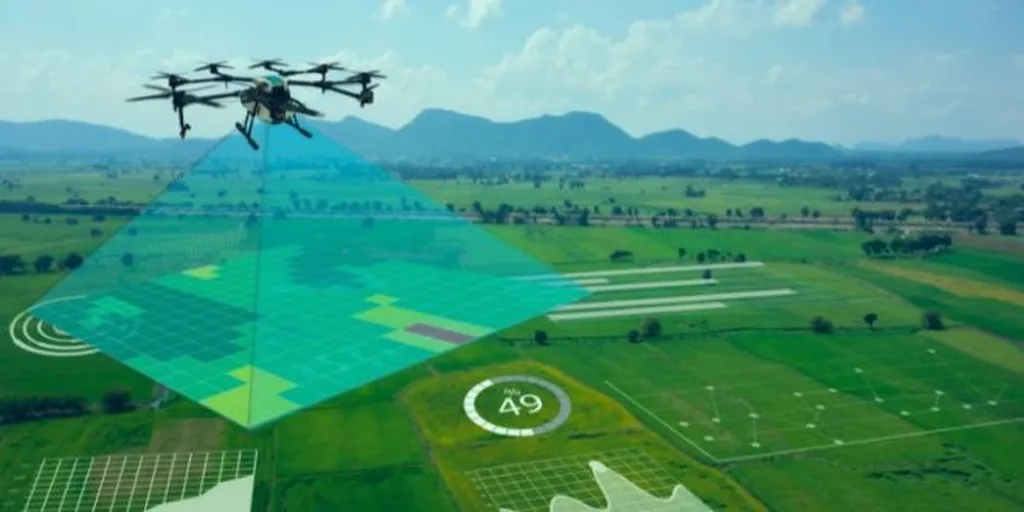
In the ever-evolving landscape of agricultural technology, a groundbreaking study has emerged that promises to revolutionize the way we monitor and cultivate potato seedlings. Researchers have developed an advanced instance segmentation system tailored for aeroponic tissue culture-based potato seedlings, integrating Internet of Things (IoT) sensors and an optimized computer vision model. This innovation, published in the *JOIV: International Journal on Informatics Visualization*, could significantly enhance agricultural productivity and efficiency.
The study, led by Gisnaya Faridatul Avisyah from Politeknik Negeri Semarang in Indonesia, introduces an IoT system equipped with multiple sensors to monitor humidity, temperature, pH, and turbidity in real-time. This data is crucial for maintaining optimal growing conditions for potato seedlings. However, the real game-changer lies in the adaptation of the YOLOv8l-small computer vision model, a streamlined version of the YOLOv8 designed for efficient potato leaf disease detection and segmentation.
YOLOv8 represents a significant leap forward in the YOLO series, offering improved accuracy, efficiency, and flexibility. “YOLOv8 outperforms previous methods in generating precise segmentation masks while maintaining real-time performance,” Avisyah explains. This capability is particularly valuable in resource-constrained IoT environments, where computational efficiency is paramount.
When tested on a custom dataset of potato leaf images, the proposed model achieved impressive results. It produced a mask mean Average Precision at 50% IoU (mAP50) of 0.842 and a mAP50-95 of 0.566, with a model size of 36.1 MB and an inference time of just 9.3 ms. These results are comparable to the original YOLOv8l model, which had a slower inference time of 11.0 ms and a larger model size of 92.3 MB, albeit with a slightly higher mAP50 of 0.843.
The implications for the agriculture sector are substantial. By enabling real-time monitoring and precise disease detection, this technology can help farmers optimize their cultivation processes, reduce labor costs, and ultimately increase yields. “Future research will explore additional aspects, while practical experiments aim to reduce labor costs,” Avisyah notes, hinting at the potential for further advancements in this field.
As we look to the future, this research could pave the way for more sophisticated and efficient agricultural systems. The integration of IoT sensors and advanced computer vision models like YOLOv8l-small could become a standard practice, transforming the way we approach crop monitoring and disease management. This innovation not only promises to enhance agricultural productivity but also to make farming more sustainable and resilient in the face of changing environmental conditions.
In the quest for more efficient and sustainable agricultural practices, this study marks a significant milestone. By leveraging the power of IoT and advanced computer vision, researchers have opened up new possibilities for the future of farming. As the agriculture sector continues to evolve, innovations like these will be crucial in meeting the growing demand for food while minimizing environmental impact.