
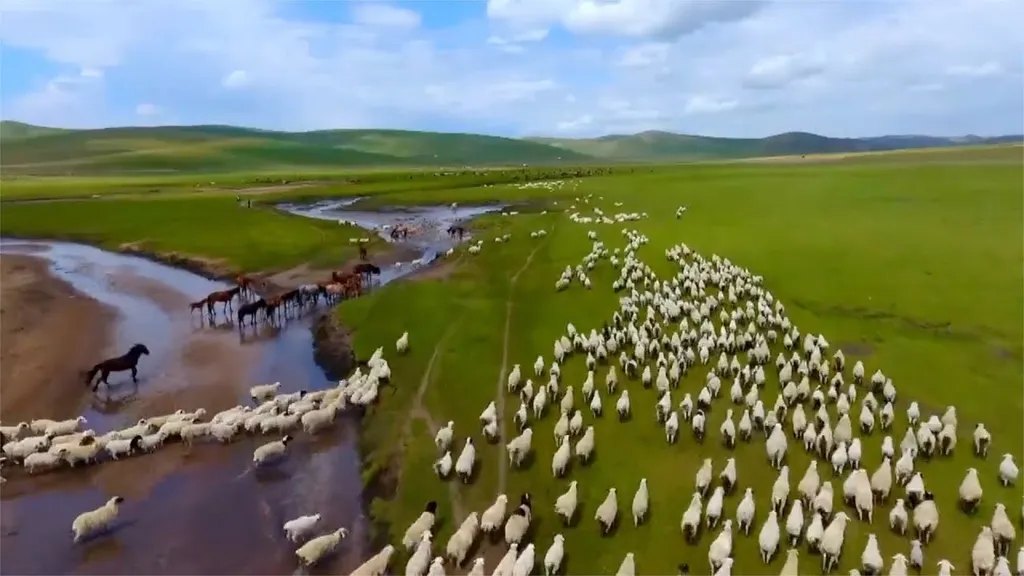
In the vast grasslands of Inner Mongolia, China, a digital revolution is quietly unfolding, one herdsman at a time. A recent study published in *Frontiers in Sustainable Food Systems* sheds light on how the livelihood capital of herdsmen—encompassing natural, physical, human, social, and financial resources—plays a pivotal role in their adoption of digital technology. The research, led by Mei Yong of the College of Economics and Management at Inner Mongolia Agricultural University, offers valuable insights into how enhancing these resources can drive technological advancement in agriculture.
The study, based on survey data from 356 herdsmen, reveals that livelihood capital significantly boosts the use of digital technology among herdsmen. “The findings show that natural, physical, human, and social capital all positively impact the adoption of digital technology,” Yong explains. “This suggests that improving these areas can create a ripple effect, enhancing productivity and efficiency in the agricultural sector.”
The research employed the entropy weight method to calculate the livelihood capital of herdsmen and used IV-probit and moderating effect models to analyze the relationship between this capital and digital technology usage. The results were robust, indicating a clear positive correlation. “Technical training and network quality further amplify the impact of livelihood capital on digital technology adoption,” Yong adds. “This underscores the importance of investing in education and infrastructure to support technological advancement.”
The commercial implications of this research are substantial. As digital technology becomes increasingly integral to modern agriculture, understanding the factors that drive its adoption can help stakeholders develop targeted strategies. For instance, herdsmen with larger grassland areas, more education, and greater livestock scales were found to benefit more from enhanced livelihood capital. This suggests that policies aimed at improving these specific areas could have a significant impact on the broader agricultural sector.
The study also highlights the need for tailored interventions. “Herdsmen with different levels of resource endowments may require different types of support,” Yong notes. “For example, those with limited financial capital might benefit more from subsidies or low-interest loans, while those with lower education levels could benefit from targeted training programs.”
Looking ahead, this research could shape future developments in the field by emphasizing the importance of a holistic approach to technological adoption. By addressing the various dimensions of livelihood capital, policymakers and industry leaders can create an environment that fosters innovation and growth. “The goal is to create a sustainable and inclusive agricultural sector that leverages digital technology to its fullest potential,” Yong concludes.
As the agricultural sector continues to evolve, the insights from this study offer a roadmap for harnessing the power of digital technology to drive progress and prosperity. By focusing on the unique needs and resources of herdsmen, stakeholders can pave the way for a more efficient and sustainable future.