
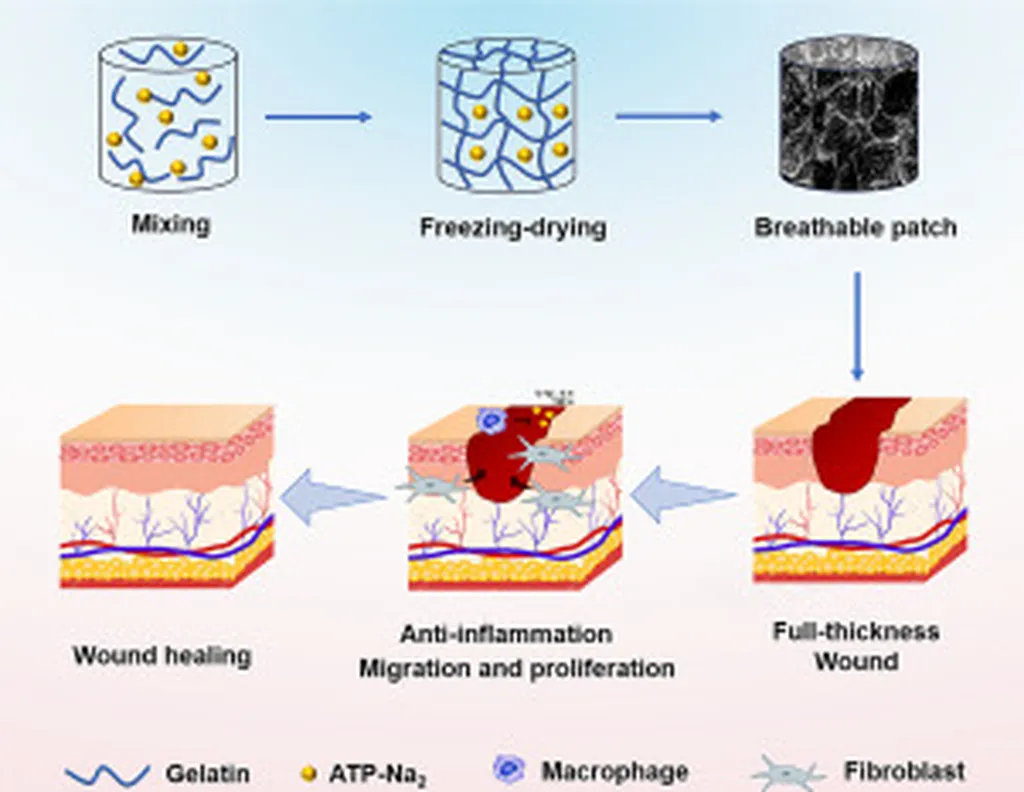
In the realm of agricultural technology, a groundbreaking study has emerged that could revolutionize how we approach wound healing in livestock, a critical aspect of animal husbandry. Published in the esteemed journal *Bioactive Materials*, the research titled “Skin-inspired phototherapeutic cryogel ameliorates infected wound healing by orchestrating mechanotransduction and immunomodulation” introduces a novel approach to treating infected wounds, potentially offering significant benefits to the agricultural sector.
The study, led by Sayan Deb Dutta from the Department of Biosystems Engineering at Kangwon National University in the Republic of Korea, along with affiliations at the Institute of Forest Science and the University of California Davis, focuses on a innovative cryogel designed to mimic the properties of human skin. This cryogel not only accelerates the healing process but also combats infection, a common challenge in livestock management.
“Our cryogel is engineered to respond to light, triggering a series of biological processes that enhance wound healing,” explains Dutta. “It orchestrates mechanotransduction—the process by which cells convert mechanical stimuli into biochemical signals—and immunomodulation, which regulates the immune response. This dual action is crucial for treating infected wounds effectively.”
The implications for the agricultural sector are profound. Livestock injuries are a common occurrence, often leading to reduced productivity, increased veterinary costs, and even mortality. Traditional treatments for infected wounds can be slow and ineffective, leading to prolonged suffering for the animals and financial losses for farmers.
The cryogel developed by Dutta and his team offers a promising solution. Its ability to accelerate healing and combat infection can significantly reduce recovery times, improve animal welfare, and enhance productivity. “This technology has the potential to transform livestock management,” says Dutta. “By providing a more effective treatment for infected wounds, we can improve the overall health and well-being of animals, which is beneficial for both the animals and the farmers.”
The commercial impact of this research is substantial. The development of phototherapeutic cryogels could lead to the creation of new products tailored for agricultural use, offering farmers innovative tools to manage livestock health more effectively. This could open up new markets and revenue streams for companies specializing in agricultural technology.
Moreover, the study’s findings could pave the way for further research into advanced wound healing technologies. The principles underlying the cryogel’s design—mechanotransduction and immunomodulation—could be applied to other areas of animal health, leading to the development of new treatments and therapies.
In conclusion, the research led by Sayan Deb Dutta represents a significant advancement in the field of agricultural technology. Its potential to improve livestock health and productivity underscores the importance of continued investment in agritech research. As the agricultural sector continues to evolve, innovations like this cryogel will play a crucial role in shaping the future of animal husbandry.