
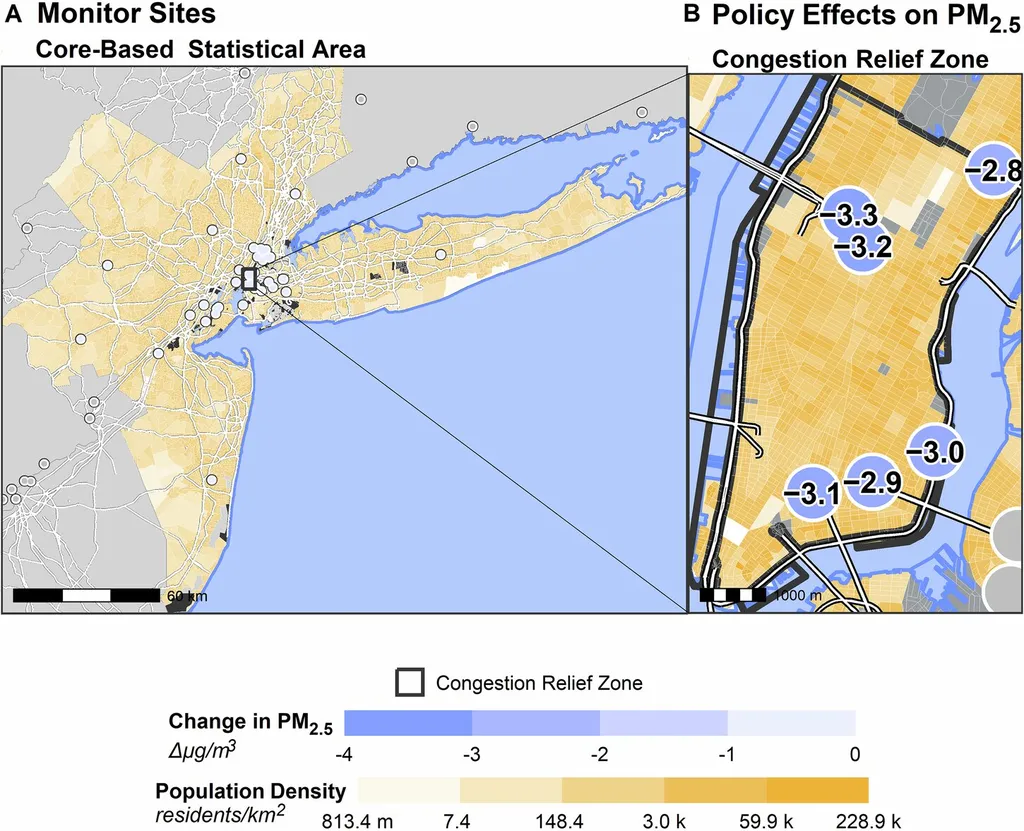
The introduction of congestion pricing in New York City has not only led to a reduction in traffic and noise but has also significantly improved air quality, according to a recent study from Cornell University. The toll, which came into effect in January, charges cars $9 to drive through busy parts of Manhattan during peak hours. In the first six months of the program, traffic in the congestion zone dropped by 11 percent, accidents by 14 percent, and complaints of excessive honking or other noise by 45 percent. The study found that particulate pollution, a leading risk factor for premature death, decreased by 22 percent in the affected areas.
The implications of this study extend beyond urban planning and public health, touching upon the agriculture sector and investors. The reduction in particulate pollution can have a positive impact on agricultural productivity. Particulate matter can damage crops and reduce yields, so a decrease in pollution can lead to healthier crops and improved agricultural output. This is particularly relevant for urban and peri-urban agriculture, which is becoming increasingly important as cities seek to enhance their food security and sustainability.
For investors, the study highlights the potential benefits of investing in sustainable urban infrastructure. Congestion pricing is one example of a policy that can improve public health and environmental quality while also generating revenue. This revenue can be reinvested in public transportation, green spaces, and other infrastructure that supports sustainable urban living. Investors who prioritize environmental, social, and governance (ESG) factors may find opportunities in this area, as cities around the world look to implement similar policies to reduce traffic congestion and air pollution.
Moreover, the study’s findings suggest that congestion pricing can encourage the use of cleaner transportation options, such as public transportation or nighttime deliveries. This shift can create investment opportunities in electric vehicles, charging infrastructure, and other technologies that support sustainable transportation. Additionally, the reduction in traffic accidents can lower insurance costs and improve road safety, benefiting both individuals and businesses.
In conclusion, the New York City congestion pricing study offers valuable insights for the agriculture sector and investors. By reducing particulate pollution and encouraging sustainable transportation options, congestion pricing can enhance agricultural productivity and create investment opportunities in sustainable urban infrastructure and transportation technologies. As more cities consider implementing similar policies, the potential benefits for agriculture and investors are likely to grow.