
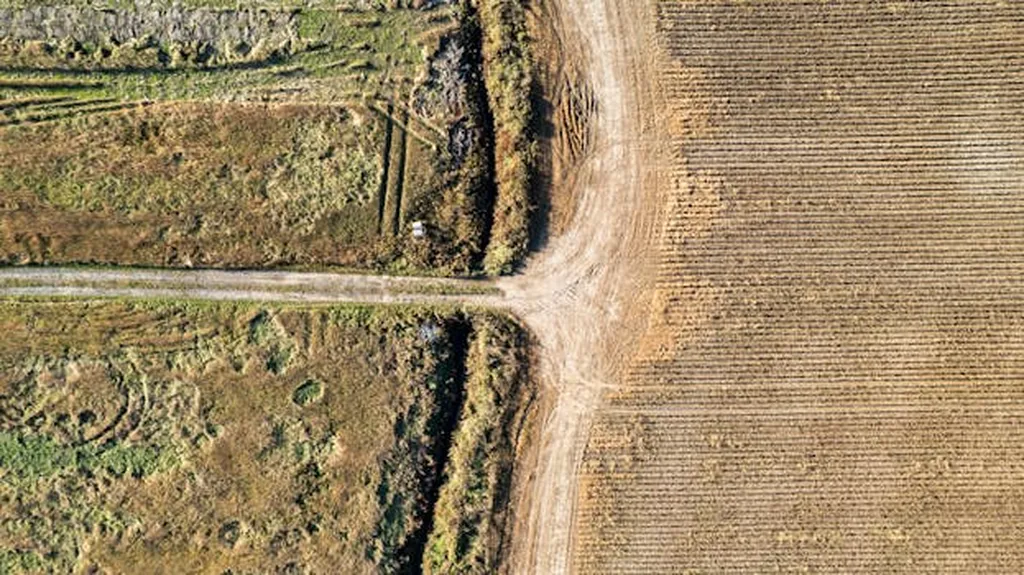
In the vast, rainfed expanses of broadacre agriculture, where crops stretch to the horizon and farmers contend with intensifying climate stresses, a new review published in *Remote Sensing* offers a beacon of hope. Led by Jianxiu Shen from the Department of Primary Industries and Regional Development in Western Australia, the study synthesizes two decades of methodological advances in remote sensing (RS) to bolster crop resilience. The findings could reshape how farmers monitor and manage their fields, potentially stabilizing yields and livelihoods in the face of climate uncertainty.
Remote sensing has long been a tool for monitoring crop performance, but this review takes a deeper dive into its evolving capabilities. By analyzing peer-reviewed studies across diverse crops and regions, the researchers identified key trends and challenges in three critical areas: crop productivity, phenology, and environmental stress detection. “Remote sensing enables spatially explicit yield estimation from regional to paddock scales,” Shen explains, highlighting how vegetation indices (VIs) and phenology-adjusted metrics are closely correlated with yield. This means farmers could soon have access to hyper-local, real-time data to guide their decisions, optimizing inputs and maximizing outputs.
The review also underscores the power of time-series analyses in capturing phenological transitions—critical stages in a crop’s life cycle that influence yield potential. Advances in curve fitting, sensor fusion, and machine learning are making it easier to forecast these transitions with greater accuracy. “Time-series analyses of RS data effectively capture phenological transitions critical for forecasting,” Shen notes, suggesting that farmers could soon predict and mitigate risks like frost damage or heat stress with unprecedented precision.
But perhaps the most compelling finding is the potential for early detection of environmental stresses, both abiotic (drought, heat, salinity) and biotic (pests, disease). Thermal and multispectral indices are already supporting this, though the review acknowledges that specificity remains a challenge. Nonetheless, the ability to detect stress early could be a game-changer for farmers, allowing them to intervene before damage is done.
However, the review also highlights significant barriers. Methodological silos and sensor integration issues hinder holistic application, limiting the full potential of remote sensing. To overcome these challenges, the researchers advocate for emerging approaches like multi-sensor/scale fusion, RS–crop model data assimilation, and operational and big data integration. These could provide promising pathways toward resilience-focused decision support, ultimately helping farmers adapt to climate change.
The commercial implications are substantial. By integrating remote sensing into their operations, farmers could reduce input costs, increase yields, and mitigate risks associated with climate variability. This could lead to more stable farm incomes and greater food security, benefiting not just individual farmers but entire agricultural economies.
As the review concludes, future research should focus on defining quantifiable resilience metrics, cross-theme predictive integration, and accessible tools to guide climate adaptation. The study, published in *Remote Sensing* and led by Jianxiu Shen from the Department of Primary Industries and Regional Development in Western Australia, offers a roadmap for the future of broadacre agriculture. By harnessing the power of remote sensing, farmers could build more resilient systems, better equipped to weather the storms of climate change. The question now is not whether this will happen, but how quickly the agricultural sector can adapt and integrate these advancements into everyday practice.