
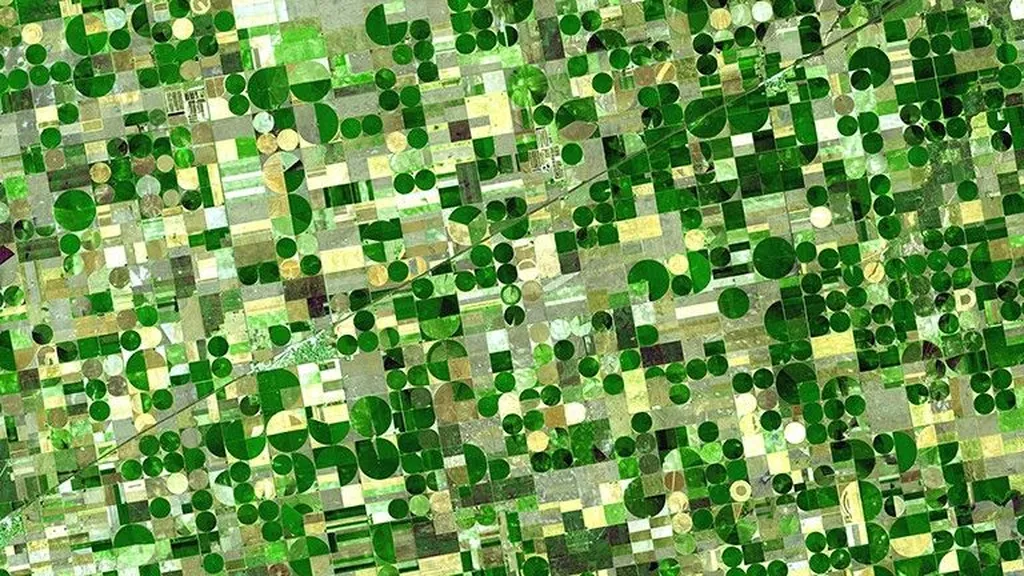
In the face of escalating climate change, understanding its impact on agricultural ecosystems has become more critical than ever. A recent study published in *Agriculture* and led by Xingshuai Mei of the Key Laboratory of Land Resources Survey and Planning of Qinghai Province, School of Politics and Public Administration, Qinghai Minzu University, sheds light on how remote sensing technology is revolutionizing our ability to monitor and respond to these changes. The research, which analyzed 222 key articles from 2021 to 2025, reveals a rapidly evolving field that is poised to transform agricultural practices and carbon management.
The study focuses on agricultural ecosystem respiration, a vital process that influences carbon cycling and climate feedbacks. Traditional ground observations have long been limited by their scale and continuity, but remote sensing technology is breaking through these barriers. “Remote sensing provides a new way to monitor agricultural ecosystems on a large scale and continuously,” Mei explains. This capability is crucial for assessing the spatiotemporal dynamics of ecosystem respiration and understanding its response to climate change.
The research highlights a three-stage development in this interdisciplinary field: the initial development period (2021–2022), the rapid growth period (2023–2024), and the deepening development period (2025). This evolution is characterized by a shift from technology-driven methods to a more integrated approach that fuses methods and couples systems. “The deep integration of artificial intelligence and remote sensing data is promoting the transformation of research methods from traditional inversion to intelligent modeling,” Mei notes. This shift is not only enhancing our understanding of agricultural ecosystems but also paving the way for more effective climate adaptation strategies.
Keyword clustering analysis identified 13 important research directions, including machine learning, permafrost, and carbon flux. The study found that the focus on alpine grasslands and other ecosystems reflects a growing interest in the interaction between agricultural and natural environments. This trend is significant for the agriculture sector, as it highlights the need for holistic approaches that consider both managed and natural ecosystems.
The study also emphasizes the commercial impacts of these advancements. By building multi-scale monitoring networks and developing “grey box” models that integrate mechanisms and data fusion, the agriculture sector can better manage carbon emissions and adapt to climate change. “Future research should prioritize building multi-scale monitoring networks, developing ‘grey box’ models that integrate mechanisms and data fusion, and evaluating the carbon emission reduction efficiency of agricultural management practices,” Mei suggests. These efforts will provide a theoretical basis for carbon management and climate adaptation in agricultural ecosystems, supporting global sustainable development goals.
The findings of this study have profound implications for the future of agriculture. As climate change continues to exert pressure on agricultural ecosystems, the ability to monitor and respond to these changes will be crucial. The integration of remote sensing technology and artificial intelligence offers a powerful tool for achieving these goals, ultimately supporting the agriculture sector’s efforts to mitigate climate impacts and achieve sustainable development.