
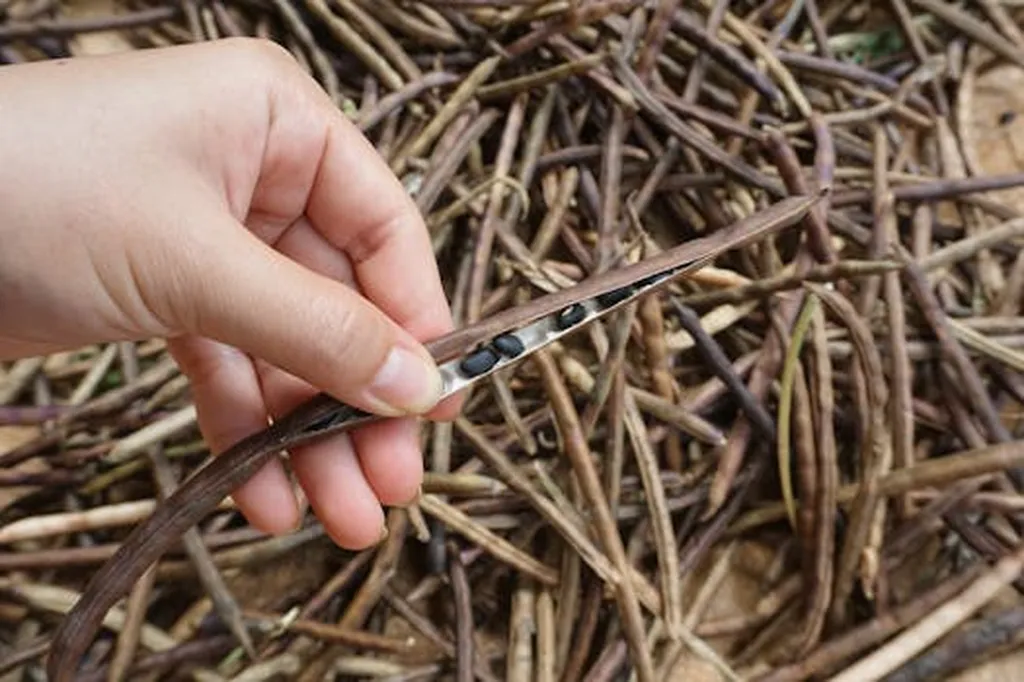
In the ever-evolving landscape of agricultural technology, a groundbreaking review published in the journal ‘Plants’ is shedding light on the transformative potential of single-cell omics in legume research. Led by Yaohua Li from the University of Missouri-Columbia, this study delves into the intricate world of legumes, crops that are not only vital for global food security but also play a pivotal role in sustainable agriculture through their unique ability to fix atmospheric nitrogen.
The review highlights the recent advancements in single-cell and spatial transcriptomics, along with single-cell epigenomics, which have revolutionized our understanding of gene expression dynamics in legumes. These high-resolution analyses are paving the way for the prediction of cell-type-specific regulatory networks, offering unprecedented insights into plant development, responses to pathogens, stress-induced plasticity, and the establishment of root nodule symbioses.
“Single-cell omics is like having a microscope that allows us to see the individual cells within a plant and understand how they function and interact,” explains Li. “This level of detail is crucial for developing more resilient and productive legume crops.”
The study focuses on four key legume species: *Medicago truncatula*, *Lotus japonicus*, *Glycine max* (soybean), and *Arachis hypogaea* (peanut). By shifting from bulk to single-cell multi-omics, researchers are uncovering the specific roles that genes play in different cell types, a shift that could have profound implications for the agriculture sector.
One of the most exciting aspects of this research is its potential to enhance nitrogen fixation, a process that is central to sustainable agriculture. Legumes form symbiotic relationships with rhizobia, soil bacteria that convert atmospheric nitrogen into a form that plants can use. By understanding the cellular mechanisms behind this symbiosis, scientists can develop crops that are more efficient at nitrogen fixation, reducing the need for synthetic fertilizers and promoting more sustainable farming practices.
The commercial impacts of this research are vast. For instance, soybean and peanut are major cash crops worldwide, and any improvements in their yield, resilience, or nutritional content could have significant economic benefits. Moreover, the insights gained from single-cell omics can be applied to other crops, potentially revolutionizing the entire agriculture sector.
However, the journey is not without its challenges. The review outlines current limitations, such as the need for more sophisticated computational tools and the integration of data from different studies to build comprehensive legume cell atlases. These atlases will be instrumental in supporting translational research and crop improvement, bridging the gap between fundamental science and practical applications.
As we look to the future, the potential of single-cell omics in legume research is immense. It promises to unlock new avenues for crop improvement, enhance our understanding of plant biology, and contribute to more sustainable and productive agriculture. The work of Li and colleagues, published in ‘Plants’ and led from the Division of Plant Science and Technology at the University of Missouri-Columbia, is a testament to the power of cutting-edge technology in driving agricultural innovation.