
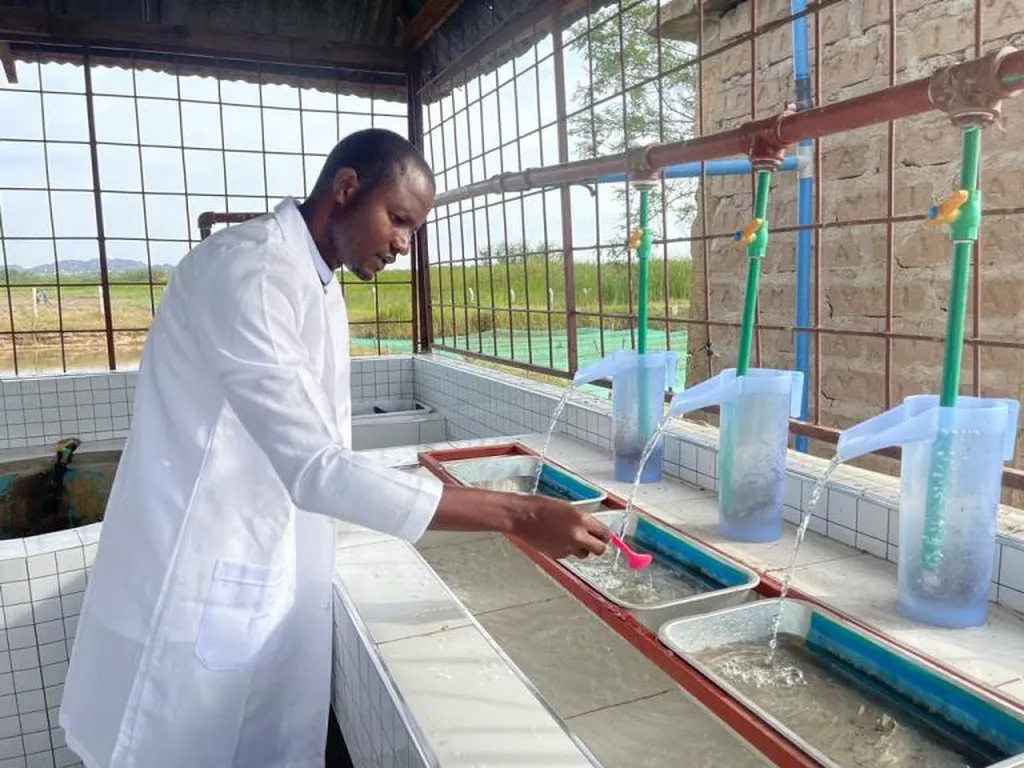
In the heart of Tanzania’s Lake Zone, where the shimmering waters of Lake Victoria support a thriving aquaculture industry, a groundbreaking study has revealed how climate-smart practices are transforming household incomes and food security. Published in the *Nigerian Journal of Fisheries and Aquaculture Research (NAJFNR)*, the research led by Christopher N. Mdoe from the Department of Rural Development and Regional Planning at the Institute of Rural Development Planning-Lake Zone Centre in Mwanza, sheds light on the profound impact of integrated farming, polyculture, and monoculture on the livelihoods of local communities.
The study, conducted between November 2023 and February 2024, involved 384 aquaculture households across the Mara and Mwanza regions. The findings are nothing short of revolutionary for the agriculture sector. Integrated farming, which combines aquaculture with agriculture, emerged as a game-changer, significantly boosting both household income and food security. Households practicing integrated farming achieved a “Very Satisfactory” Household Food Security Index (HFSI) score, a testament to the practice’s effectiveness.
“Integrated farming is not just about growing fish; it’s about creating a sustainable ecosystem that supports both agriculture and aquaculture,” said Mdoe. “This synergy not only enhances food security but also provides a stable income for households.”
The study also highlighted regional disparities. In Mara, where integrated farming is more prevalent, households reported significantly higher yields (3303 ± 155 kg) compared to those in Mwanza (2454 ± 146 kg). However, Mwanza benefited from higher fish prices per kilogram (6719 ± 103 TSH) due to superior market access and infrastructure. This dichotomy underscores the importance of regional context in implementing climate-smart aquaculture practices.
Polyculture, the practice of raising multiple species of fish together, yielded variable impacts. While it was more frequently adopted in Mwanza (35.7%) than in Mara (21.8%), its effects on income and food security were less consistent. The study found significant regional disparities in the adoption of climate-smart aquaculture practices, with Mara exhibiting higher adoption rates of integrated farming (69.3%) compared to Mwanza (56.0%).
The implications for the agriculture sector are profound. The study confirms that integrated aquaculture-agriculture systems can significantly improve household income and food security, while monoculture increases vulnerability. Strengthening financial access, training programs, and institutional support is crucial for enhancing the adoption of climate-smart aquaculture practices.
Key recommendations include the expansion of extension services, the improvement of market infrastructure, and the fortification of cooperative support systems to ensure sustainable aquaculture. As the world grapples with the challenges of climate change, this research offers a beacon of hope, demonstrating how innovative practices can transform lives and livelihoods.
The study, published in the *Nigerian Journal of Fisheries and Aquaculture Research (NAJFNR)*, was led by Christopher N. Mdoe from the Department of Rural Development and Regional Planning at the Institute of Rural Development Planning-Lake Zone Centre in Mwanza. Its findings are set to shape future developments in the field, offering a roadmap for sustainable aquaculture practices that can be replicated in other regions facing similar challenges.