
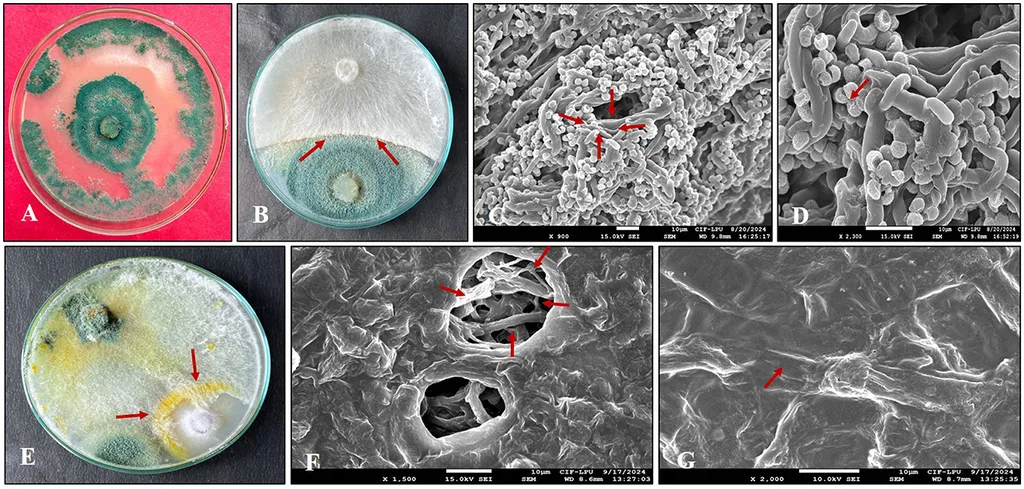
In the ongoing battle against soil-borne pathogens that threaten chickpea crops, a new study offers a promising, eco-friendly solution. Researchers have discovered that certain strains of Trichoderma, a genus of fungi known for their biocontrol properties, can significantly enhance chickpea’s defense mechanisms when combined with biochar. This breakthrough could revolutionize disease management in agriculture, reducing reliance on chemical fungicides.
The study, published in *Frontiers in Microbiology*, screened 21 Trichoderma isolates for their protease and chitinase activities, which are crucial for breaking down pathogen cell walls. Four strains stood out: *T. harzianum* (PBT13), *T. virens* (PBT3), *T. lixii* (PBT14), and *T. asperellum* (PBT4). Among these, *T. harzianum* (PBT13) emerged as the most potent, showing the highest enzymatic activity and strong antagonism against *Fusarium oxysporum* f. sp. *ciceri* and *Sclerotium rolfsii*, two notorious chickpea pathogens.
“Our findings demonstrate that *T. harzianum* (PBT13) can significantly suppress these pathogens,” said lead author Ranjna Kumari from the Department of Botany at Lovely Professional University in Punjab, India. “When combined with rice husk biochar, the effect is even more pronounced, enhancing plant defense and promoting growth.”
The study found that the combined application of *T. harzianum* and biochar reduced disease incidence, boosted defense enzyme activity, improved germination and chlorophyll content, and reduced sclerotia formation. This integrated approach also promoted the survival of Trichoderma in the soil, ensuring long-term protection for the crops.
The commercial implications of this research are substantial. Chickpea is a vital crop for global food security, and soil-borne diseases pose a significant threat to its production. By providing a sustainable and effective alternative to chemical fungicides, this study offers a viable solution for farmers worldwide. The use of biochar, a byproduct of agricultural waste, further enhances the sustainability of this approach, reducing waste and promoting circular economy principles in agriculture.
Looking ahead, this research could pave the way for similar studies exploring the synergistic effects of beneficial microbes and biochar in managing other crop diseases. As the agricultural sector continues to seek eco-friendly and sustainable solutions, such integrated strategies may become a cornerstone of modern farming practices.
In the words of Kumari, “This study is just the beginning. We hope our findings will inspire further research into the potential of microbial-biochar combinations for enhancing crop resilience and sustainability.” With the global population on the rise and arable land becoming increasingly scarce, such innovations are not just welcome but essential for ensuring food security in the years to come.