
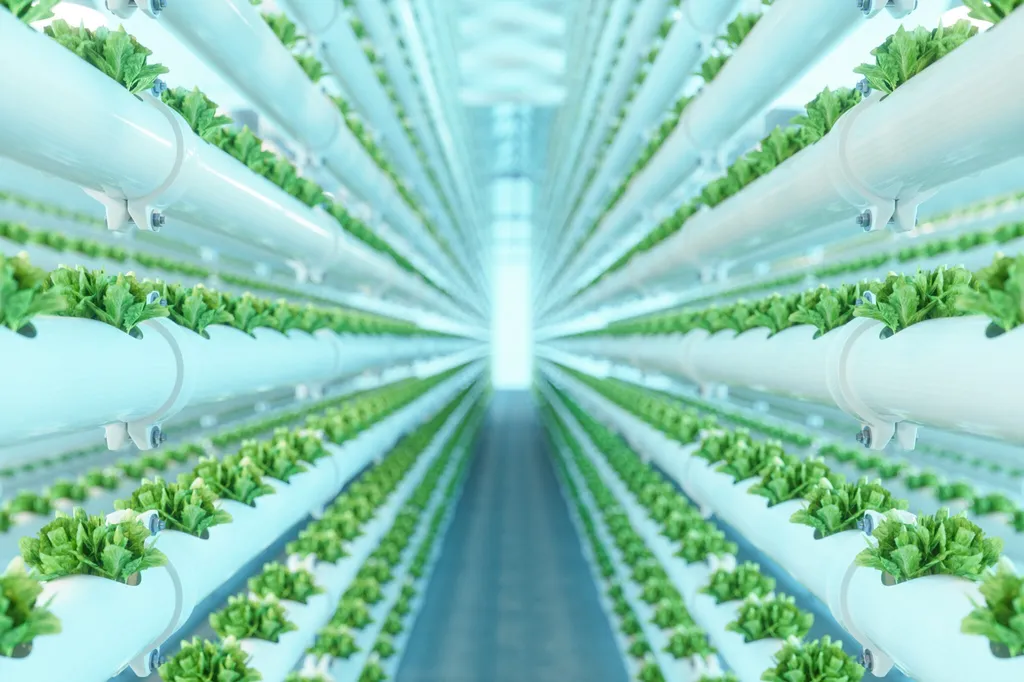
In the heart of urban landscapes where arable land is a premium, a novel approach to pest detection in hydroponic systems is making waves. Researchers have turned to thermal sensors and advanced image processing techniques to monitor mustard leaves, offering a promising solution for urban farmers and agritech enthusiasts alike.
The study, led by Fredy Susanto from Bina Sarana Global Institute of Technology and Business in Tangerang, Indonesia, explores the use of thermal sensors to capture images of mustard leaves in hydroponic systems. The research, published in the *JOIV: International Journal on Informatics Visualization*, focuses on detecting pest attacks by analyzing these thermal images. “Pests emit hot air, causing affected leaves to appear red, while healthy leaves remain green or blue,” Susanto explains. This color differentiation provides a clear visual indicator of pest presence, enabling timely intervention.
The crux of the research lies in enhancing the resolution of images captured by low-resolution thermal sensors. The team compared two methods: the Long Short-Term Memory (LSTM) algorithm and the Super-Resolution Convolutional Neural Network (SR-CNN). The results were compelling. SR-CNN outperformed LSTM in terms of Mean Square Error (MSE), Peak Signal-to-Noise Ratio (PSNR), and Structural Similarity Index (SSIM). “SR-CNN proved to be more effective in improving image quality, despite the limitations of the sensor’s resolution,” Susanto notes.
The commercial implications for the agriculture sector are significant. Hydroponic systems are increasingly popular in urban settings, where space is limited, and traditional farming is not feasible. Early detection of pests can prevent crop loss and reduce the need for chemical pesticides, leading to healthier produce and more sustainable farming practices. “This technology can revolutionize urban farming by providing real-time, non-invasive monitoring of plant health,” says Susanto.
The findings suggest that SR-CNN could be a game-changer in the field of precision agriculture. By enhancing the resolution of thermal images, farmers can make more informed decisions about pest management, ultimately improving crop yields and quality. The research also opens doors for further exploration into the use of thermal imaging and advanced algorithms in agriculture.
As urbanization continues to encroach on agricultural land, innovations like these are crucial. They not only address the challenges of limited space but also promote sustainable and efficient farming practices. The study by Susanto and his team is a testament to the power of technology in transforming agriculture, offering a glimpse into a future where urban farms thrive with the help of cutting-edge tools.
The research was published in the *JOIV: International Journal on Informatics Visualization* and was led by Fredy Susanto from Bina Sarana Global Institute of Technology and Business in Tangerang, Indonesia.