
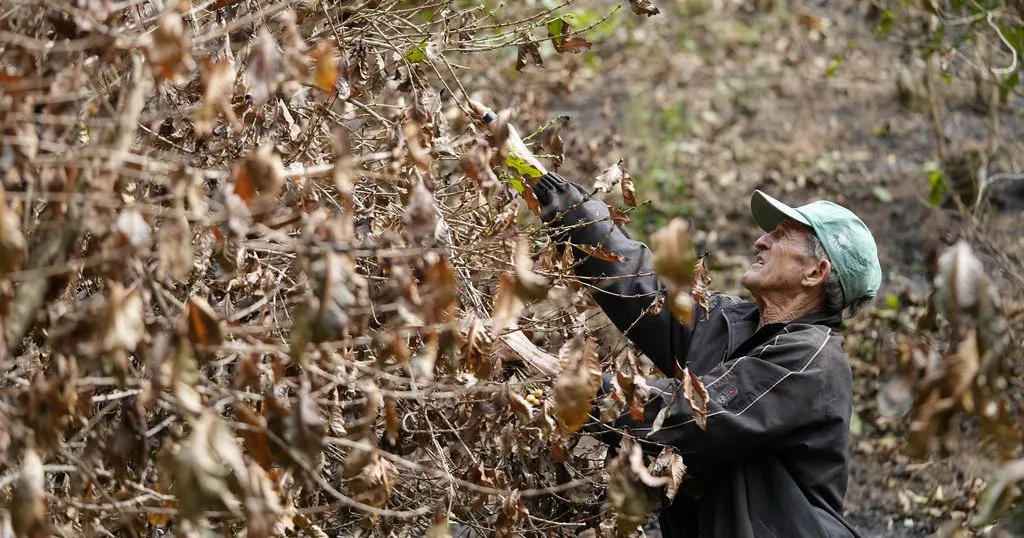
In the rolling hills of Minas Gerais, Brazil, a quiet revolution is brewing—one that could reshape the way the world thinks about coffee and carbon. A recent study published in *Cleaner Production Letters* has shed light on the stark differences between conservationist and conventional coffee farming practices, offering a roadmap for a more sustainable future.
The research, led by Gabrielli Martinelli of the Agribusiness Postgraduate Program at the Federal University of Grande Dourados (UFGD), compared greenhouse gas emissions and carbon sequestration in two distinct coffee production systems. The findings are nothing short of compelling. The Conservationist Production System emitted a mere 1.21 kg CO2-eq per functional unit, a significant drop from the 3.21 kg CO2-eq observed in the Conventional System. Both systems acted as carbon sinks, but the Conservationist System outshone its counterpart with a net carbon balance of −560.78 kg CO2-eq, compared to −430.86 kg CO2-eq for the Conventional System.
So, what’s driving this performance? According to Martinelli, practices like intercropping with Urochloa decumbens and the incorporation of organic residues are key. “These methods not only reduce emissions but also enhance the soil’s ability to sequester carbon,” Martinelli explains. “It’s a win-win for both the environment and the farmer.”
The commercial implications of this research are profound. As consumer demand for sustainably sourced products continues to rise, coffee producers who adopt these conservationist practices could see a significant boost in marketability. “This isn’t just about reducing emissions; it’s about creating value,” says Martinelli. “Farmers who can demonstrate their role as carbon sinks may qualify for carbon credits and environmental certifications, opening up new revenue streams.”
The study also highlights the potential for sustainable intensification—a concept that aims to increase productivity while minimizing environmental impact. By integrating conservationist practices into coffee farming, producers can enhance ecosystem services, such as biodiversity and soil health, which in turn can improve yield and resilience.
But the journey towards sustainable coffee production is not without its challenges. Implementing these practices requires investment and knowledge, and not all farmers may have access to the necessary resources. However, the study’s findings offer a compelling case for the long-term benefits of such investments.
As the global coffee industry faces increasing pressure to address its environmental footprint, this research provides a beacon of hope. It shows that by embracing conservationist practices, coffee farmers can not only mitigate their impact on the climate but also unlock new opportunities for growth and sustainability.
In the words of Martinelli, “This is just the beginning. The potential for conservationist practices in coffee farming is vast, and the benefits are clear. It’s time to scale up these efforts and make sustainable coffee production the norm, not the exception.”
The study, published in *Cleaner Production Letters*, underscores the urgent need for the agriculture sector to adopt sustainable practices. As the world grapples with the challenges of climate change, the coffee industry has a unique opportunity to lead the way in environmental conservation and sustainable intensification. The question now is: will the industry rise to the challenge?