
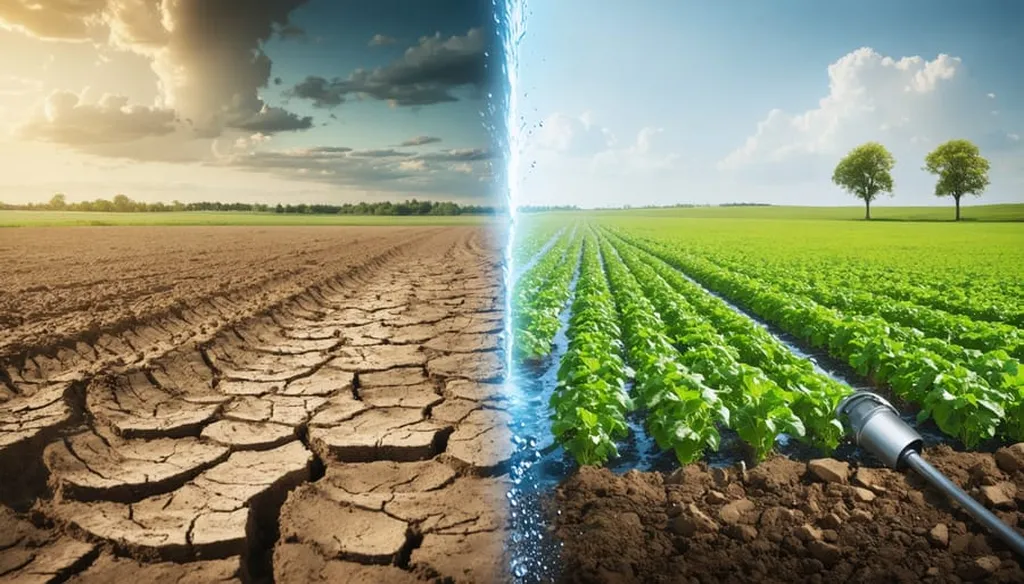
In the heart of Davao City, Philippines, a critical water source is under threat, and the stakes are high, especially for the agriculture sector. A recent study published in *Nature Environment and Pollution Technology* has sounded the alarm, projecting a significant decline in groundwater recharge in the Talomo-Lipadas Watershed over the next century. The research, led by Nympha Ellarina-Branzuela, employs advanced modelling techniques to paint a sobering picture of the future, one where water scarcity could reshape the region’s agricultural landscape.
The study leverages the Statistical Downscaling Method (SDSM) to generate detailed climate scenarios for the watershed, focusing on three key time periods: 2020, 2050, and 2080. These scenarios, which predict a steady increase in temperatures, were fed into the BROOK90 hydrological model to simulate groundwater recharge. The results are clear: groundwater supply is expected to drop from 109.01 million cubic meters (MCM) in 2020 to 103.53 MCM by 2050, and further to 99.81 MCM by 2080.
For the agriculture sector, which relies heavily on consistent water supply for irrigation, these projections are a wake-up call. “Reduced groundwater flow doesn’t just mean less water available for crops; it can also impact river baseflow, affecting ecosystems and exacerbating water scarcity during dry periods,” explains Branzuela. This could lead to increased competition for water resources, potentially disrupting farming practices and threatening food security.
The study’s findings underscore the urgent need for adaptation strategies to mitigate the effects of climate change on groundwater recharge. “We need to start thinking about sustainable water management plans now,” Branzuela emphasizes. “This isn’t just about preparing for the future; it’s about protecting our present resources.”
The research also highlights the importance of employing diverse hydrological models to validate findings and provide a more robust basis for decision-making. This approach could shape future developments in the field, encouraging a more comprehensive understanding of groundwater dynamics and climate change impacts.
As the Talomo-Lipadas Watershed faces these challenges, the agricultural sector must adapt. Innovations in water-efficient farming practices, investment in water storage infrastructure, and policy measures to promote sustainable water use will be crucial. The study serves as a reminder that the future of agriculture in Davao City—and indeed, in many regions facing similar climate change impacts—hinges on proactive and informed action.
With the lead author, Nympha Ellarina-Branzuela, affiliated with an undisclosed institution, the research stands as a testament to the power of scientific inquiry in addressing pressing environmental challenges. As the world grapples with the realities of climate change, studies like this one provide valuable insights and a roadmap for resilience.