
In the face of a growing global population and the pressing need for sustainable agriculture, researchers are turning to nanotechnology to revolutionize crop nutrition. A recent study published in *Current Research in Biotechnology* explores the potential of green-synthesized nano-fertilizers (NFs) as a sustainable and effective alternative to conventional chemical fertilizers. Led by Shefali Thanta from the School of Biological and Environmental Sciences at Shoolini University of Biotechnology and Management Sciences, this research offers a promising solution to the challenges posed by traditional fertilization methods.
Conventional chemical fertilizers have long been the backbone of modern agriculture, significantly boosting crop yields. However, their widespread use has come at a cost. These fertilizers often alter soil physicochemical and biological properties, leading to environmental damage. Moreover, conventional application methods frequently result in chemical overdosing, causing issues such as eutrophication, nitrogen volatilization, and the release of greenhouse gases. “The inefficiencies in nutrient use and the environmental impact of conventional fertilizers highlight the urgent need for more sustainable and effective alternatives,” Thanta explains.
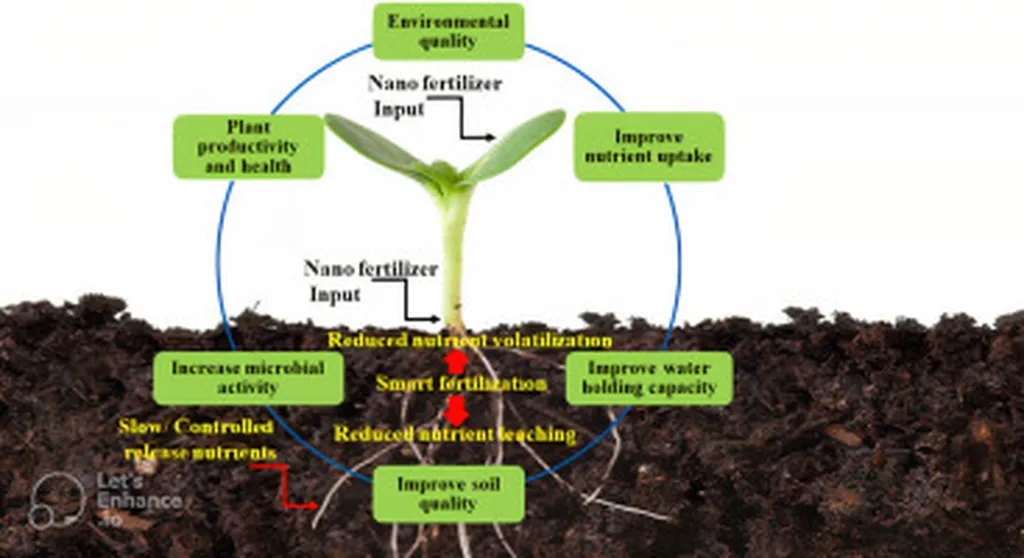
Enter nano-fertilizers. These innovative products encapsulate plant nutrients in nanomaterials, allowing them to easily pass through stomata and root hairs, and penetrate deeper into plant tissues. This enhanced delivery system significantly decreases nutrient loss and boosts nutrient efficiency, ultimately leading to increased plant productivity. What sets green-synthesized NFs apart is their eco-friendly production process, which uses plant extracts as reducing agents. Their high solubility makes them ideal for both foliar and root application, offering a versatile and effective solution for modern agriculture.
The study reviews the potential of green-synthesized NFs as effective and environmentally friendly alternatives to conventional fertilizers. Green NFs have been shown to significantly boost crop yields while also helping to mitigate plant stress caused by biotic and abiotic factors. “The potential of green-synthesized nano-fertilizers to enhance crop productivity and stress tolerance is immense,” Thanta notes. “With further research, commercial scaling, and regulatory support, these innovative fertilizers could transform fertilization practices and promote a more sustainable ecosystem.”
The commercial implications of this research are substantial. As the agriculture sector seeks to balance productivity with sustainability, green-synthesized NFs offer a promising avenue for innovation. The shift towards these advanced fertilizers could not only enhance crop yields but also reduce the environmental footprint of agriculture, aligning with global sustainability goals. Moreover, the strategic insights provided by this research could help address nutrient use inefficiencies and pave the way for a more sustainable future in agriculture.
As the world grapples with the challenges of feeding a growing population while protecting the environment, the development of green-synthesized nano-fertilizers represents a significant step forward. With continued research and investment, these innovative fertilizers could play a pivotal role in shaping the future of sustainable agriculture.