
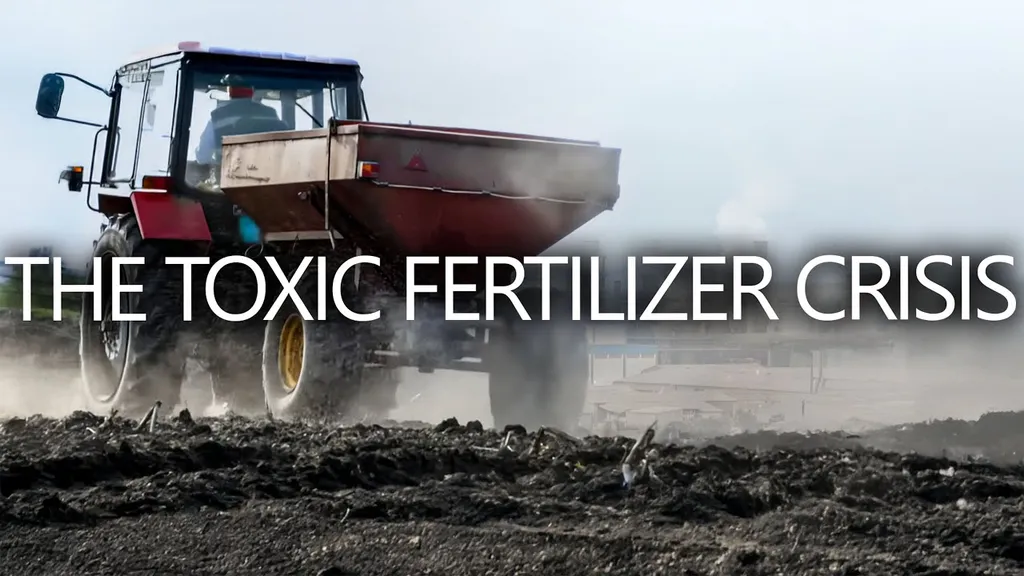
In the sun-scorched fields of north-central Morocco, a silent battle is unfolding beneath our feet. Potentially toxic elements (PTEs) are seeping into agricultural soils, threatening food security and human health. But a new study, published in *Frontiers in Soil Science*, is shedding light on this hidden menace, offering hope for targeted solutions that could reshape sustainable agriculture in semi-arid regions.
The research, led by Laila Ait Mansour of the Center of Excellence for Soil and Fertilizer Research in Africa at Mohammed VI Polytechnique University, delves into the intricate world of soil typology and its influence on PTE distribution and ecological risks. Unlike previous studies that applied uniform thresholds, Ait Mansour and her team took a soil-type-specific approach, revealing how different soil types control PTE behavior and risk patterns.
The team analyzed 15 soil samples from 20 horizons across five representative soil types—Luvic Phaeozems, Haplic Calcisols, Chromic Luvisols, Vertisols, and Calcic Kastanozems—and five bedrock samples. They quantified nine PTEs (As, Cd, Cu, Mn, Ba, Pb, Sr, Ti, Zn) and examined physicochemical properties to understand their influence on metal mobility.
The findings are striking. Luvic Phaeozem, one of the soil types studied, exhibited the highest contamination, with Cd, As, and Pb exceeding WHO/FAO thresholds and posing a very high ecological risk. “Cd emerged as the most mobile, correlating with acidic pH and organic matter,” Ait Mansour explains. “Clay content strongly controlled retention, highlighting the need for soil-type-specific management strategies.”
The study also identified two main geochemical associations: clay retention and carbonate buffering. Principal Component Analysis effectively separated soil types, clustering Luvic Phaeozems and Calcic Kastanozems due to their high contamination and retention capacity, and isolating Haplic Calcisols and Vertisols for their carbonate and clay-driven buffering behavior.
So, what does this mean for the agriculture sector? The commercial impacts are significant. By understanding the specific behaviors of PTEs in different soil types, farmers and agronomists can implement targeted bioremediation and soil-type-informed agricultural management practices. This could lead to more sustainable land use, improved crop yields, and safer food products.
As Ait Mansour puts it, “These findings emphasize the necessity of integrating soil typology into risk assessments. It’s not just about identifying the problem; it’s about understanding the context and tailoring solutions accordingly.”
The research also opens up new avenues for future developments. By focusing on soil typology, scientists can better predict PTE behavior and ecological risks, paving the way for more precise and effective mitigation strategies. This could revolutionize agriculture in semi-arid regions, making it more resilient and sustainable in the face of climate change and intensive farming practices.
In the end, this study is more than just a scientific breakthrough. It’s a call to action, a reminder that the key to sustainable agriculture lies beneath our feet. And with the right knowledge and tools, we can turn the tide in this silent battle, ensuring food security and human health for generations to come.