
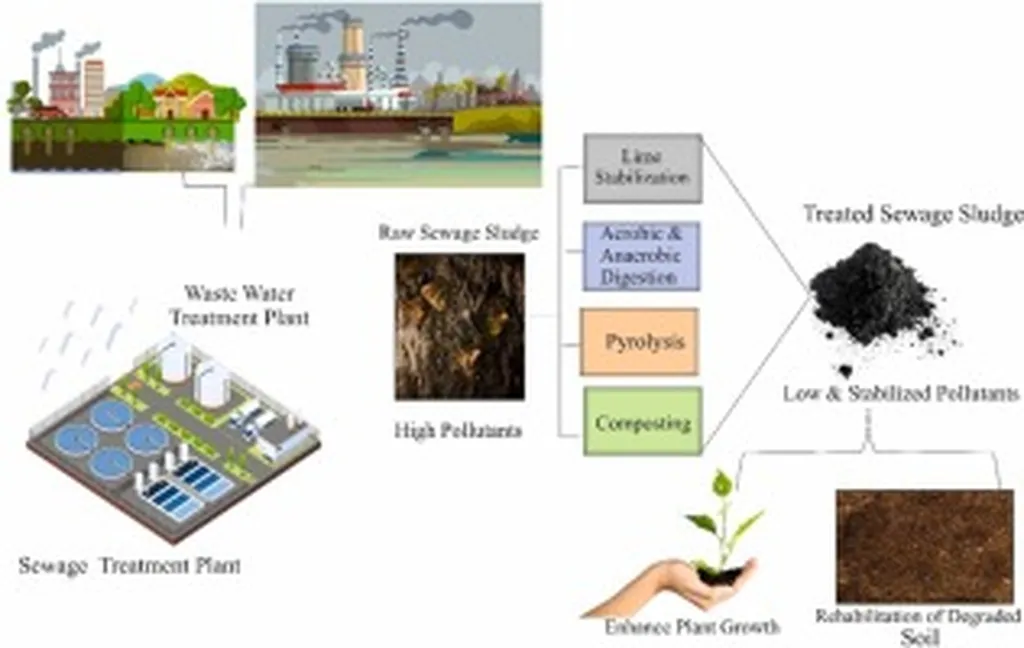
In the quest for sustainable agriculture, researchers are turning to an unlikely hero: sewage sludge. A recent study published in *Cleaner Water* and led by Acharya Balkrishna of the Patanjali Herbal Research Department, Patanjali Research Foundation, Haridwar, Uttarakhand, India, delves into the promise and pitfalls of using sewage sludge (SS) as a low-cost fertilizer. The findings could reshape how farmers approach soil enrichment, balancing cost savings with potential health risks.
Sewage sludge, a byproduct of wastewater treatment, is rich in nutrients that plants crave. Farmers in the United States, India, Europe, Australia, and beyond have already seen reduced agrochemical expenses by incorporating SS into their fields. “Using sewage sludge as a fertilizer can significantly cut down on fertilizer costs, making it an attractive option for farmers looking to boost crop yields without breaking the bank,” Balkrishna explains. This cost-effectiveness is a game-changer in an industry where every dollar counts.
However, the story doesn’t end with nutrient-rich soil. The study highlights the presence of microbial pathogens and pollutants in sewage sludge, posing serious health risks. Pathogens like *Salmonella Typhi*, *Escherichia coli*, and *Helicobacter pylori*, along with protozoan parasites and viruses, can contaminate crops and, by extension, the food supply. The study also raises alarms about antibiotic-resistant genes, which could exacerbate global health crises if introduced into agricultural soils.
Adding to the complexity, microplastics (MPs), nanoplastics, and heavy metals like cadmium, arsenic, chromium, mercury, and lead can wreak havoc on human health. These contaminants can affect the gastrointestinal, respiratory, and other systems, though research on their toxicity is still in its infancy. “The presence of microplastics and nanoplastics in sewage sludge is a growing concern, and we need more studies to fully understand their impact,” Balkrishna notes.
The study calls for innovative techniques to remove pathogens and remediate pollutants, transforming sewage sludge from waste into a valuable resource. This isn’t just about sustainability; it’s about reimagining waste management in a way that benefits both farmers and the environment. As the agricultural sector grapples with rising costs and environmental pressures, this research offers a path forward—one that requires careful consideration of both benefits and risks.
The findings could spur advancements in wastewater treatment technologies, leading to safer, more sustainable agricultural practices. Farmers, policymakers, and researchers alike will need to collaborate to ensure that sewage sludge is used responsibly, minimizing health risks while maximizing its potential as a low-cost fertilizer. The future of agriculture may well hinge on our ability to turn waste into a resource—safely and sustainably.