
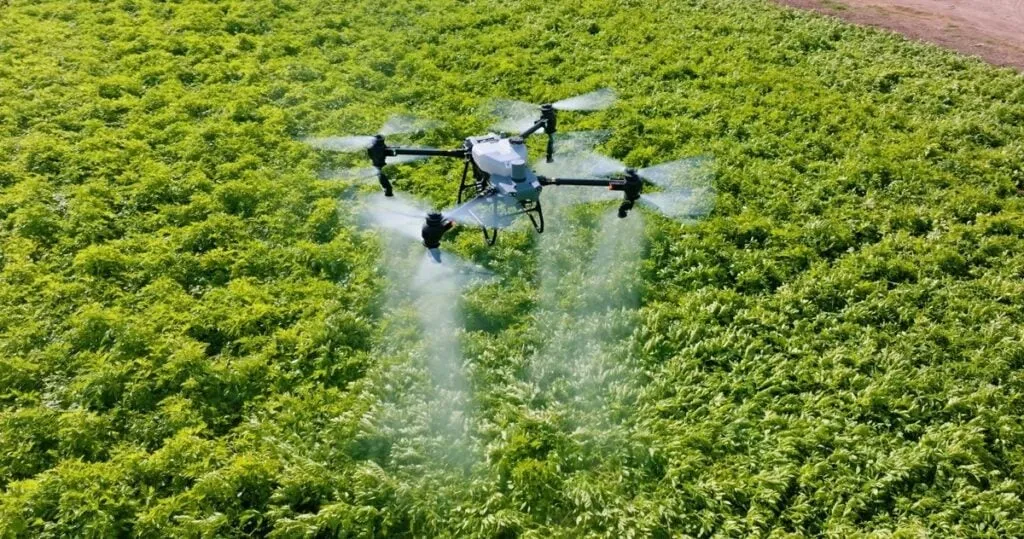
In the ever-evolving landscape of agricultural technology, Unmanned Aerial Vehicles (UAVs) are taking center stage, and a recent study published in *Frontiers in Plant Science* sheds light on the transformative potential of UAV payload technology (UPT) in agriculture and beyond. The research, led by Weixiang Yao from the College of Information and Electrical Engineering at Shenyang Agricultural University, offers a comprehensive review of UPT’s development, applications, and challenges, paving the way for smarter, more efficient agricultural practices.
UAVs have become indispensable tools across various industries due to their high maneuverability and adaptability. UPT, the suite of sensors and equipment carried by UAVs, is enhancing mission performance and expanding application scenarios. The study highlights that UPT is rapidly integrating into agriculture, driving the low-altitude economy and intelligent operations.
The research systematically analyzed global studies on UPT from 2012 to 2025, identifying key application areas such as crop monitoring, precision agricultural operations, and aerial transportation. “UPT has made notable progress in these areas,” Yao noted, “but there are still challenges to overcome.”
One of the primary challenges is the limited autonomous perception and path planning capabilities of UAVs. Additionally, the lack of standardized device interfaces and the need for improved endurance, communication, and operational stability under adverse weather conditions are significant hurdles. Yao emphasized the need for future research to focus on lightweight and multifunctional payload design, intelligent operation control, and modular and standardized integration.
The study also calls for the development of a “satellite-UAV-ground” collaborative perception and decision-making system, which could revolutionize agricultural monitoring and management. This system would integrate data from satellites, UAVs, and ground-based sensors to provide a comprehensive view of agricultural fields, enabling precision farming and improving crop yields.
The commercial impacts of these advancements are substantial. Farmers can expect more efficient and precise monitoring of crops, leading to better resource management and increased productivity. Precision agricultural operations, such as targeted pesticide and fertilizer application, can reduce costs and environmental impact. Aerial transportation of agricultural products can streamline supply chains, ensuring fresher produce reaches consumers more quickly.
Yao’s research provides both theoretical and practical guidance for promoting UAV adoption in agriculture. By addressing the identified challenges and focusing on future research directions, the agricultural sector can harness the full potential of UPT, contributing to the sustainable development of smart agriculture and the low-altitude economy.
As the agricultural industry continues to evolve, the insights from this study will be invaluable for stakeholders looking to stay ahead of the curve. The integration of UPT into agricultural practices is not just a technological advancement; it’s a step towards a more sustainable and efficient future for farming.