
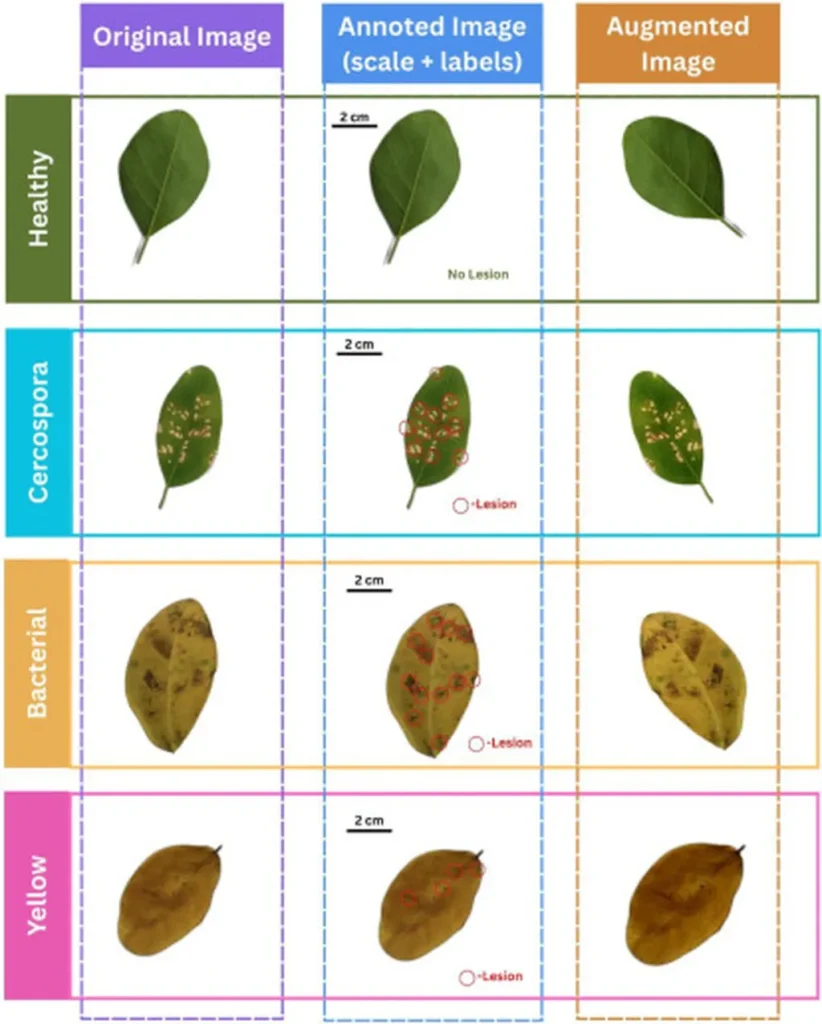
In the heart of Bangladesh, a groundbreaking dataset is set to revolutionize the way farmers detect and manage diseases in Moringa plants, a crop celebrated for its nutritional and health benefits. The MoringaLeafNet dataset, recently published in *Data in Brief*, is a collection of high-quality images of Moringa leaves, both healthy and afflicted by various diseases. This dataset, compiled by lead author Sabit Ahamed Preanto from the Department of Computer Science and Engineering at Daffodil International University, aims to empower precision agriculture through advanced deep learning techniques.
Moringa Oleifera, often referred to as the “miracle tree,” is prized globally for its leaves, which are rich in essential vitamins, antioxidants, and minerals. However, diseases such as Yellow Leaf, Bacterial Leaf Spot, and Cercospora Leaf Spot pose significant challenges to its cultivation. These diseases are notoriously difficult to detect early, often leading to rapid spread and substantial crop damage. Farmers typically rely on pesticides, which not only increase costs but also pose environmental risks.
The MoringaLeafNet dataset includes images collected from Sumi Nursery in Madhupur, Tangail, and Rafin Nursery in Birulia, Savar, under various weather conditions. The images are categorized into four classes: Healthy Leaf, Yellow Leaf, Bacterial Leaf Spot, and Cercospora Leaf Spot. To enhance the dataset’s utility for deep learning applications, the images have undergone random rotations, flips, and adjustments in brightness and contrast.
“This dataset is a game-changer for precision agriculture,” says Preanto. “By providing high-quality images of Moringa leaves affected by different diseases, we aim to facilitate the development of advanced diagnostic tools that can detect diseases at an early stage. This will enable farmers to take timely action, reducing the need for pesticides and ultimately improving crop yield and sustainability.”
The implications of this research are far-reaching. By leveraging computer vision and deep learning, farmers can implement real-time diagnostic systems that offer timely insights for decision-making. This not only enhances the efficiency of disease management but also promotes sustainable agriculture practices. The dataset’s potential extends beyond Moringa, offering a framework that could be adapted for other crops, thereby fostering innovation in the broader agricultural sector.
As the world grapples with the challenges of climate change and food security, the MoringaLeafNet dataset represents a significant step forward in the quest for sustainable and efficient agricultural practices. By providing a robust tool for early disease detection, this research paves the way for a future where technology and agriculture intersect to create a more resilient and productive farming landscape.
The dataset, published in *Data in Brief*, is a testament to the collaborative efforts of researchers and farmers, highlighting the potential of technology to transform traditional agricultural practices. As the agricultural sector continues to evolve, the MoringaLeafNet dataset stands as a beacon of innovation, offering new possibilities for precision agriculture and sustainable farming.