
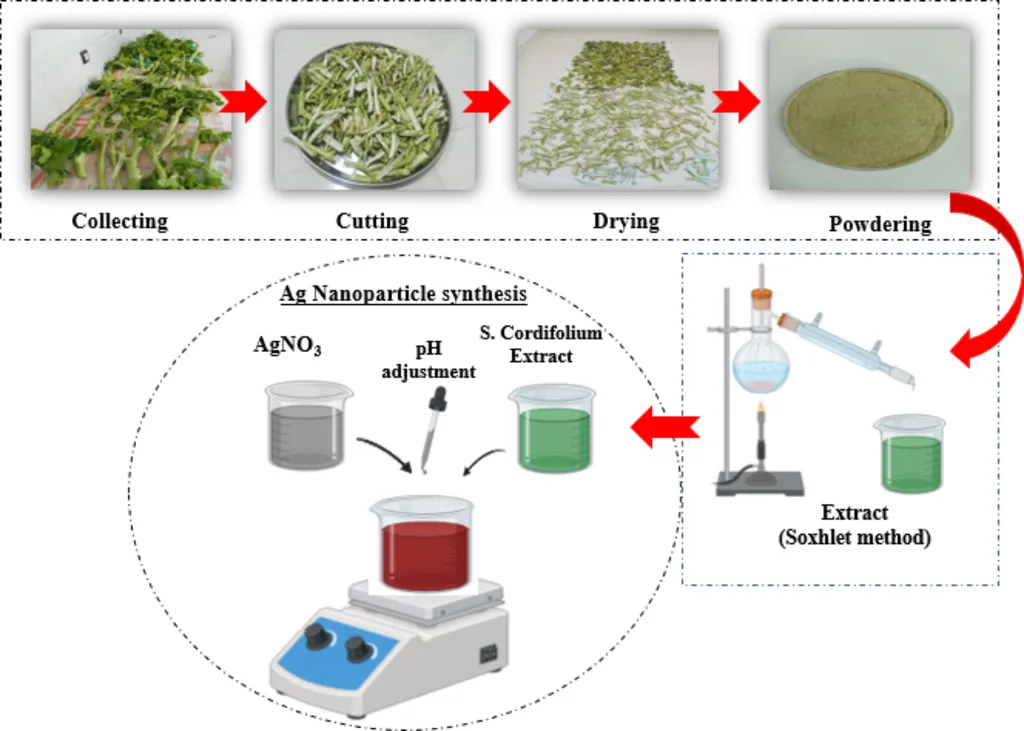
In a groundbreaking study published in *Industrial Crops and Products*, researchers have unveiled a novel approach to enhancing tobacco growth using green-synthesized silver nanoparticles (AgNPs). The study, led by Xingyue Huang from the Zhengzhou Tobacco Research Institute of CNTC and Shanxi University, explores the potential of tobacco extract-derived silver nanoparticles (TE/AgNPs) to promote the growth and development of tobacco plants, offering promising implications for sustainable agriculture.
Tobacco, a significant cash crop and model plant in agriculture, faces numerous biotic and abiotic stressors that hinder its growth, yield, and quality. The researchers investigated the effects of TE/AgNPs on tobacco growth through seed medium and pot-based cultivation experiments. The results were striking: TE/AgNPs significantly promoted tobacco growth, as evidenced by growth and physiological measurements.
To delve deeper into the molecular mechanisms behind these growth-promoting effects, the researchers employed a multi-omics approach, integrating transcriptomics, metabolomics, and microbiomics. Metabolomic analysis revealed that TE/AgNPs treatment induced a reprogramming of the plant metabolome, altering cellular metabolism and responses to external signaling molecules. Key changes were observed in organic acids, energy production, and secondary metabolites.
Microbiome profiling demonstrated that TE/AgNPs treatment significantly altered the community structure of both root and soil microbiota. The structure of the microflora became more complex, with notable changes in the “network hub” nodes of each ecological niche. Transcriptomic analysis identified the carotenoid biosynthesis pathway as enriched among differentially expressed genes in both roots and leaves.
“Our findings suggest that TE/AgNPs exert their growth-promoting effects by regulating gene expression, metabolic pathways, and the inter-root microbial community in plants,” said lead author Xingyue Huang. This holistic approach provides a comprehensive understanding of how green-synthesized silver nanoparticles can enhance plant growth and development.
The study also highlighted the alanine, aspartate, and glutamate metabolic pathway, as well as the glutathione metabolic pathway, as critical players in TE/AgNPs-promoted tobacco growth. Spearman correlation analysis further revealed strong correlations between root differential metabolites and the “network hub” of the microbiome genus level co-occurrence network. Molecular docking and metabolite tracing using MetOrigin identified specific metabolites closely related to plant growth-promoting rhizobacteria (PGPR) such as Sphingobium, Sphingopyxis, and Caulobacter.
The commercial implications of this research are substantial. As the agriculture sector seeks sustainable and environmentally friendly production methods, the use of green-synthesized nanosilver as a plant growth regulator offers a promising avenue. This study not only provides practical guidance for agricultural practices but also lays a theoretical foundation for future research in this field.
The findings were published in *Industrial Crops and Products*, with Xingyue Huang as the lead author, affiliated with the Zhengzhou Tobacco Research Institute of CNTC and Shanxi University. This research paves the way for innovative approaches to enhancing crop yield and quality, ultimately benefiting farmers and the agriculture industry as a whole.