
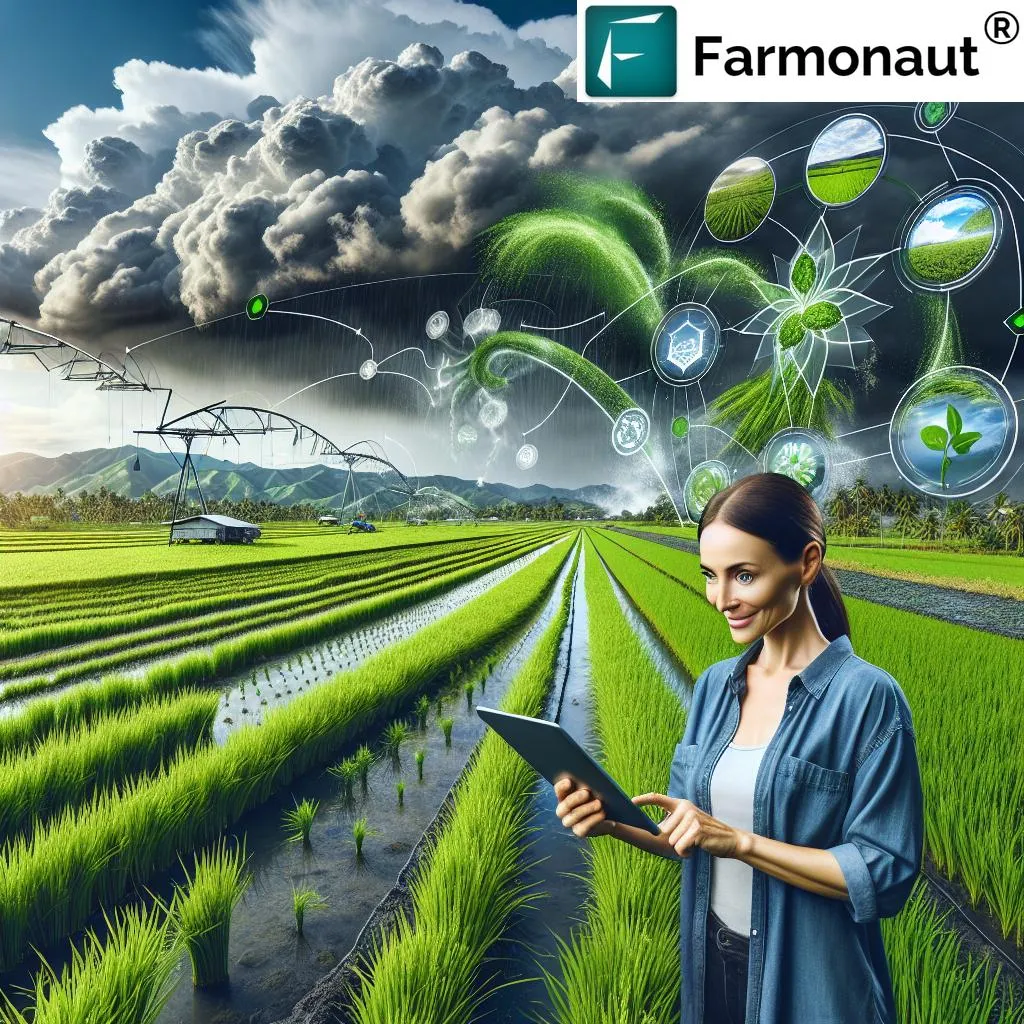
In the face of escalating climate challenges, the Philippines is embracing a digital and sustainable revolution in agriculture, with the Caraga region emerging as a beacon of innovation. Local governments, national agencies, and partner organisations are collaborating to equip farming communities with the tools and knowledge needed to thrive amidst increasingly unpredictable weather patterns.
At the heart of this transformation is the Department of Science and Technology (DOST) Caraga, which is empowering local government units (LGUs) to implement digital agriculture systems through the Smarter Approaches to Reinvigorate Agriculture as an Industry in the Philippines (SARAI) program. A key component of this initiative is the Community-Level SARAI Enhanced Agricultural Monitoring System (CL-SEAMS), which provides agricultural extension workers with real-time, accurate information on crop conditions and environmental trends. By leveraging satellite-derived data, the system enables digital mapping of farms, identification of crop growth stages, and monitoring of field conditions, even when direct access is restricted. This empowers farmers and extension staff to respond swiftly to emerging issues, optimise planting schedules, and make informed decisions about irrigation, fertilisation, and pest management.
CL-SEAMS also offers early warning alerts for climate-related risks such as extreme rainfall, drought, or sudden temperature changes. These alerts enable farmers and local authorities to prepare for potential hazards, reduce crop losses, and protect livelihoods. By integrating these insights into routine agricultural planning, LGUs can provide more precise advisories to farmers, allocate resources efficiently, and strengthen overall community resilience. To ensure full adoption of the system, DOST Caraga is providing comprehensive training programs for LGU teams, aiming to make digital tools an integral part of daily agricultural planning. Additionally, Automatic Weather Stations are being installed in partner municipalities to deliver localised 10-day forecasts, further equipping farmers with actionable information.
Parallel to these digital advancements, the provincial government of Surigao del Sur has launched the SEA2SOIL Caraga Project in Tandag City, promoting climate-resilient and environmentally sustainable smart farming practices. Supported by SwitchAsia and funded by the European Union, the initiative introduces seaweed-based bio-inputs as alternatives to conventional chemical fertilisers. Partnering with organisations such as CODESPA and MCPI Corporation, the project aligns with the Philippine Development Plan 2023–2028 and broader national strategies for climate adaptation, sustainable food security, and inclusive economic growth.
SEA2SOIL strengthens agri-food value chains, facilitates local production and distribution of organic inputs, and encourages wider adoption among smallholder farmers. By transitioning to locally produced seaweed bio-inputs, farmers can improve soil health, increase productivity, reduce production costs, and lessen dependence on imported fertilisers. The project also creates new livelihood opportunities through inclusive supply chains for production, processing, and marketing of bio-inputs, empowering communities economically while promoting environmentally sustainable agriculture.
Provincial officials emphasised that SEA2SOIL not only enhances sustainability but also builds climate resilience, safeguards natural resources, and positions Surigao del Sur as a model for green agricultural transformation. Together, the digital monitoring systems implemented by DOST Caraga and the sustainable practices promoted by SEA2SOIL reflect a holistic approach to modernising agriculture. This approach helps farmers increase productivity, protect the environment, and strengthen community resilience for the future. As these initiatives gain traction, they offer a promising blueprint for other regions in the Philippines and beyond, demonstrating the power of technology and sustainable practices in building a more resilient and productive agricultural sector.