
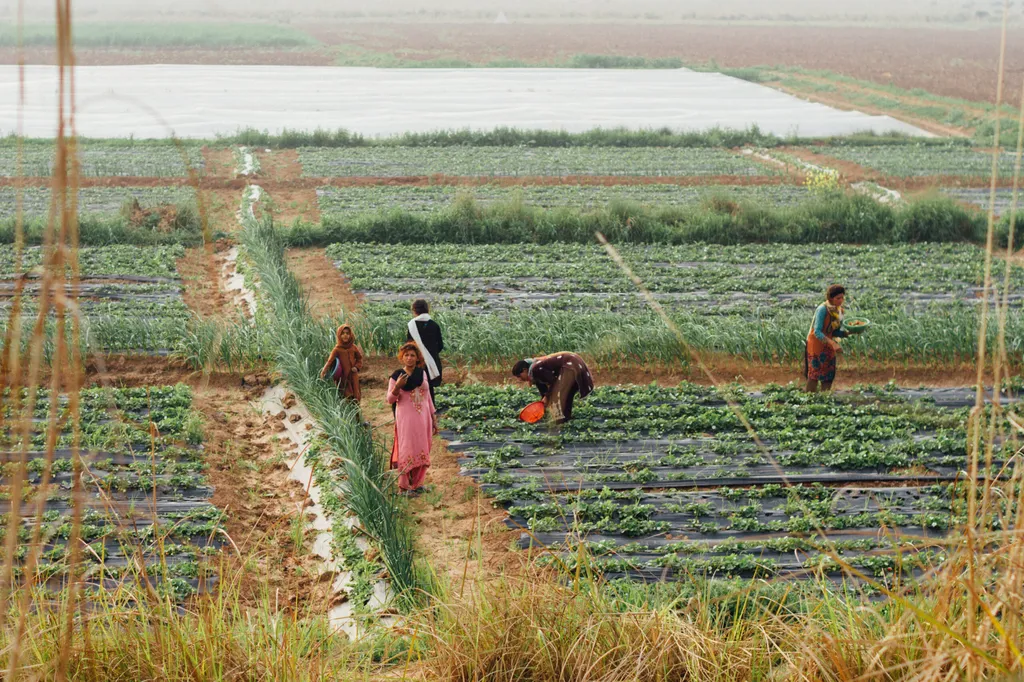
In the heart of Pakistan’s Sindh Province, a pressing question looms over farmers and policymakers alike: how can agriculture adapt to the escalating threats of climate change? A recent study published in *Climate Smart Agriculture* offers some answers, revealing that climate-smart agriculture (CSA) practices can significantly bolster disaster resilience—but their effectiveness varies depending on the type of hazard.
The study, led by Aziz Ahmed from the Centre for Environmental Sciences at the University of Sindh, systematically compared the impact of CSA practices across three distinct disaster-prone districts: Dadu (riverine flooding), Tharparkar (drought), and Thatta (coastal flooding). The findings underscore the need for tailored, rather than uniform, adaptation strategies.
“Climate-smart agriculture is not a one-size-fits-all solution,” Ahmed emphasized. “Our research shows that while CSA practices can greatly enhance resilience in drought-prone areas, their impact is far less significant in flood-prone regions.”
The study’s multi-scale analysis combined climate data, agricultural vulnerability assessments, and farmer surveys. It revealed that Tharparkar, the district most vulnerable to drought, saw a strong positive correlation between CSA practices and disaster resilience. In contrast, flood-prone districts like Thatta and Dadu showed negligible relationships.
This disparity has significant commercial implications for the agriculture sector. In drought-prone areas, investing in CSA practices could substantially reduce crop losses and stabilize yields, benefiting both farmers and agribusinesses. However, in flood-prone regions, different strategies may be needed to achieve similar results.
The study also highlighted the urgent need for targeted adaptation policies. With future projections indicating substantial sea-level rise, the agricultural sector must prepare for a range of climate impacts. “Our findings provide the first systematic evidence comparing CSA effectiveness across different disaster contexts,” Ahmed noted. “This research supports the need for targeted adaptation policies that consider the specific hazards faced by each region.”
As the agriculture sector grapples with the escalating threats of climate change, this research offers a crucial roadmap for building resilience. By tailoring CSA practices to the specific needs of each region, farmers and policymakers can better navigate the challenges ahead. The study, led by Aziz Ahmed from the Centre for Environmental Sciences at the University of Sindh, provides a vital step forward in the quest for climate-resilient agriculture.