
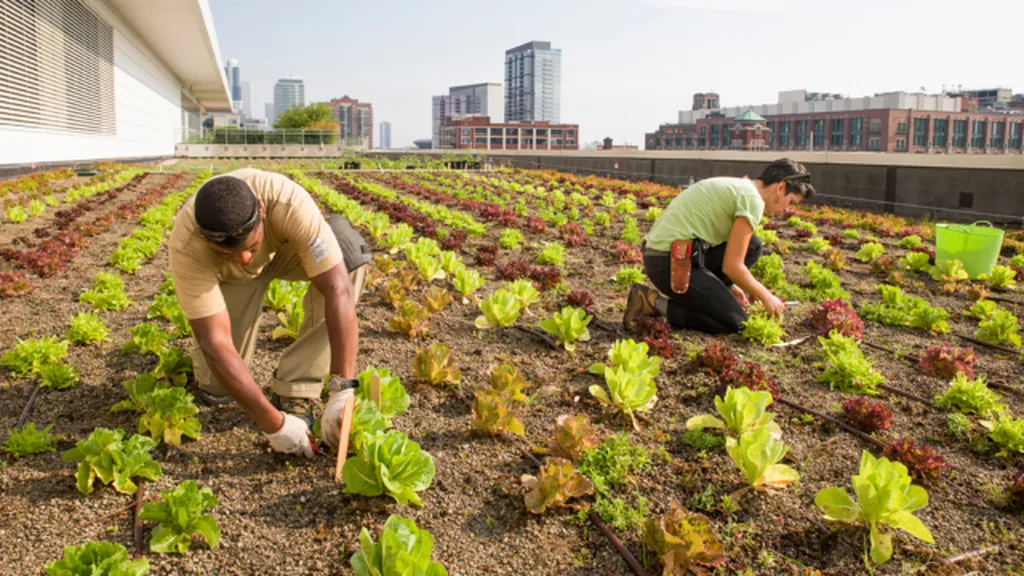
In the heart of bustling cities, a quiet revolution is taking root—urban agriculture (UA) is transforming how we grow food, engage communities, and address sustainability challenges. A recent study published in the *Journal of Agriculture, Food Systems, and Community Development* sheds light on the intricate dynamics of collaborative governance in UA, offering valuable insights for policymakers, businesses, and community leaders alike. Led by Svetla Stoeva of the Institute of Philosophy and Sociology at the Bulgarian Academy of Sciences (IPS-BAS), the research delves into the roles of various stakeholders and the mechanisms that drive successful urban farming initiatives.
Urban agriculture is more than just a trend; it’s a vital component of sustainable urban development. By addressing food insecurity, environmental degradation, and social inequality, UA initiatives are reshaping urban landscapes. Stoeva’s study examines six types of UA initiatives—social farms, urban farms, community parks, community gardens, do-it-yourself gardens, and zero-acreage farms—across 14 European case studies. The research identifies key stakeholders including public authorities, civil society organizations (CSOs), non-governmental organizations (NGOs), private businesses, and practitioners.
Public authorities play a crucial role by providing regulatory frameworks and resources, while NGOs and CSOs facilitate community engagement and advocacy. Private businesses contribute innovation and investment, and practitioners offer local knowledge and labor. “Effective collaboration depends on inclusivity, shared responsibility, flexibility, and social cohesion,” Stoeva explains. This collaborative approach enhances the adaptability and sustainability of UA initiatives, fostering resilient urban food systems.
The study highlights diverse collaborative mechanisms such as participatory decision-making, resource-sharing, and dynamic feedback loops. These mechanisms not only improve the efficiency of UA projects but also ensure that they are responsive to the needs of the community. For instance, participatory decision-making allows for the inclusion of diverse perspectives, leading to more equitable outcomes. Resource-sharing fosters a sense of community and shared responsibility, while dynamic feedback loops enable continuous improvement and adaptation.
However, the research also reveals challenges arising from power imbalances. Public authorities and businesses often dominate these initiatives, potentially marginalizing smaller stakeholders. “Power imbalances can undermine inclusivity and equitable outcomes,” Stoeva notes. Addressing these challenges is crucial for the long-term success of UA initiatives. By fostering balanced stakeholder interactions and participatory governance, communities can mitigate conflicts and support sustainable development.
The commercial impacts of this research are significant. For the agriculture sector, understanding the dynamics of collaborative governance can lead to more effective partnerships and innovative business models. Private businesses, in particular, can leverage their resources and expertise to support UA initiatives, creating new opportunities for investment and growth. By engaging with local communities and stakeholders, businesses can build trust and foster long-term relationships that benefit both the company and the community.
The study’s findings offer a roadmap for building resilient urban food systems. By emphasizing inclusivity, shared responsibility, and adaptability, UA initiatives can address the complex socio-economic and environmental challenges of urban environments. Future research should explore longitudinal case studies and extend the geographical scope to capture UA governance dynamics in diverse urban settings.
As urban agriculture continues to gain momentum, the insights from Stoeva’s research will be invaluable for shaping policy and practice. By fostering collaborative governance and addressing power imbalances, communities can create sustainable and inclusive urban food systems that benefit everyone. The study not only contributes to academic discourse but also provides practical guidance for policymakers, businesses, and community leaders. As we look to the future, the lessons learned from these initiatives will be crucial in building resilient and sustainable cities.