
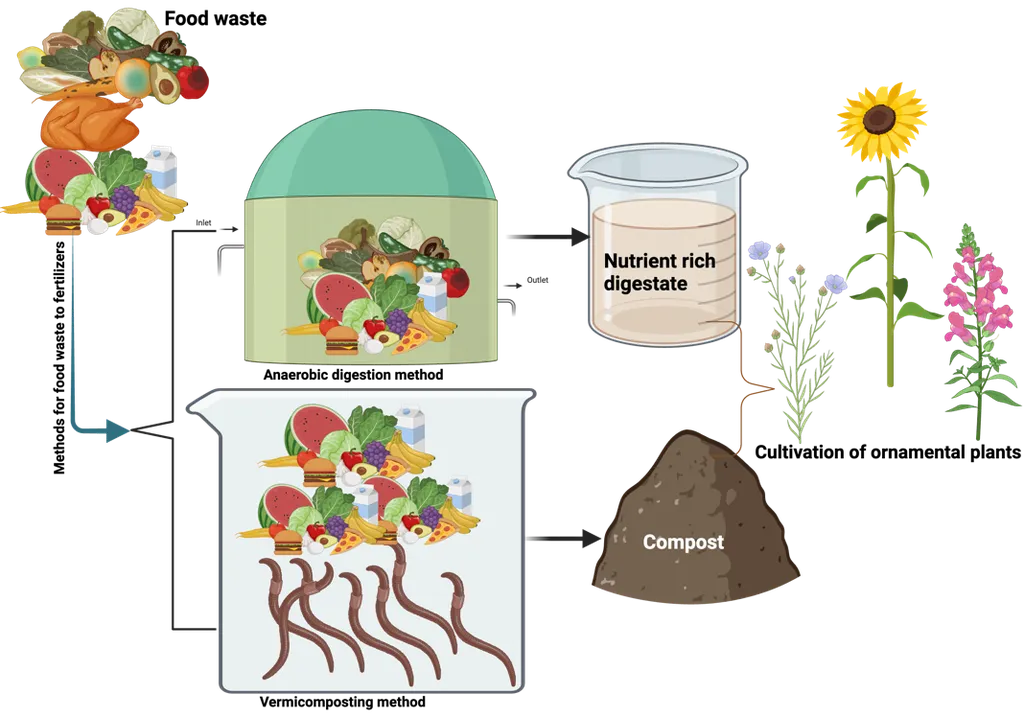
In a groundbreaking study published in the journal *Circular Economy*, researchers have unveiled a novel approach to sustainable agriculture by transforming organic waste into a high-value biofertilizer. The study, led by Thipwan Jiemanukunkij of Burapha University and the Vidyasirimedhi Institute of Science and Technology (VISTEC), demonstrates how anaerobic co-digestate liquid (AcoDL) derived from pig manure, food waste, and spent coffee grounds can significantly enhance plant growth and promote the production of bioactive compounds.
The research highlights the favorable physicochemical properties of the PMI/FW/SCG AcoDL, which includes a pH of 8.09, electrical conductivity of 14.44 mS/cm, and a nutrient profile rich in nitrogen, phosphorus, and potassium. Notably, the AcoDL contains plant growth-promoting compounds such as salicylic acid, kinetin, and essential amino acids. “This is not just about recycling waste; it’s about creating a value-added product that can revolutionize sustainable agriculture,” Jiemanukunkij explained.
The study’s findings are particularly promising for the agriculture sector. In hydroponic cultivation, the supplementation of AcoDL increased the biomass of green oak lettuce by approximately 2.7-fold compared to controls. In soil-based systems, the combination of AcoDL with cow manure markedly increased triterpene accumulation in Gotu Kola, with asiaticoside and madecassoside levels reaching 2–3 times higher than those in the controls. These results suggest that AcoDL can be a game-changer for farmers looking to improve crop yield and quality while reducing reliance on synthetic fertilizers.
The commercial implications of this research are substantial. By converting organic waste into a sustainable biofertilizer, farmers can not only reduce their environmental footprint but also enhance their economic returns. “This approach aligns perfectly with the principles of a circular economy, where waste is minimized, and resources are used efficiently,” Jiemanukunkij noted.
The study also underscores the importance of microbial community analysis in understanding the efficacy of biofertilizers. The dominance of beneficial taxa such as Methanothrix soehngenii and Propionibacterium sp. in the AcoDL suggests that these microorganisms play a crucial role in promoting plant growth and health.
As the agriculture sector continues to grapple with the challenges of sustainability and resource efficiency, this research offers a promising solution. By leveraging the power of anaerobic co-digestion, farmers can transform organic waste into a valuable agricultural input, paving the way for a more sustainable and profitable future. The findings of this study, published in *Circular Economy*, represent a significant step forward in the quest for sustainable agriculture and circular waste management.