
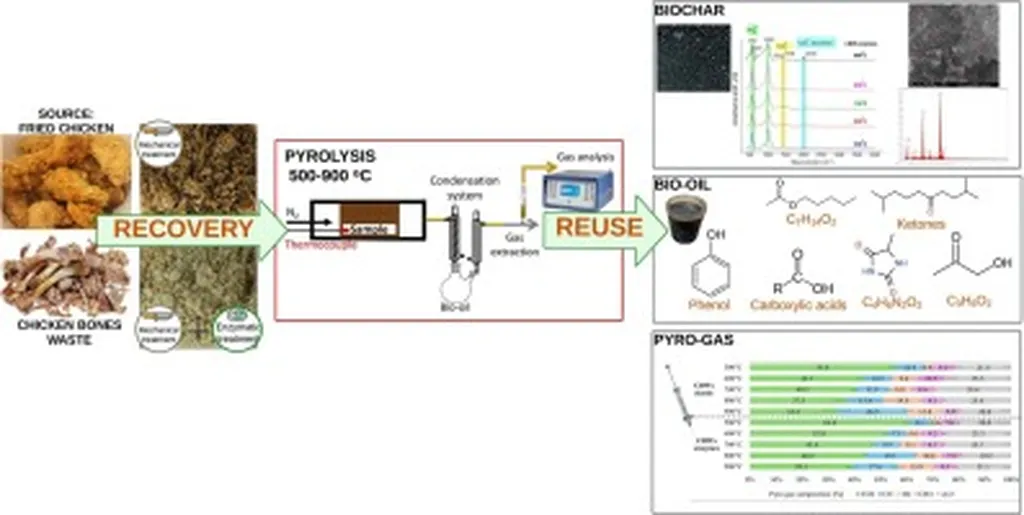
In a world grappling with the dual challenges of waste management and environmental pollution, a team of researchers has discovered a novel solution that could revolutionize the agriculture sector. By transforming chicken bone waste into high-performance activated carbon, they have unlocked a sustainable method for efficiently removing organophosphorus pesticides from the environment. This breakthrough, published in *Discover Chemistry*, not only addresses the pressing issue of agricultural waste but also offers a promising tool for enhancing environmental safety.
The study, led by Sarifah Supri from the Faculty of Sustainable Agriculture at Universiti Malaysia Sabah, highlights the potential of upcycling agricultural byproducts into valuable resources. Chicken bones, typically discarded as waste, are rich in carbon and can be converted into activated carbon through a straightforward process. This activated carbon exhibits exceptional adsorption capabilities, making it highly effective in capturing and removing organophosphorus pesticides from water and soil.
“Our research demonstrates that chicken bone waste, which is often overlooked, can be transformed into a high-value product that addresses critical environmental concerns,” said Supri. “This approach not only reduces waste but also provides a cost-effective solution for pesticide removal, which is a significant step forward for sustainable agriculture.”
The implications of this research are far-reaching. Organophosphorus pesticides, widely used in agriculture, pose serious health and environmental risks. Their persistent nature can lead to contamination of water sources and soil, affecting both ecosystems and human health. By developing an efficient method for their removal, this study paves the way for cleaner agricultural practices and safer food production.
Moreover, the commercial potential of this innovation is substantial. The agriculture sector stands to benefit from a sustainable and economical solution for pesticide management. Farmers and agricultural companies can adopt this technology to mitigate environmental impact while also complying with stringent regulatory standards. The conversion of chicken bone waste into activated carbon could also create new revenue streams for poultry processing industries, further incentivizing its adoption.
Looking ahead, this research opens up new avenues for exploring the valorization of other agricultural wastes. The principles applied in this study could be extended to other organic byproducts, unlocking a plethora of opportunities for sustainable resource utilization. As the world moves towards a circular economy, such innovations are crucial in minimizing waste and maximizing resource efficiency.
In summary, the transformation of chicken bone waste into high-performance activated carbon represents a significant advancement in sustainable agriculture. By addressing both waste management and environmental pollution, this research offers a blueprint for future developments in the field. As Sarifah Supri and her team continue to refine this technology, the agriculture sector can look forward to a greener and more sustainable future.