
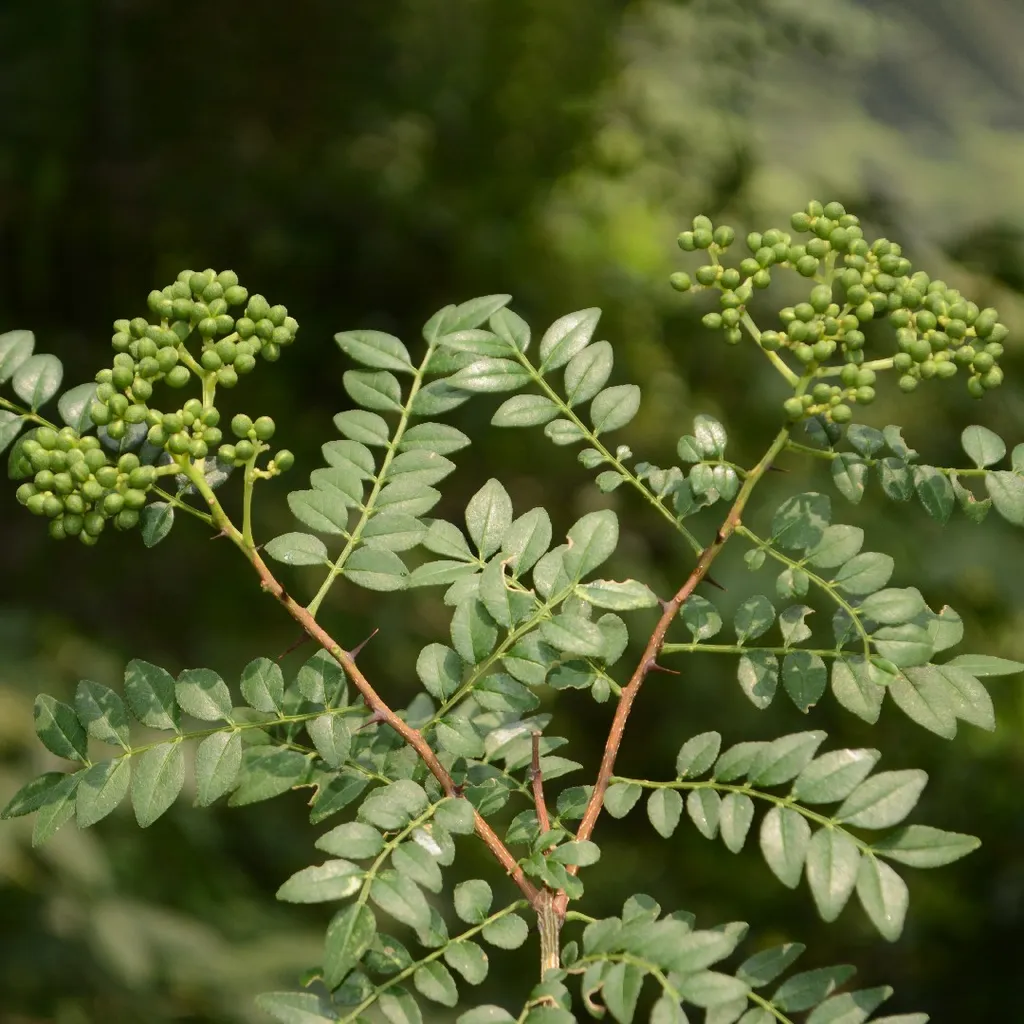
In the heart of China’s agricultural landscape, a team of researchers has unlocked new insights into the genetic diversity of prickly ash, a plant with significant economic value. Their work, published in *Scientific Reports*, could pave the way for more efficient breeding programs and better utilization of this important crop.
Prickly ash, known for its medicinal properties and use in traditional Chinese medicine, has been a subject of interest for agricultural scientists. However, the lack of detailed genetic information has hindered its full potential. Enter Jiamin Liu and colleagues from the Chongqing Key Laboratory of Economic Plant Biotechnology, who have delved deep into the transcriptome of prickly ash to uncover its genetic secrets.
Using advanced bioinformatics tools, the team analyzed the transcriptome data of prickly ash, focusing on simple sequence repeats (EST-SSR). These genetic markers are crucial for understanding the genetic diversity and relationships among different germplasm resources. “We found that the frequency of EST-SSR occurrence was quite high, at 14.94%,” explains Liu. “This abundance of markers provides a wealth of information for breeders to work with.”
The researchers identified 20,271 EST-SSR loci from 245,286 Unigene sequences, with single-nucleotide repeats being the most common. They then designed 30 pairs of EST-SSR primers to screen for polymorphisms among 35 prickly ash germplasms from nine provinces. The results were promising, with 22 pairs of primers showing polymorphisms, an amplification efficiency of 73.33%, and a polymorphism rate of 90.99%.
The genetic diversity analysis revealed that the majority of genetic variation (79.80%) was within individuals, with smaller proportions among populations (12.40%) and among individuals within populations (7.80%). This information is invaluable for breeders looking to develop new varieties with desirable traits.
The commercial implications of this research are significant. “Understanding the genetic diversity of prickly ash allows us to make more informed decisions in breeding programs,” says Liu. “This can lead to the development of new varieties with improved yield, disease resistance, and medicinal properties, ultimately benefiting farmers and consumers alike.”
The study also provides a foundation for future research. The EST-SSR markers developed in this study can be used for molecular-assisted selection, core germplasm screening, and the cultivation of excellent varieties. This aligns with the growing trend of multi-omics-driven breeding innovation, where data from genomics, transcriptomics, and other omics technologies are integrated to drive agricultural advancements.
As the agricultural sector continues to evolve, the insights gained from this research could shape the future of prickly ash cultivation. By harnessing the power of genetic diversity, breeders can develop crops that are not only more productive but also more resilient to environmental challenges. This, in turn, can contribute to food security and the sustainable utilization of agricultural resources.
In the words of Liu, “Our work is just the beginning. The genetic diversity we’ve uncovered opens up new avenues for research and development in the field of prickly ash cultivation.” As the agricultural sector looks towards a future driven by innovation and technology, this research serves as a testament to the power of genetic diversity in shaping the crops of tomorrow.